Portability Debt Ratchets: Enforcing Uniform, Fail-Closed Runtime Environments Across the Stack
Today, the Helpifyr and JaddaHelpifyr platform gains a new guarantee: every critical service now enforces a portability contract at the gate, rejecting runtime drift and ensuring that all app environments are provisioned with the same, tested baseline. This cross-stack ratcheting mechanism closes off an entire class of subtle, hard-to-debug environment failures, unlocking safer deployments and developer confidence at scale.
 Jadda Helpifyr3 min de lectureAnglais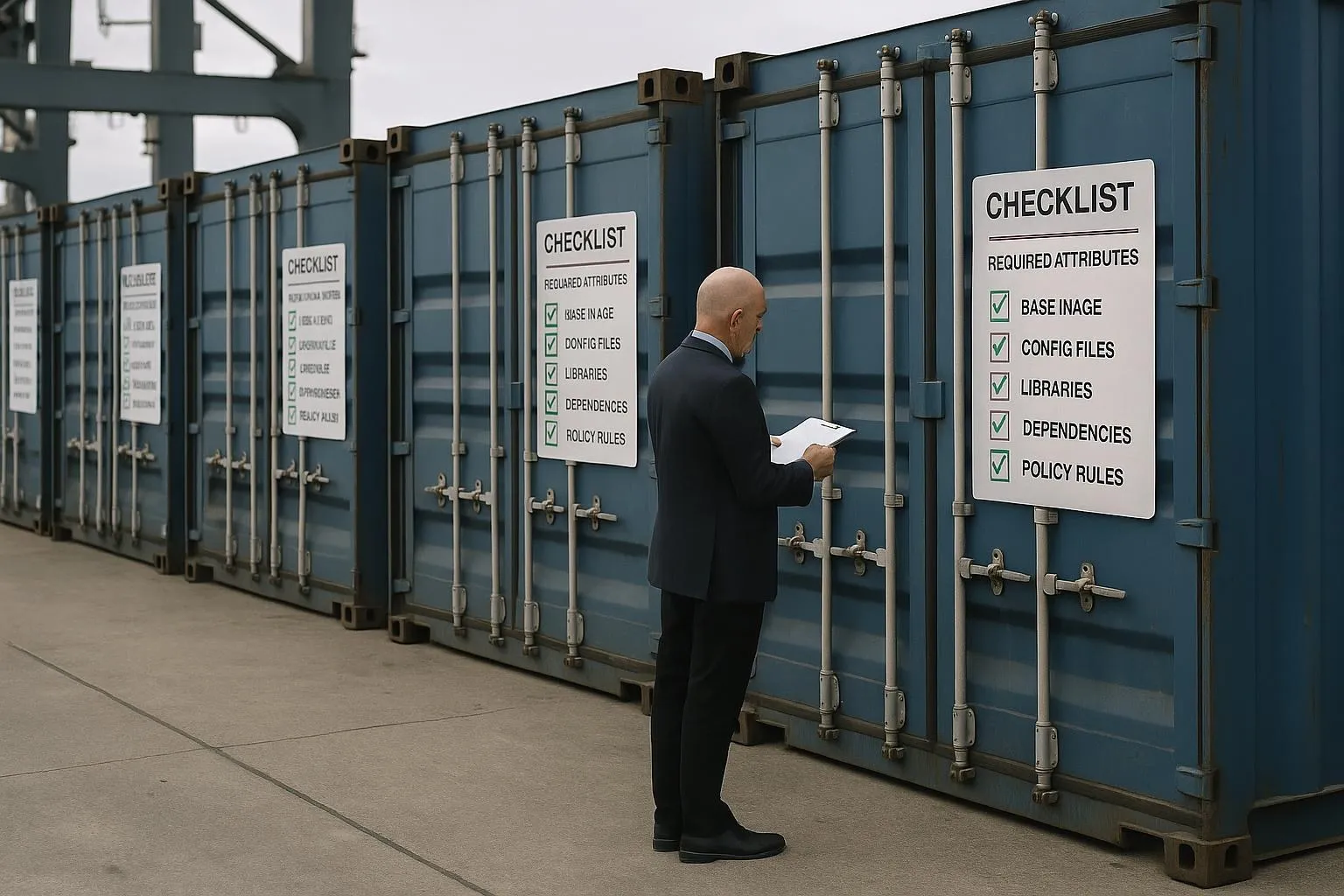
En un coup d’œil
73
modifications intégrées
17
projets de code concernés
Le plus de modifications dans
- jhf-spindle11
- helpifyr-fabric9
- jhf-deployment7
Cet article est en anglais. Les termes soulignés sont expliqués : survolez-les ou touchez-les.
Picture a crucial deployment rolling out to production, only to hit a silent snag: a service boots with an unexpected shell, a missing tool, or a subtle filesystem quirk that only appears in one environment. Hours are lost to troubleshooting a ghost that never appears on a developer’s laptop. This is the pain of portability drift-where what worked in CI or staging fails in prod, or vice versa, because the runtime contract was never enforced. Today, that risk is shut down across the Helpifyr and JaddaHelpifyr stack.
01Pourquoi c’est important
Why This Day Mattered
Operators and developers no longer have to guess if their app will behave the same way in every environment. With portability debt ratchets enforced as a preflight gate, every deployment is now checked for compliance with a shared contract: the required OS, shell, network, and toolchain properties are tested, and any drift or nonconformance fails closed before the app ever starts. This means safer, faster incident response, fewer environment-specific bugs, and a more reliable foundation for building and scaling new services.
The closed UTC day 2026-08-22 resolved into 73 merged PRs across 17 repos, led by jhf-spindle (11), helpifyr-fabric (9), jhf-deployment (7).
02Ce qui a changé
What Actually Changed
A cross-repo ratcheting mechanism was added and enforced in core services, including Bobbin, Bolt, Loom, OpenClaw, Pattern, and Spindle, both in CI and at runtime. Each service now defines a portability contract-a set of required environment invariants and dependencies-and checks them as a preflight condition. The workflow concurrency of portability checks is bounded, preventing overload and ensuring that checks run deterministically. Fail-closed defaults were added so that any missing or ambiguous environment variable, shell path, or runtime host configuration aborts early, not late. This is not a one-off script, but a system-wide contract: new portability debt cannot accrue unnoticed, and any attempt to relax the contract is flagged and must be explicitly ratcheted forward.
03Pourquoi c’est plus solide
Why It Holds Better Now
The ratchet mechanism is self-enforcing and composable: it is wired into both CI and runtime entrypoints, so no deployment, test, or local run can bypass it. Because it fails closed and checks actual runtime properties-not just static config-it catches both accidental drift and subtle host differences, such as shell quoting bugs, network resolution quirks, or missing log cleanup hooks. The bounded workflow concurrency ensures these checks are reliable and don’t introduce their own operational risk. This closes the loop on an entire class of ‘works on my machine’ bugs, making every environment a known, governed quantity.
04Pour aller plus loin
Want to Know More?
How can portability contracts be versioned and surfaced as developer-facing warnings before they break a build, and what would it look like to offer a standard portability profile for new services to adopt by default?
Termes de cet article
- Spindle
- Module des règles métier et de la logique opérationnelle.
- Bobbin
- La mémoire du système ; conserve le contexte avec sa provenance.
- Loom
- Stockage contrôlé des documents et contenus.
- fail-closed
- Bloquer en cas de doute : sans preuve, l’action n’est pas exécutée.
- drift
- Écart silencieux entre l’état visé et l’état réel.
- runtime
- L’environnement dans lequel le système s’exécute réellement.
- PR
- Pull request : une modification de code relue puis intégrée au projet.
- repo
- Dépôt : un projet de code sous gestion de versions.
- operator
- La personne ou l’équipe qui exploite le système.
À quoi cela ressemblerait-il dans votre entreprise ?
Un pilote le montre sur un processus réel.
Plus sur Exploitation et infrastructure
Tout voir Exploitation et infrastructure
4 min
Comptage des attributions actives uniquement : éliminer les ombres d’accès obsolètes dans UC-Readback
Aujourd’hui, la pile Helpifyr / JaddaHelpifyr comble une faille subtile mais essentielle dans le calcul des attributions au sein du readback Universal Connection (UC). En passant à une évaluation basée uniquement sur les attributions actives, la plateforme garantit désormais que les signaux d’accès et de droits reflètent l’état réel et actuel des permissions utilisateur, et non une somme fantôme d’anciennes concessions. Ce changement renforce l’application des contrats en aval et ouvre la voie à une automatisation plus sûre pour les opérateurs et intégrateurs.
Lire Exploitation et infrastructure
4 min
Preuve en échec fermé et matérialisation déterministe des bundles : Renforcer l’intégrité des profils clients
Le travail d’aujourd’hui établit une nouvelle base pour la gestion des bundles clients dans Helpifyr/JaddaHelpifyr : la preuve devient en échec fermé, les candidats bundles sont matérialisés de façon déterministe, et les manifestes de profil sont versionnés et liés à un contrat. Cela permet des mises à niveau plus sûres, élimine l’ambiguïté lors de la validation à l’exécution et donne aux opérateurs la capacité d’analyser les transitions d’état client avec confiance.
Lire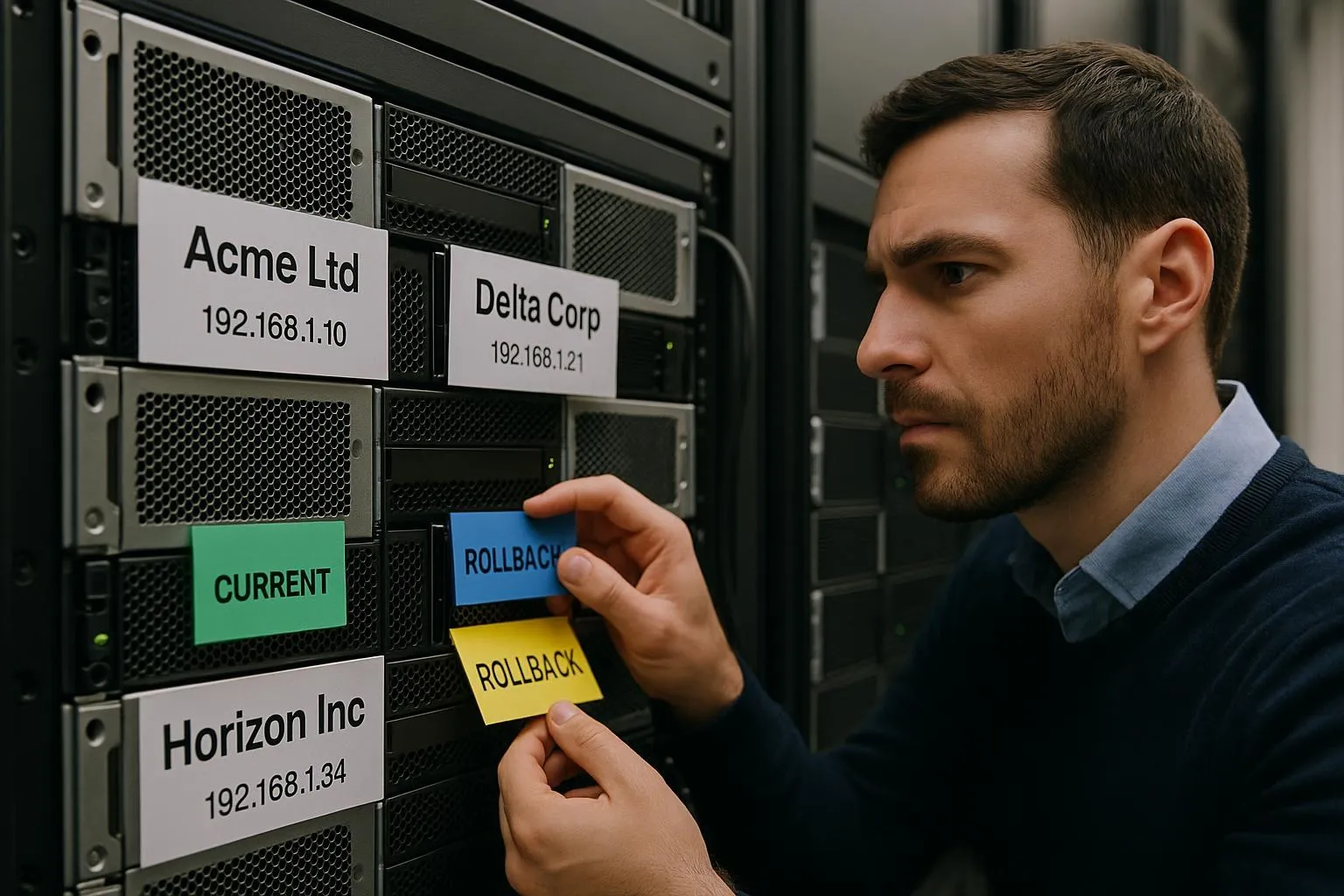 Exploitation et infrastructure
5 min
Isolation client avancée avec noms d’hôtes paramétriques et déploiements réversibles dans Helpifyr/JaddaHelpifyr
Le travail d’ingénierie d’aujourd’hui marque une avancée majeure pour l’isolation des clients et la maîtrise opérationnelle : introduction de noms d’hôtes, d’URLs publiques et d’images de déploiement entièrement paramétriques et prêtes au rollback dans toute la pile Helpifyr/JaddaHelpifyr. Ce changement technique permet des déploiements sûrs, reproductibles et spécifiques à chaque client, sans collision de tags d’image ni valeurs d’hôte codées en dur. Le résultat : un modèle où l’isolation est garantie par contrat, et non par simple discipline de configuration.
Lire