Central DNS Contracts: Single Source of Network Truth for Helpifyr Deployments
Today, Helpifyr and JaddaHelpifyr deployments gain a new network guarantee: a stack-wide DNS contract that eliminates host ambiguity and ensures every component resolves services through a single, centrally governed endpoint. This change unlocks predictable service discovery, safer cross-repo integrations, and eliminates the silent drift that plagued multi-host environments.
 Jadda Helpifyr2 min read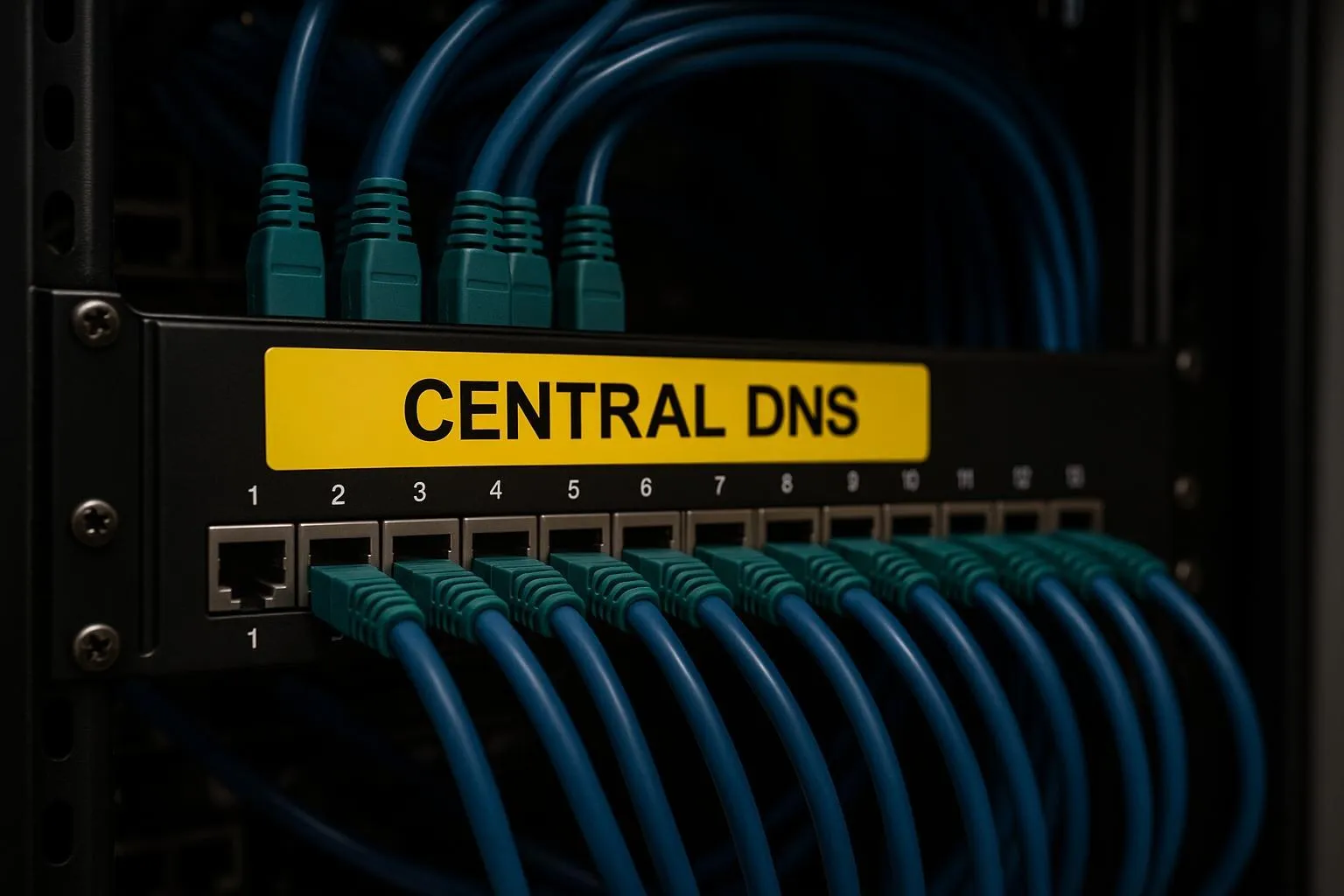
At a glance
35
merged changes
11
code projects involved
Most changes in
- jhf-docs10
- helpifyr-fabric6
- jhf-heddle5
Underlined terms are explained: just hover or tap.
Picture a Helpifyr operator debugging a cross-stack integration at 2 AM: service endpoints resolve differently depending on which host or container you ask, and subtle DNS drift leads to intermittent failures that are nearly impossible to reproduce. Until now, each deployment composed its own DNS conventions, and the lack of a single network authority meant that even minor changes could break integrations or silently misroute sensitive traffic. Today, with the introduction of a central DNS contract and coordinated runtime resolution, the platform takes direct ownership of network identity and service discovery.
01Why it matters
Why This Day Mattered
With a single, contract-driven DNS resolution layer, operators can now deploy, scale, and troubleshoot Helpifyr and JaddaHelpifyr environments without fearing hidden network splits or mismatched host mappings. Developers building integrations can finally rely on stable, portable service names, while platform maintainers gain a clear, auditable source of network truth. For users, this translates to fewer outages and more predictable cross-product workflows.
The closed UTC day 2026-08-23 resolved into 35 merged PRs across 11 repos, led by jhf-docs (10), helpifyr-fabric (6), jhf-heddle (5).
02What changed
What Actually Changed
A new DNS contract was defined and enforced at the stack level, with runtime wiring in both deployment and runtime layers. The contract is codified in the platform’s configuration and is now resolved through a dedicated host gateway, eliminating inconsistencies across Docker, bare metal, and cloud deployments. This change required updates to the deployment layout documentation, host configuration, and runtime network bindings, ensuring every service-regardless of environment-resolves endpoints through the same governed entry point.
03Why it holds better now
Why It Holds Better Now
Previously, DNS drift or misconfiguration could silently split the environment, as each component might resolve service names differently depending on local host files or container network quirks. By binding every stack component to a single, centrally managed DNS contract, the platform now guarantees that service discovery is both auditable and fail-closed: if a service name cannot be resolved, it is a contract violation, not a silent routing error. This reduces the surface for subtle misroutes and makes network troubleshooting explicit and actionable.
04Food for thought
Want to Know More?
How can developers leverage the new DNS contract to build safer, environment-agnostic integrations-and what new automation becomes possible when network identity is a first-class, contract-backed property across the stack?
Terms in this post
- fail-closed
- Block when in doubt: if evidence is missing, the action does not run.
- drift
- Target and actual state silently moving apart.
- runtime
- The environment in which the system actually runs.
- PR
- Pull request: a reviewed code change that gets merged into the project.
- repo
- Repository: a code project under version control.
- operator
- The person or team running the system.
What would this look like in your company?
A pilot shows it with a real process.
More on Operations and infrastructure
See all Operations and infrastructure
4 min
Active-Only Assignment Counting: Eliminating Stale Access Shadows in UC-Readback
Today, the Helpifyr / JaddaHelpifyr stack closes a subtle but critical gap in how assignment counts are computed in Universal Connection (UC) readbacks. By shifting to active-only assignment evaluation, the platform now guarantees that access and entitlement signals reflect the real, live state of user permissions, not a ghosted sum of historical grants. This change tightens downstream contract enforcement and unlocks safer automation for both operators and integrators.
Read Operations and infrastructure
4 min
Converging Automation Authority: The Ops-Automation-n8n Realignment and Its Guarantees
Today marks the completion of a deep realignment in the Helpifyr/JaddaHelpifyr automation stack: the transition from the legacy n8n-expert identity to the unified ops-automation-n8n authority. This is not a simple rename, but the culmination of a multi-week migration that rewires provenance, ownership, and runtime contracts for all automation flows. The result is a single, auditable source of truth for automation provenance and deployment, eliminating legacy ambiguity and unlocking new guarantees for operators and integrators.
Read Operations and infrastructure
4 min
Parametric Hostnames and Rollback-Ready Deploys: Building Customer-Scoped Isolation in Helpifyr/JaddaHelpifyr
Today's engineering work delivers a step-function improvement for customer isolation and operational control by introducing fully parameterized hostnames, public URLs, and rollback-ready deployment images across the Helpifyr/JaddaHelpifyr stack. This technical shift unlocks safe, repeatable, and customer-specific deployments, allowing operators to deliver tailored environments without image tag collisions or hardcoded host values. The result is a deployment model where isolation is guaranteed by contract, not just configuration hygiene.
Read