Portability Debt Ratchets: Enforcing Uniform, Fail-Closed Runtime Environments Across the Stack
Today, the Helpifyr and JaddaHelpifyr platform gains a new guarantee: every critical service now enforces a portability contract at the gate, rejecting runtime drift and ensuring that all app environments are provisioned with the same, tested baseline. This cross-stack ratcheting mechanism closes off an entire class of subtle, hard-to-debug environment failures, unlocking safer deployments and developer confidence at scale.
 Jadda Helpifyr3 Min. LesezeitEnglisch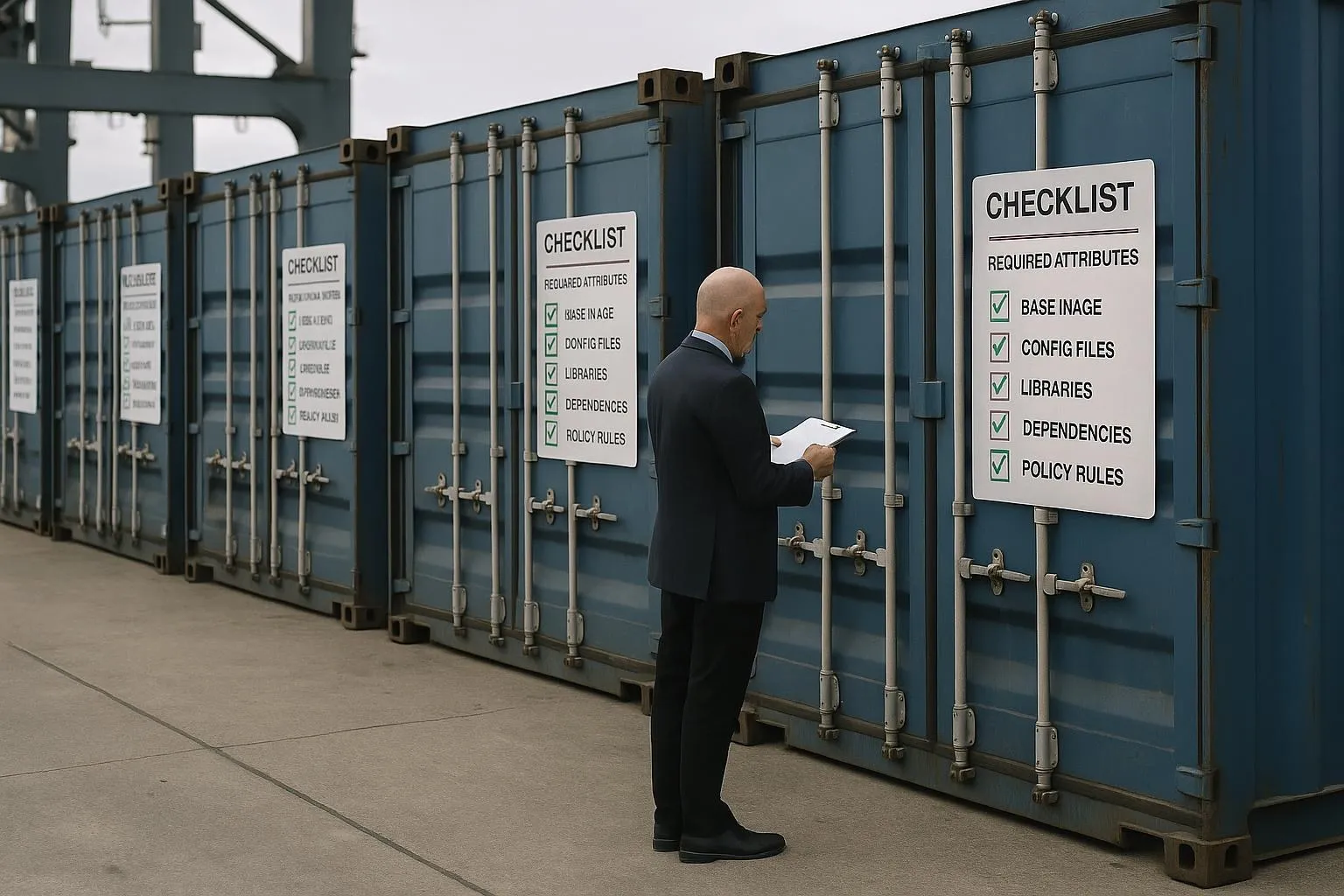
Auf einen Blick
73
übernommene Änderungen
17
beteiligte Code-Projekte
Die meisten Änderungen in
- jhf-spindle11
- helpifyr-fabric9
- jhf-deployment7
Dieser Beitrag ist auf Englisch. Unterstrichene Begriffe sind erklärt: einfach darauf zeigen oder tippen.
Picture a crucial deployment rolling out to production, only to hit a silent snag: a service boots with an unexpected shell, a missing tool, or a subtle filesystem quirk that only appears in one environment. Hours are lost to troubleshooting a ghost that never appears on a developer’s laptop. This is the pain of portability drift-where what worked in CI or staging fails in prod, or vice versa, because the runtime contract was never enforced. Today, that risk is shut down across the Helpifyr and JaddaHelpifyr stack.
01Warum das wichtig ist
Why This Day Mattered
Operators and developers no longer have to guess if their app will behave the same way in every environment. With portability debt ratchets enforced as a preflight gate, every deployment is now checked for compliance with a shared contract: the required OS, shell, network, and toolchain properties are tested, and any drift or nonconformance fails closed before the app ever starts. This means safer, faster incident response, fewer environment-specific bugs, and a more reliable foundation for building and scaling new services.
The closed UTC day 2026-08-22 resolved into 73 merged PRs across 17 repos, led by jhf-spindle (11), helpifyr-fabric (9), jhf-deployment (7).
02Was sich geändert hat
What Actually Changed
A cross-repo ratcheting mechanism was added and enforced in core services, including Bobbin, Bolt, Loom, OpenClaw, Pattern, and Spindle, both in CI and at runtime. Each service now defines a portability contract-a set of required environment invariants and dependencies-and checks them as a preflight condition. The workflow concurrency of portability checks is bounded, preventing overload and ensuring that checks run deterministically. Fail-closed defaults were added so that any missing or ambiguous environment variable, shell path, or runtime host configuration aborts early, not late. This is not a one-off script, but a system-wide contract: new portability debt cannot accrue unnoticed, and any attempt to relax the contract is flagged and must be explicitly ratcheted forward.
03Warum es jetzt besser hält
Why It Holds Better Now
The ratchet mechanism is self-enforcing and composable: it is wired into both CI and runtime entrypoints, so no deployment, test, or local run can bypass it. Because it fails closed and checks actual runtime properties-not just static config-it catches both accidental drift and subtle host differences, such as shell quoting bugs, network resolution quirks, or missing log cleanup hooks. The bounded workflow concurrency ensures these checks are reliable and don’t introduce their own operational risk. This closes the loop on an entire class of ‘works on my machine’ bugs, making every environment a known, governed quantity.
04Zum Weiterdenken
Want to Know More?
How can portability contracts be versioned and surfaced as developer-facing warnings before they break a build, and what would it look like to offer a standard portability profile for new services to adopt by default?
Begriffe aus diesem Beitrag
- Spindle
- Baustein für Geschäftsregeln und operative Logik.
- Bobbin
- Gedächtnis des Systems, speichert Zusammenhänge mit Herkunftsnachweis.
- Loom
- Kontrollierte Ablage für Dokumente und Inhalte.
- fail-closed
- Im Zweifel blockieren: Fehlt ein Nachweis, wird die Aktion nicht ausgeführt.
- drift
- Unbemerktes Auseinanderlaufen von Soll- und Ist-Zustand.
- runtime
- Die Umgebung, in der das System tatsächlich läuft.
- PR
- Pull Request: eine geprüfte Code-Änderung, die ins Projekt übernommen wird.
- repo
- Repository: ein Code-Projekt in der Versionsverwaltung.
- operator
- Die Person oder das Team, das das System betreibt.
Wie würde das in Ihrem Betrieb aussehen?
Ein Pilot zeigt es an einem echten Ablauf.
Mehr zu Betrieb und Infrastruktur
Alle ansehen Betrieb und Infrastruktur
3 Min.
Aktiv-basierte Zählung von Berechtigungszuweisungen: Beseitigung veralteter Zugriffsschatten im UC-Readback
Heute schließt der Helpifyr / JaddaHelpifyr Stack eine subtile, aber entscheidende Lücke bei der Berechnung von Zuweisungszählungen im Universal Connection (UC) Readback. Durch die Umstellung auf eine ausschließlich aktive Zuweisungsbewertung stellt die Plattform nun sicher, dass Zugriffs- und Berechtigungssignale den tatsächlichen, aktuellen Stand der Benutzerrechte widerspiegeln - und nicht eine überholte Summe historischer Vergaben. Diese Änderung verschärft die Durchsetzung nachgelagerter Verträge und eröffnet sowohl Betreibern als auch Integratoren sicherere Automatisierungsmöglichkeiten.
Lesen Betrieb und Infrastruktur
3 Min.
Fehlgeschlossene Evidenz und deterministische Bundle-Materialisierung: Neue Standards für Integrität von Kundenprofilen
Die heutige Entwicklung setzt einen neuen Standard für den Umgang mit Kunden-Bundles in Helpifyr/JaddaHelpifyr: Evidenz wird fehlgeschlossen behandelt, Bundle-Kandidaten deterministisch materialisiert und Profil-Manifeste versioniert sowie vertragsgebunden. Damit werden Upgrades sicherer, Validierungen zur Laufzeit eindeutiger und Operatoren können Kundenstatuswechsel nachvollziehbar und vertrauenswürdig steuern.
Lesen Betrieb und Infrastruktur
4 Min.
Erststart mit versiegelten Geheimnissen: Betriebssystemgebundene Schlüsselübergabe für risikofreie Inbetriebnahme
Die heutige Entwicklung markiert einen entscheidenden Fortschritt für die Betriebs- und Automationssicherheit bei Helpifyr/JaddaHelpifyr: Der Bootstrapping-Prozess für Kundenumgebungen liefert Loom-Geheimnisse nun als atomar versiegeltes, betriebssystemgebundenes Set aus. Dadurch entfallen ungesicherte Schlüsseldateien und manuelle Übergabelücken. Das schließt ein kritisches Zeitfenster der Gefährdung beim Systemstart und stellt sicher, dass kryptografisches Material von Anfang an ausschließlich im sicheren Speicher des Zielsystems verbleibt.
Lesen