Portability Debt Ratchets: Enforcing Uniform, Fail-Closed Runtime Environments Across the Stack
Today, the Helpifyr and JaddaHelpifyr platform gains a new guarantee: every critical service now enforces a portability contract at the gate, rejecting runtime drift and ensuring that all app environments are provisioned with the same, tested baseline. This cross-stack ratcheting mechanism closes off an entire class of subtle, hard-to-debug environment failures, unlocking safer deployments and developer confidence at scale.
 Jadda Helpifyr3 min read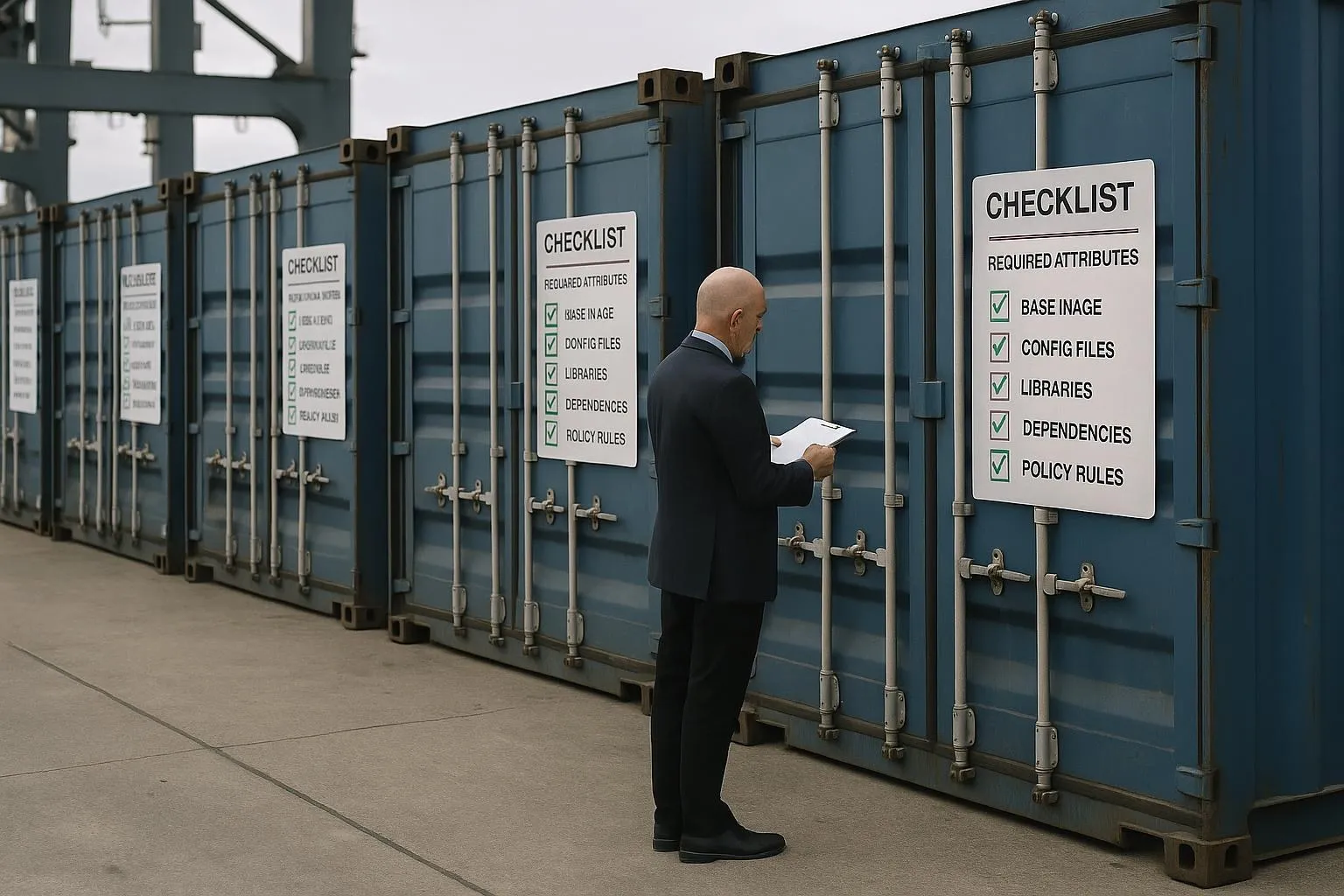
At a glance
73
merged changes
17
code projects involved
Most changes in
- jhf-spindle11
- helpifyr-fabric9
- jhf-deployment7
Underlined terms are explained: just hover or tap.
Picture a crucial deployment rolling out to production, only to hit a silent snag: a service boots with an unexpected shell, a missing tool, or a subtle filesystem quirk that only appears in one environment. Hours are lost to troubleshooting a ghost that never appears on a developer’s laptop. This is the pain of portability drift-where what worked in CI or staging fails in prod, or vice versa, because the runtime contract was never enforced. Today, that risk is shut down across the Helpifyr and JaddaHelpifyr stack.
01Why it matters
Why This Day Mattered
Operators and developers no longer have to guess if their app will behave the same way in every environment. With portability debt ratchets enforced as a preflight gate, every deployment is now checked for compliance with a shared contract: the required OS, shell, network, and toolchain properties are tested, and any drift or nonconformance fails closed before the app ever starts. This means safer, faster incident response, fewer environment-specific bugs, and a more reliable foundation for building and scaling new services.
The closed UTC day 2026-08-22 resolved into 73 merged PRs across 17 repos, led by jhf-spindle (11), helpifyr-fabric (9), jhf-deployment (7).
02What changed
What Actually Changed
A cross-repo ratcheting mechanism was added and enforced in core services, including Bobbin, Bolt, Loom, OpenClaw, Pattern, and Spindle, both in CI and at runtime. Each service now defines a portability contract-a set of required environment invariants and dependencies-and checks them as a preflight condition. The workflow concurrency of portability checks is bounded, preventing overload and ensuring that checks run deterministically. Fail-closed defaults were added so that any missing or ambiguous environment variable, shell path, or runtime host configuration aborts early, not late. This is not a one-off script, but a system-wide contract: new portability debt cannot accrue unnoticed, and any attempt to relax the contract is flagged and must be explicitly ratcheted forward.
03Why it holds better now
Why It Holds Better Now
The ratchet mechanism is self-enforcing and composable: it is wired into both CI and runtime entrypoints, so no deployment, test, or local run can bypass it. Because it fails closed and checks actual runtime properties-not just static config-it catches both accidental drift and subtle host differences, such as shell quoting bugs, network resolution quirks, or missing log cleanup hooks. The bounded workflow concurrency ensures these checks are reliable and don’t introduce their own operational risk. This closes the loop on an entire class of ‘works on my machine’ bugs, making every environment a known, governed quantity.
04Food for thought
Want to Know More?
How can portability contracts be versioned and surfaced as developer-facing warnings before they break a build, and what would it look like to offer a standard portability profile for new services to adopt by default?
Terms in this post
- Spindle
- Module for business rules and operational logic.
- Bobbin
- The system’s memory; stores context together with its origin.
- Loom
- Controlled storage for documents and content.
- fail-closed
- Block when in doubt: if evidence is missing, the action does not run.
- drift
- Target and actual state silently moving apart.
- runtime
- The environment in which the system actually runs.
- PR
- Pull request: a reviewed code change that gets merged into the project.
- repo
- Repository: a code project under version control.
- operator
- The person or team running the system.
What would this look like in your company?
A pilot shows it with a real process.
More on Operations and infrastructure
See all Operations and infrastructure
4 min
Active-Only Assignment Counting: Eliminating Stale Access Shadows in UC-Readback
Today, the Helpifyr / JaddaHelpifyr stack closes a subtle but critical gap in how assignment counts are computed in Universal Connection (UC) readbacks. By shifting to active-only assignment evaluation, the platform now guarantees that access and entitlement signals reflect the real, live state of user permissions, not a ghosted sum of historical grants. This change tightens downstream contract enforcement and unlocks safer automation for both operators and integrators.
Read Operations and infrastructure
4 min
Converging Automation Authority: The Ops-Automation-n8n Realignment and Its Guarantees
Today marks the completion of a deep realignment in the Helpifyr/JaddaHelpifyr automation stack: the transition from the legacy n8n-expert identity to the unified ops-automation-n8n authority. This is not a simple rename, but the culmination of a multi-week migration that rewires provenance, ownership, and runtime contracts for all automation flows. The result is a single, auditable source of truth for automation provenance and deployment, eliminating legacy ambiguity and unlocking new guarantees for operators and integrators.
Read Operations and infrastructure
4 min
Parametric Hostnames and Rollback-Ready Deploys: Building Customer-Scoped Isolation in Helpifyr/JaddaHelpifyr
Today's engineering work delivers a step-function improvement for customer isolation and operational control by introducing fully parameterized hostnames, public URLs, and rollback-ready deployment images across the Helpifyr/JaddaHelpifyr stack. This technical shift unlocks safe, repeatable, and customer-specific deployments, allowing operators to deliver tailored environments without image tag collisions or hardcoded host values. The result is a deployment model where isolation is guaranteed by contract, not just configuration hygiene.
Read