Regulatory Gates as Runtime Contracts: Enforced Boundaries for Broker-Core Activation
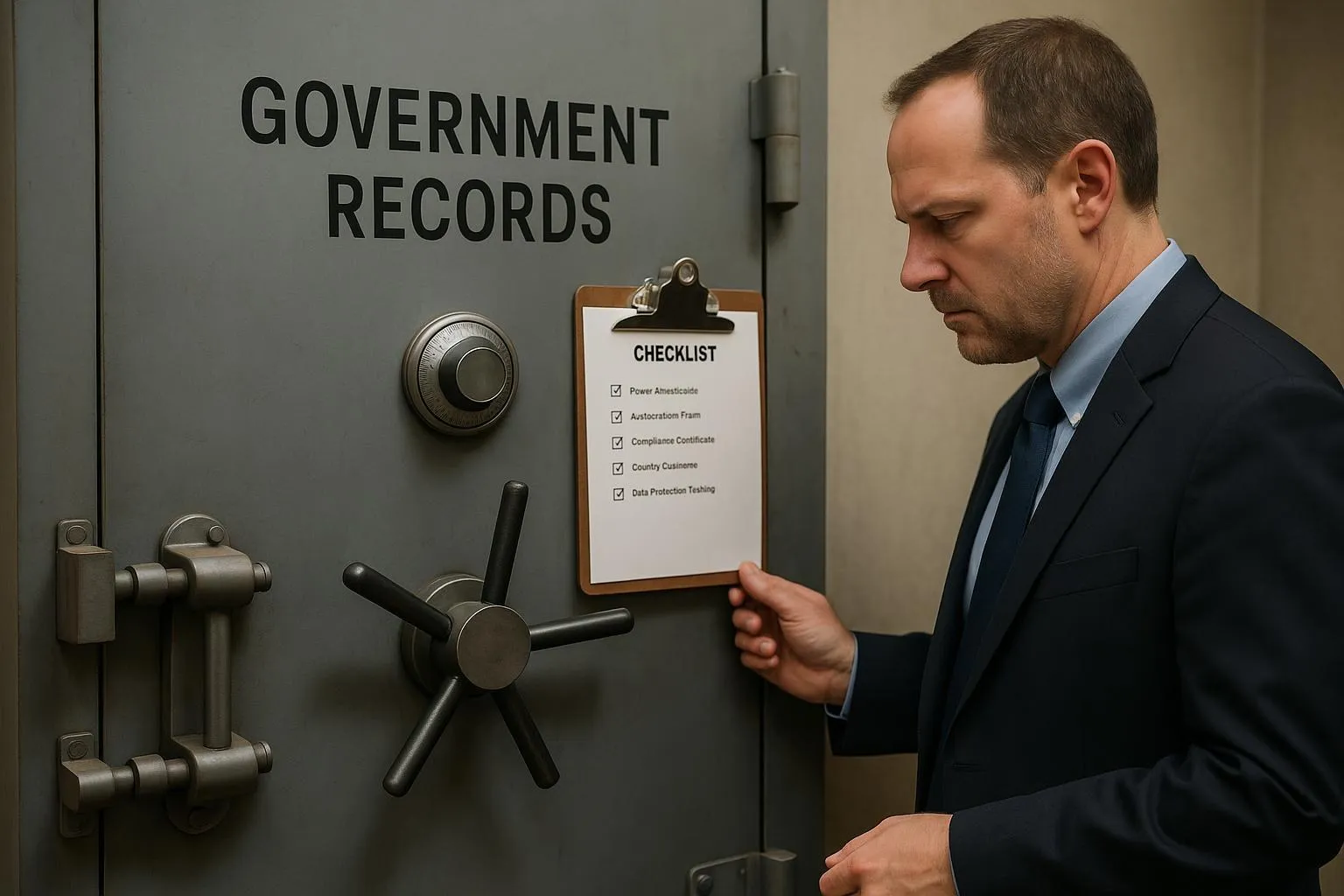
Today, the Helpifyr / JaddaHelpifyr stack operationalizes regulatory enforcement as a runtime contract, not a policy afterthought: persistent Broker-Core registries and product taxonomies now gate activation and workflow coverage by jurisdiction, with fail-closed boundaries that surface and halt incomplete state before any pilot or publish path can proceed.
 Jadda Helpifyr2 min read
At a glance
64
merged changes
14
code projects involved
Most changes in
- insurance-broker-core17
- helpifyr-fabric11
- jhf-heddle9
Underlined terms are explained: just hover or tap.
Imagine a new insurance product is ready to launch, but the underlying regulatory registry for its jurisdiction is incomplete or out of sync. In the old world, this gap might only surface after partial activation, leaving operators scrambling to patch issues post-hoc and risking noncompliance. Now, the platform refuses to even begin the activation workflow unless every regulatory mandate and taxonomy is proven present and correct, closing the door on accidental exposure and making compliance a prerequisite, not a postmortem.
01Why it matters
Why This Day Mattered
This shift means operators and developers can no longer accidentally activate or publish a product or workflow that is missing jurisdictional coverage or regulatory evidence. Instead of catching gaps downstream, the stack blocks incomplete registry or taxonomy state at the boundary, unlocking safer pilot runs and confidence for marketplace readiness. Product launches and regulatory reviews become safer and faster because the system proves its own readiness before any exposure.
The closed UTC day 2026-08-21 resolved into 64 merged PRs across 14 repos, led by insurance-broker-core (17), helpifyr-fabric (11), jhf-heddle (9).
02What changed
What Actually Changed
The insurance-broker-core now requires explicit mandate activation scopes and wires regulatory inventory coverage directly into the activation workflow. A persistent Broker-Core registry is gated before any Advice or Adapter pilot can apply, with preflight findings preserved and surfaced. The product taxonomy is seeded by jurisdiction and enforced at install, and regulatory ACL callsites are ratcheted for security. Fail-closed enforcement boundaries are now runtime contracts, not just documentation. Across the deployment path, the stack materializes these checks as preconditions: workflows and pilots cannot proceed unless all regulatory and jurisdictional data is present, complete, and proven.
03Why it holds better now
Why It Holds Better Now
By enforcing regulatory and jurisdictional boundaries at the runtime contract level, the platform eliminates the risk of silent misconfiguration or accidental activation in noncompliant states. Operators and developers are forced to resolve missing evidence before exposure, and every activation is backed by a proven, jurisdiction-scoped registry and taxonomy. This guarantee is not just procedural but technical: the stack will not proceed unless the boundary is satisfied, making compliance an enforced property of the system.
04Food for thought
Want to Know More?
How might these runtime regulatory contracts be extended to dynamically adapt as new jurisdictions or mandates appear, enabling zero-downtime expansion for global product launches?
Terms in this post
- fail-closed
- Block when in doubt: if evidence is missing, the action does not run.
- runtime
- The environment in which the system actually runs.
- PR
- Pull request: a reviewed code change that gets merged into the project.
- repo
- Repository: a code project under version control.
- operator
- The person or team running the system.
What would this look like in your company?
A pilot shows it with a real process.
More on Operations and infrastructure
See all Operations and infrastructure
4 min
Shadow-Truth Verification: Closing the Gap Between Live State and Declarative Plans in Fabric v4.1
Today marks a concrete step toward runtime alignment between what the platform believes is true and what actually governs its operation. With the introduction of the Shadow-Truth Verifier for Skill Platform v4.1, the Helpifyr / JaddaHelpifyr stack gains a new internal contract: the ability to cross-check live operational state against the declaratively authored plan, surfacing drift and latent misalignments before they can manifest as runtime failures or silent policy violations.
Read Operations and infrastructure
3 min
Per-Install PID Limits: Defusing EAGAIN Failures at the Edge
A targeted limit on process IDs per Openclaw gateway install now neutralizes a subtle class of resource exhaustion errors, giving operators a precise control lever and developers a reproducible contract for process spawning across environments.
Read Operations and infrastructure
3 min
Automated Process Cleanup and Targeted Output: Eliminating Zombie States in Refresh Workflows
Today's engineering work eliminates a critical class of stuck processes during site refresh and test runs, replacing silent hangs with explicit termination and actionable output. By integrating process tree cleanup and partial log extraction, we have converted ambiguous, resource-leaking zombie states into fast-failing, evidence-rich events. This shift not only improves operator visibility and recovery but raises the bar for what developers can expect from automated test and refresh orchestration across the Helpifyr / JaddaHelpifyr stack.
Read