 Helpifyr
Helpifyr Voice
One call is enough. The next step happens.
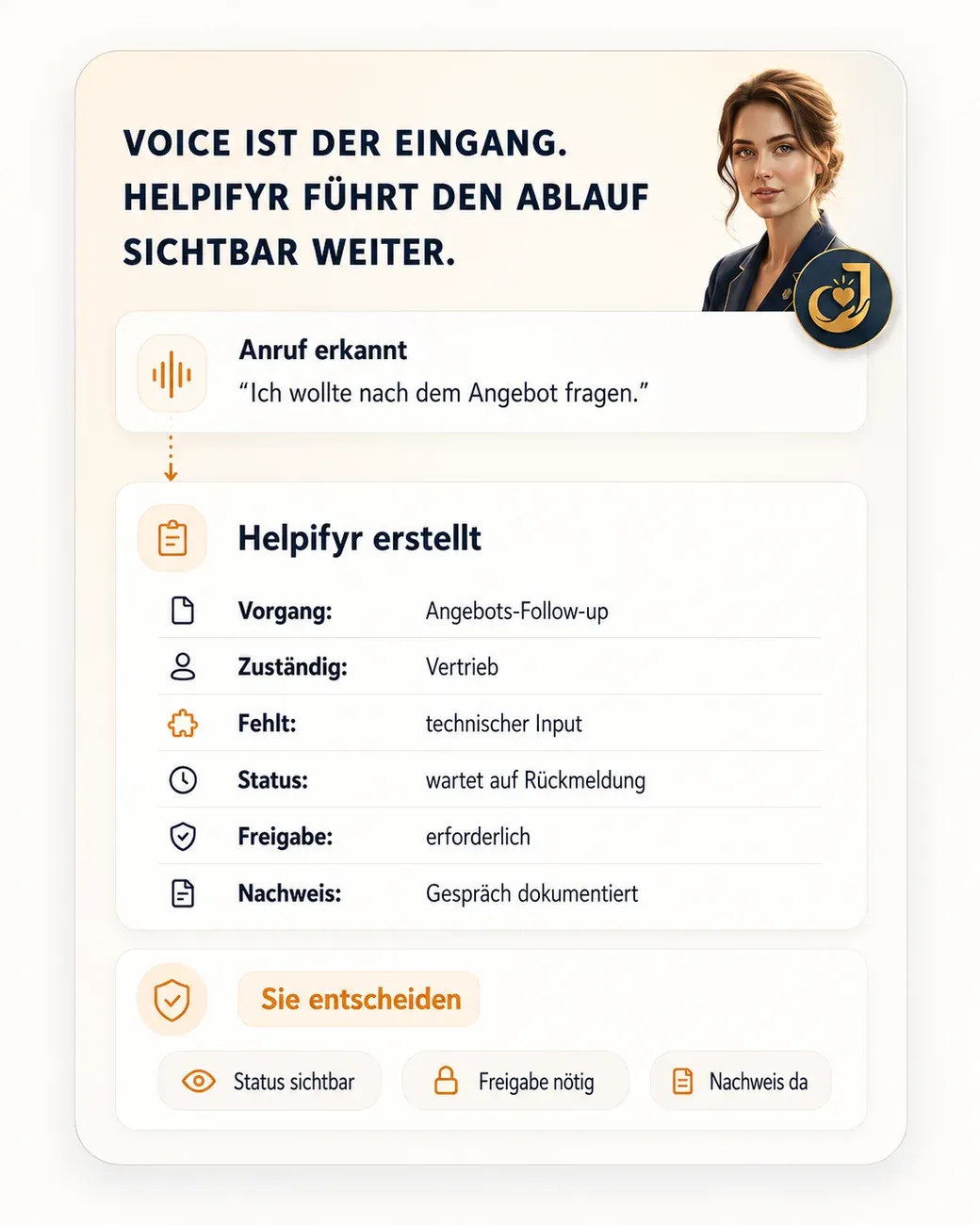
Jadda answers the call, recognises the request and turns it into a ticket, a task, a call-back or an approval. With evidence, and people stay in control.
- Human approval
- Evidence
- Clear ownership
- Existing systems can be connected
01The problem
Calls aren’t lost when the phone rings, but afterwards.
The request is noted, passed on or forgotten. Ownership stays unclear, follow-up stalls and evidence is missing later. Helpifyr Voice starts with the conversation but doesn’t end with the summary.
Typical voice AI
- Call
- Answer
- Summary
- Afterwards: manual work again
Helpifyr Voice
- Call and recognised request
- A task or ticket is created
- Approval for critical steps
- Evidence and status stay visible
02The process
How the same case continues
- 01
A call comes in
The request is captured before anything gets lost.
- 02
Jadda recognises the request
Call-back, support, quote status or service request are classified clearly.
- 03
A task or ticket is created
The next step becomes visible and gets a clear owner.
- 04
Critical steps await approval
Price commitments, external messages or contract changes need a human decision.
- 05
Evidence stays visible
Later you can see who approved or passed on what and when.
- 06
Status stays traceable
Open, waiting, escalated or done: visible to the team at all times.
03Example
An everyday case
- A customer calls about the status of their quote.
- Jadda recognises: quote follow-up.
- Helpifyr creates a task with an owner.
- A price commitment waits for human approval.
- Evidence and status stay visible.
The result
The customer request doesn’t become a lost note. The next step is clear before anyone has to call again. Critical statements stay under human control.
04Getting started
Where teams typically start
For service, sales, reception, field service and all teams with recurring customer calls.
Call handling with call-back
When requests come in but call-backs get lost in daily work.
Support request with ticket
When a call needs to become a visible service case.
Quote or lead follow-up
When the next sales step must not stall.
Order or service request
When a clean process has to follow the call.
Appointment or call-back request
When a request should be assigned to a person or task.
Escalation to a person
When critical cases must deliberately reach a decision-maker.
05Limits
You stay in control
- No price commitment without approval
- No contract change without approval
- No legal, financial or tax commitment without approval
- No personal information without checking role and permissions
- No payment, submission or external action without a human decision
Start with one clear call process.
One request, one target system, one human approval and visible evidence are enough to begin.