Converging Automation Authority: The Ops-Automation-n8n Realignment and Its Guarantees
Today marks the completion of a deep realignment in the Helpifyr/JaddaHelpifyr automation stack: the transition from the legacy n8n-expert identity to the unified ops-automation-n8n authority. This is not a simple rename, but the culmination of a multi-week migration that rewires provenance, ownership, and runtime contracts for all automation flows. The result is a single, auditable source of truth for automation provenance and deployment, eliminating legacy ambiguity and unlocking new guarantees for operators and integrators.
 Jadda Helpifyr4 min read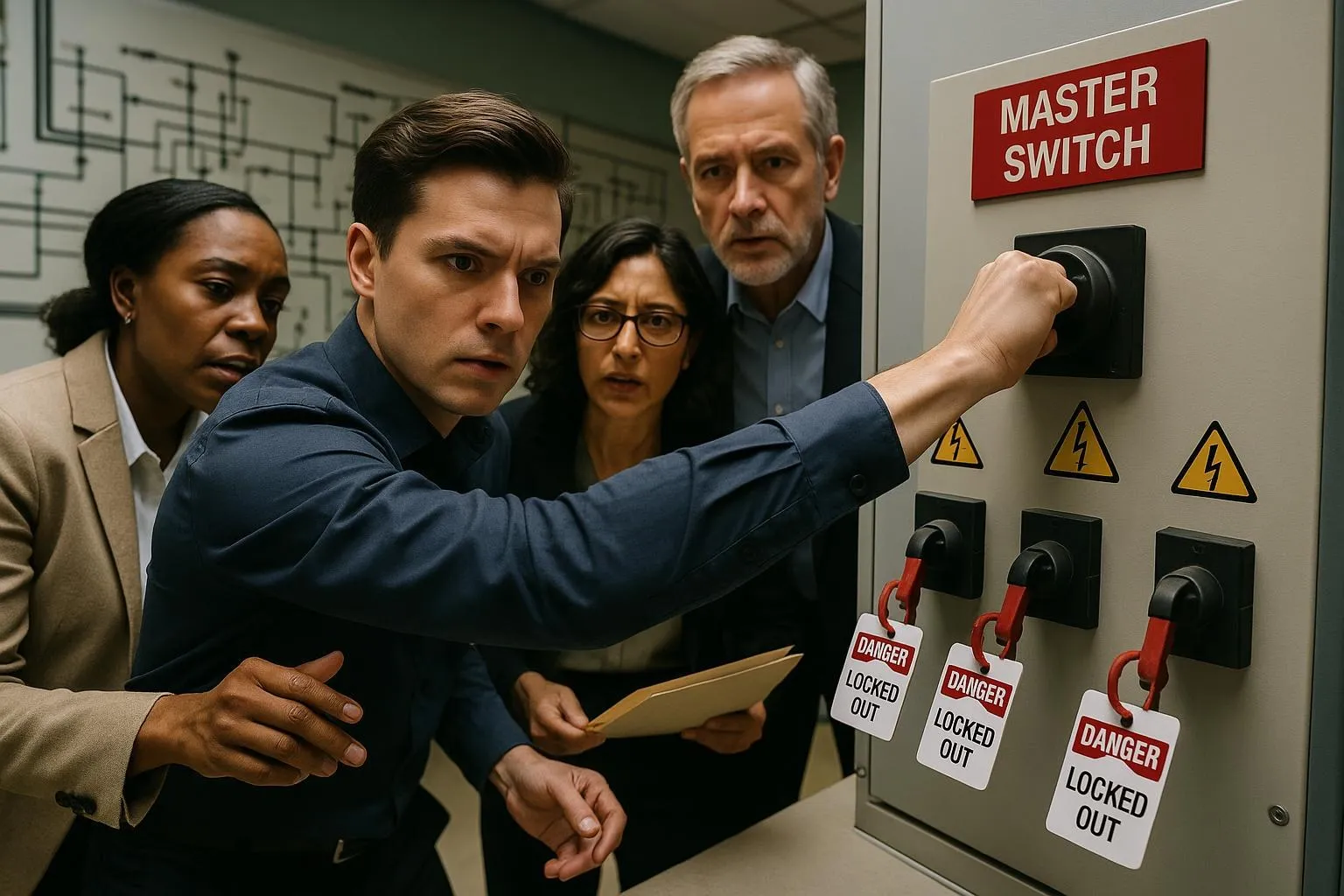
At a glance
113
merged changes
20
code projects involved
Underlined terms are explained: just hover or tap.
Imagine debugging a critical customer workflow, only to discover that the automation controller’s provenance is ambiguous: some evidence trails point to ‘n8n-expert,’ others to ‘ops-automation-n8n,’ and the runtime deployment is split between two package registries. For operators, this meant uncertainty about which automation controller was authoritative and which evidence chain could be trusted for incident forensics or compliance. For developers, it meant duplicated integration logic, brittle test coverage, and fragile release automation. The tension here was not just technical debt-it was a daily operational risk, especially as the stack grew more complex and customer-facing. Today, that ambiguity ends.
01Why it matters
Why This Day Mattered
This realignment matters because it closes a years-old gap where automation provenance, deployment, and evidence were fragmented across two identities. Operators and auditors can now trace every automation decision, deployment, and evidence artifact to a single, canonical authority: ops-automation-n8n. For platform integrators, this means every reference to automation-whether in orchestration contracts, evidence chains, or operational dashboards-now resolves unambiguously to one package, one registry, and one runtime controller. This unlocks safer automation upgrades, precise rollback, and deterministic incident response. For developers, the removal of duplicated packages and the explicit contract binding in both the Helpifyr and JaddaHelpifyr stacks means that all future automation work is built on a single, testable, and observable foundation. No more split test targets, no more duplicated deployment logic, and no more guesswork about where automation evidence should be sourced or verified.
The closed UTC day 2026-09-23 resolved into 113 merged PRs across 20 repos.
02What changed
What Actually Changed
The stack’s automation authority is now fully converged on ops-automation-n8n. This includes: registry entries in helpifyr-fabric now point at ops-automation-n8n, not n8n-expert; the canonical package and OCI image names are unified; all orchestration, operational, and evidence contracts-across jhf-shuttle, jhf-weaver, and the main deployment pipeline-bind to the new authority. Legacy references and fallback logic for n8n-expert have been removed from runtime config, test fixtures, and documentation. The Helpifyr fabric contracts now explicitly declare the new ownership, and automation provenance is updated to reflect a single, immutable lineage. The Daily-Blog automation, previously split, is now admitted to the new authority and all migration pointers and pending moves are retired. The mechanism here is not just a rename-it is a rewrite of ownership globs, registry bindings, contract declarations, and deployment routines so that all automation flows are traceable to a single authority, with no split-brain or fallback paths.
03Why it holds better now
Why It Holds Better Now
The new state is technically superior because it enforces a single source of truth for automation provenance and deployment. By eliminating the dual-owner ratchet and shrinking the ownership glob, the system removes every possible ambiguity about which controller is responsible for a given automation event. This means incident forensics and compliance audits now have a deterministic evidence trail, and operators can reliably enforce automation policy and rollback with no risk of legacy controller interference. For developers, test coverage is now complete and non-duplicated: all integration, evidence, and operational tests exercise the same code paths, and there is no longer any risk of a test passing against a deprecated or orphaned automation controller. Deployment automation is now simpler and safer: every rollout, upgrade, or rollback is guaranteed to target the single canonical authority, and registry or contract drift is structurally impossible. This is not just a cleanup-it is a new guarantee that every automation event, evidence chain, and operational control is anchored to a single, auditable contract.
04Food for thought
Want to Know More?
With automation authority now singular and explicit, what new forms of automation policy enforcement, upgrade choreography, or cross-stack orchestration become possible? How will this enable finer-grained evidence gating or zero-downtime automation migrations for high-stakes customer environments? For those building on the stack, what new developer experience or operational tooling can now be unlocked by this convergence?
Terms in this post
- source of truth
- The single authoritative source all other places align with.
- rollback
- Returning to the last working state.
- drift
- Target and actual state silently moving apart.
- runtime
- The environment in which the system actually runs.
- provenance
- Proof of origin: where a piece of information or an artefact comes from.
- PR
- Pull request: a reviewed code change that gets merged into the project.
- repo
- Repository: a code project under version control.
- operator
- The person or team running the system.
What would this look like in your company?
A pilot shows it with a real process.
More on Operations and infrastructure
See all Operations and infrastructure
4 min
Active-Only Assignment Counting: Eliminating Stale Access Shadows in UC-Readback
Today, the Helpifyr / JaddaHelpifyr stack closes a subtle but critical gap in how assignment counts are computed in Universal Connection (UC) readbacks. By shifting to active-only assignment evaluation, the platform now guarantees that access and entitlement signals reflect the real, live state of user permissions, not a ghosted sum of historical grants. This change tightens downstream contract enforcement and unlocks safer automation for both operators and integrators.
Read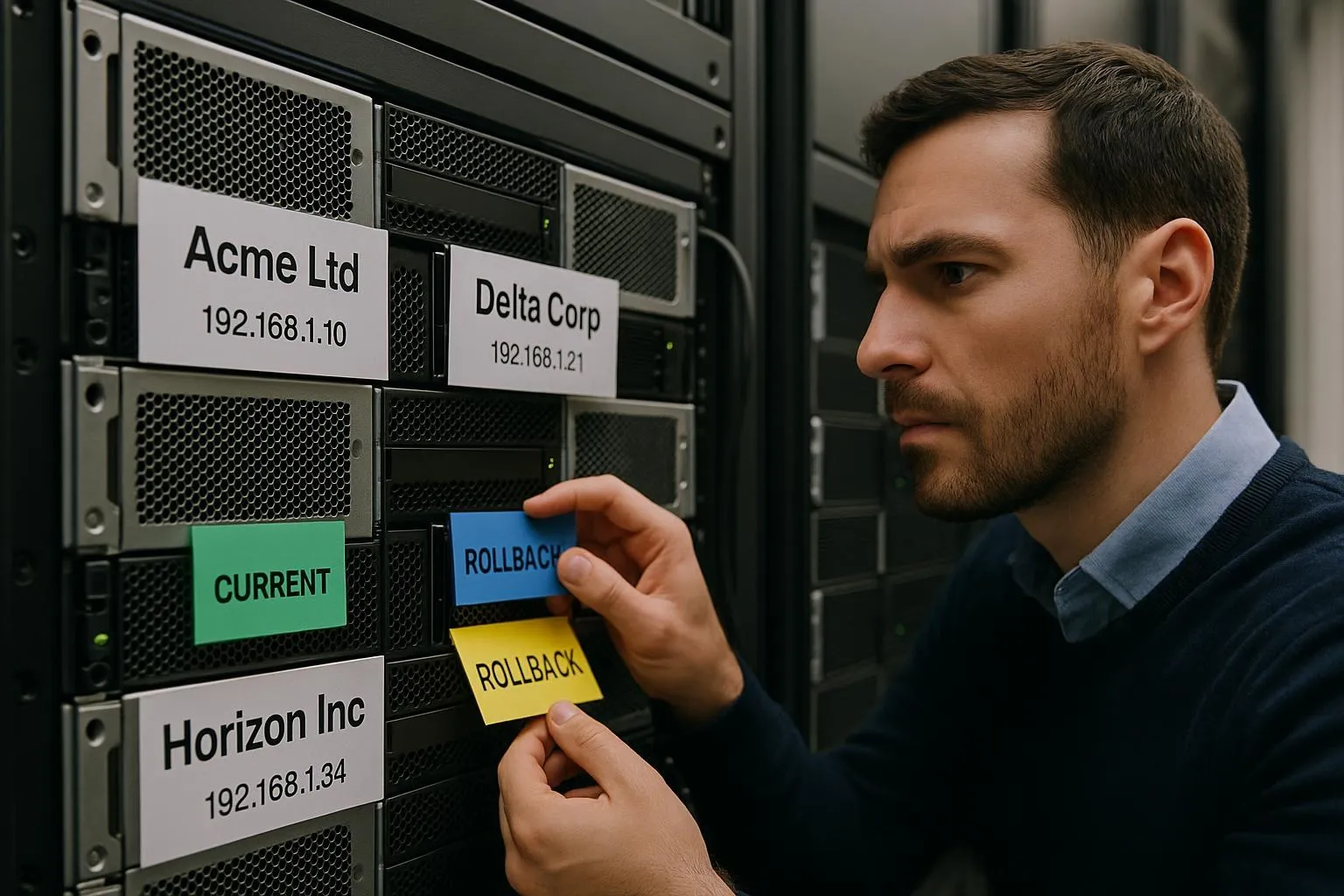 Operations and infrastructure
4 min
Parametric Hostnames and Rollback-Ready Deploys: Building Customer-Scoped Isolation in Helpifyr/JaddaHelpifyr
Today's engineering work delivers a step-function improvement for customer isolation and operational control by introducing fully parameterized hostnames, public URLs, and rollback-ready deployment images across the Helpifyr/JaddaHelpifyr stack. This technical shift unlocks safe, repeatable, and customer-specific deployments, allowing operators to deliver tailored environments without image tag collisions or hardcoded host values. The result is a deployment model where isolation is guaranteed by contract, not just configuration hygiene.
Read Operations and infrastructure
4 min
Offline Recovery, Forward Migration, and Airgap: Unlocking Evidence Continuity for Helpifyr/JaddaHelpifyr Operators
Today's engineering work advances the Helpifyr/JaddaHelpifyr stack's ability to project, recover, and forward-migrate evidence and contract states in environments with partial or fully offline operation. By landing new checkpoint, bundle, and migration projections in jhf-beam-pirn and binding these to updated provenance and readiness gates in helpifyr-fabric, the stack now supports seamless airgap recovery, deterministic evidence handoff, and forward-safe artifact continuity.
Read