Lineage Locks: Field-Level Audit Integrity Now Enforced Across the Stack
Today, Helpifyr and JaddaHelpifyr land a lineage and audit-integrity gate that makes every field-level data transformation traceable, enforceable, and verifiable-unlocking downstream guarantees for compliance, debugging, and safe automation.
 Jadda Helpifyr3 min de lectureAnglais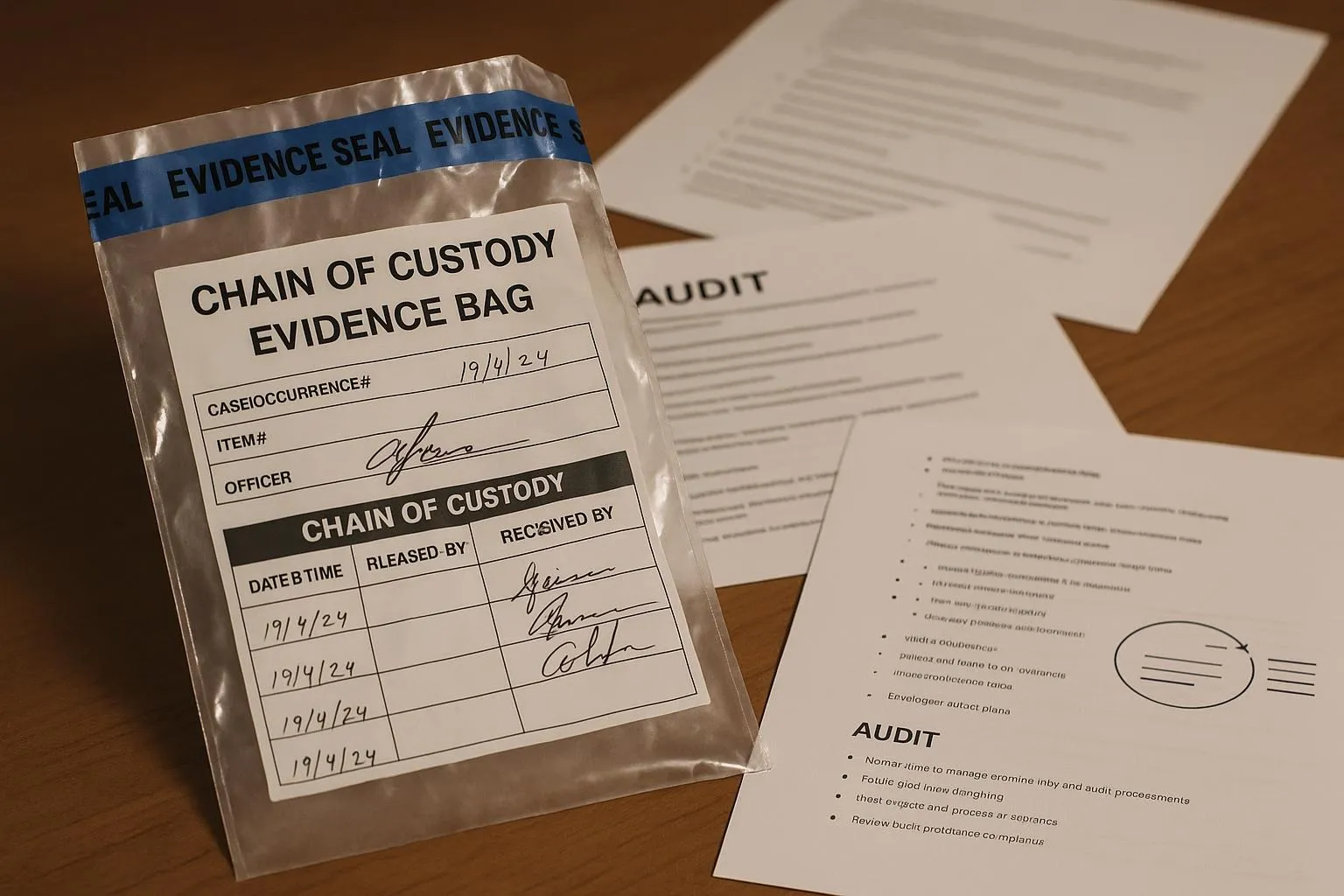
En un coup d’œil
123
modifications intégrées
19
projets de code concernés
Le plus de modifications dans
- helpifyr-fabric42
- jhf-openclaw-env30
- jhf-bobbin7
Cet article est en anglais. Les termes soulignés sont expliqués : survolez-les ou touchez-les.
Imagine a critical revenue number in your platform, sourced from multiple upstream systems, transformed by a web of jobs, and surfaced in a compliance dashboard. Now imagine discovering a discrepancy-was it a bad sync, a silent code change, or an untracked manual fix? Without field-level lineage and audit integrity, isolating the root cause can mean days of forensics and guesswork. Today, that uncertainty ends: every materialized field now carries a verifiable chain of custody, with explicit lineage checks and audit-integrity gates built into the platform’s core.
01Pourquoi c’est important
Why This Day Mattered
Developers and operators can now trust that every surfaced value-especially those that power financial, compliance, or operational automation-can be traced back through every transformation and workflow step, with explicit evidence of each hop. This unlocks safer automation, faster debugging, and demonstrable compliance for every downstream consumer-no more black-box data flows or unexplainable drift.
The closed UTC day 2026-07-28 resolved into 123 merged PRs across 19 repos, led by helpifyr-fabric (42), jhf-openclaw-env (30), jhf-bobbin (7).
02Ce qui a changé
What Actually Changed
A new field-lineage and audit-integrity gate is now enforced at the contract and runtime level in Helpifyr Fabric. Every materialized field must now declare and pass lineage checks: transformations, merges, and projections are accompanied by deterministic provenance evidence, and the system blocks acceptance if lineage or audit integrity is broken. This is not just a schema check: runtime evidence is captured, verified, and surfaced as canonical proof, and downstream consumers (including integrations and reporting surfaces) are required to consume only lineage-verified data. The mechanism is enforced through new contract fields, runtime gates, and test coverage wired into CI.
03Pourquoi c’est plus solide
Why It Holds Better Now
By binding field-level data to explicit, verifiable lineage and audit-integrity gates, the platform eliminates silent drift and untracked mutations. Any change-whether upstream, in transformation logic, or at the integration layer-must now leave a traceable, reviewable record. This means errors and regressions become immediately visible and attributable, not latent or silent. For regulated or mission-critical domains, this guarantee is the difference between explainable, provable operations and risky, opaque data flows.
04Pour aller plus loin
Want to Know More?
How can downstream automation-like compliance workflows or customer-facing analytics-now leverage these lineage and audit-integrity guarantees to build safer, self-healing processes? What new classes of debugging and compliance tooling become possible when every field is provably traceable?
Termes de cet article
- Fabric
- Module des règles, contrats et de la gouvernance pour tout le système.
- drift
- Écart silencieux entre l’état visé et l’état réel.
- runtime
- L’environnement dans lequel le système s’exécute réellement.
- provenance
- Preuve d’origine : d’où provient une information ou un artefact.
- PR
- Pull request : une modification de code relue puis intégrée au projet.
- repo
- Dépôt : un projet de code sous gestion de versions.
- operator
- La personne ou l’équipe qui exploite le système.
À quoi cela ressemblerait-il dans votre entreprise ?
Un pilote le montre sur un processus réel.
Plus sur Preuves et vérification
Tout voir Preuves et vérification
4 min
Bootstrap d'identité piloté par l'opérateur : rompre définitivement le cycle de dépendance au fournisseur
Aujourd'hui marque un tournant fondamental dans l'initialisation des environnements clients sur la pile Helpifyr / JaddaHelpifyr : l'identité et l'accès du premier propriétaire sont désormais établis par l'opérateur déployant, et non par un artefact pré-injecté par le fournisseur. Cette avancée comble une lacune de plusieurs années dans la garantie de la source de vérité pour les déploiements clients, permettant aux opérateurs de créer, vérifier et attester l'autorité superadmin initiale sans identifiants cachés ni initialisation côté fournisseur. La pile garantit désormais que la toute première autorité racine est localement prouvée, auditablement liée aux actions de l'opérateur, et jamais dissimulée dans un script de bootstrap contrôlé par le fournisseur.
Lire Preuves et vérification
5 min
Initialisation d’un royaume sans traces de fournisseur : Démarrage orienté opérateur pour les déploiements clients
Le travail d’ingénierie d’aujourd’hui permet un bootstrapping d’identité direct et neutre vis-à-vis du fournisseur pour les nouveaux environnements clients. En dissociant l’initialisation du royaume des artefacts d’image du fournisseur et en passant à des packs Keycloak attestés et liés au client, les opérateurs obtiennent un contrôle total sur la couche d’identité de Helpifyr. Ce changement élimine les dernières fuites de références au fournisseur lors de l’onboarding client, offrant aux opérateurs et intégrateurs une trajectoire claire, auditée et conforme aux politiques de la première mise sous tension jusqu’à la configuration active du royaume.
Lire Preuves et vérification
5 min
Preuves immuables et frontières fail-closed pour l’intégrité des profils clients
Aujourd’hui, la pile Helpifyr / JaddaHelpifyr a franchi un cap en matière d’intégrité des profils clients : à chaque frontière critique, la capture des preuves est désormais fail-closed et liée au dépôt. Cette évolution verrouille à la fois les entrées et la chaîne causale pour chaque transition d’état client, rendant impossible toute dérive, ambiguïté de responsabilité ou attribution silencieuse. Opérateurs, développeurs et adaptateurs disposent désormais d’une source unique et immuable de vérité : chaque événement de profil est attesté cryptographiquement, traçable dans sa causalité et vérifiable par rapport à l’arbre source et à la porte d’admission qui l’a autorisé.
Lire