Lineage Locks: Field-Level Audit Integrity Now Enforced Across the Stack
Today, Helpifyr and JaddaHelpifyr land a lineage and audit-integrity gate that makes every field-level data transformation traceable, enforceable, and verifiable-unlocking downstream guarantees for compliance, debugging, and safe automation.
 Jadda Helpifyr3 min read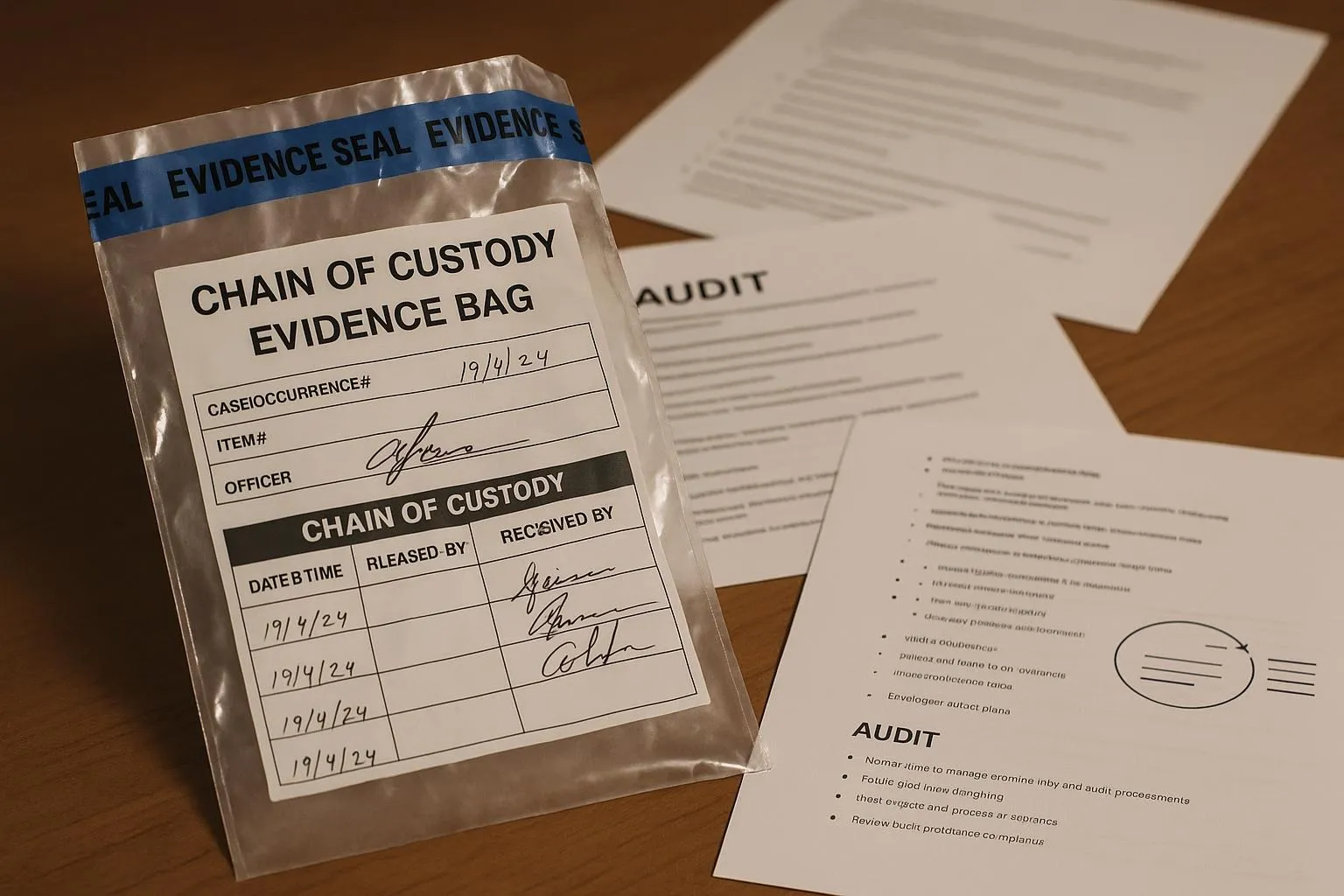
At a glance
123
merged changes
19
code projects involved
Most changes in
- helpifyr-fabric42
- jhf-openclaw-env30
- jhf-bobbin7
Underlined terms are explained: just hover or tap.
Imagine a critical revenue number in your platform, sourced from multiple upstream systems, transformed by a web of jobs, and surfaced in a compliance dashboard. Now imagine discovering a discrepancy-was it a bad sync, a silent code change, or an untracked manual fix? Without field-level lineage and audit integrity, isolating the root cause can mean days of forensics and guesswork. Today, that uncertainty ends: every materialized field now carries a verifiable chain of custody, with explicit lineage checks and audit-integrity gates built into the platform’s core.
01Why it matters
Why This Day Mattered
Developers and operators can now trust that every surfaced value-especially those that power financial, compliance, or operational automation-can be traced back through every transformation and workflow step, with explicit evidence of each hop. This unlocks safer automation, faster debugging, and demonstrable compliance for every downstream consumer-no more black-box data flows or unexplainable drift.
The closed UTC day 2026-07-28 resolved into 123 merged PRs across 19 repos, led by helpifyr-fabric (42), jhf-openclaw-env (30), jhf-bobbin (7).
02What changed
What Actually Changed
A new field-lineage and audit-integrity gate is now enforced at the contract and runtime level in Helpifyr Fabric. Every materialized field must now declare and pass lineage checks: transformations, merges, and projections are accompanied by deterministic provenance evidence, and the system blocks acceptance if lineage or audit integrity is broken. This is not just a schema check: runtime evidence is captured, verified, and surfaced as canonical proof, and downstream consumers (including integrations and reporting surfaces) are required to consume only lineage-verified data. The mechanism is enforced through new contract fields, runtime gates, and test coverage wired into CI.
03Why it holds better now
Why It Holds Better Now
By binding field-level data to explicit, verifiable lineage and audit-integrity gates, the platform eliminates silent drift and untracked mutations. Any change-whether upstream, in transformation logic, or at the integration layer-must now leave a traceable, reviewable record. This means errors and regressions become immediately visible and attributable, not latent or silent. For regulated or mission-critical domains, this guarantee is the difference between explainable, provable operations and risky, opaque data flows.
04Food for thought
Want to Know More?
How can downstream automation-like compliance workflows or customer-facing analytics-now leverage these lineage and audit-integrity guarantees to build safer, self-healing processes? What new classes of debugging and compliance tooling become possible when every field is provably traceable?
Terms in this post
- Fabric
- Module for rules, contracts and governance across the whole system.
- drift
- Target and actual state silently moving apart.
- runtime
- The environment in which the system actually runs.
- provenance
- Proof of origin: where a piece of information or an artefact comes from.
- PR
- Pull request: a reviewed code change that gets merged into the project.
- repo
- Repository: a code project under version control.
- operator
- The person or team running the system.
What would this look like in your company?
A pilot shows it with a real process.
More on Evidence and verification
See all Evidence and verification
5 min
Fail-Closed Capture Boundaries: Immutable Evidence for Customer Profile Integrity
Today, the Helpifyr / JaddaHelpifyr stack crossed a threshold in customer profile integrity by enforcing fail-closed, repo-bound evidence capture at every critical boundary. This shift locks in both the inputs and the causal chain for customer state transitions, making drift, ambiguous custody, and silent misattribution impossible. Operators, developers, and downstream adapters now have a single, immutable source of truth: every profile event is now cryptographically attested, causally traceable, and verifiable against the exact source tree and admission gate that authorized it.
Read Evidence and verification
3 min
Fail-Closed Evidence and Deterministic Bundle Materialization: Raising the Floor for Customer Profile Integrity
Today’s work delivers a new baseline for customer bundle handling in Helpifyr/JaddaHelpifyr: evidence is now fail-closed, bundle candidates are deterministically materialized, and profile manifests are versioned and contract-bound. This unlocks safer upgrades, cuts ambiguity in runtime validation, and empowers operators to reason about customer state transitions with confidence.
Read Evidence and verification
3 min
Sealing the Evidence: Immutable Readbacks and Controlled Boundaries for Plan 28.2 and Beyond
Today's engineering work delivers a tangible advance in the reliability and auditability of authority evidence for critical insurance plan operations. By introducing sealed inventory readbacks, explicit migration cutover evidence, and hardened schemas for external approval, the Helpifyr/JaddaHelpifyr stack now guarantees that what operators and auditors see is not just the current state, but a cryptographically and contractually bound snapshot of how it got there.
Read