Canonical Reapply: Making Stack Source-of-Truth Deterministic for Semantic Operations
Today, the Helpifyr / JaddaHelpifyr stack closes the loop on a longstanding source-of-truth ambiguity for semantic operations: every reapply, recovery, and schema-init now deterministically binds to the canonical source and schema artifacts, with fail-closed admission on any drift or dirty state. This shift eliminates a class of silent misconfigurations and makes every semantic operation provably tied to the intended stack identity.
 Jadda Helpifyr3 min de lectureAnglais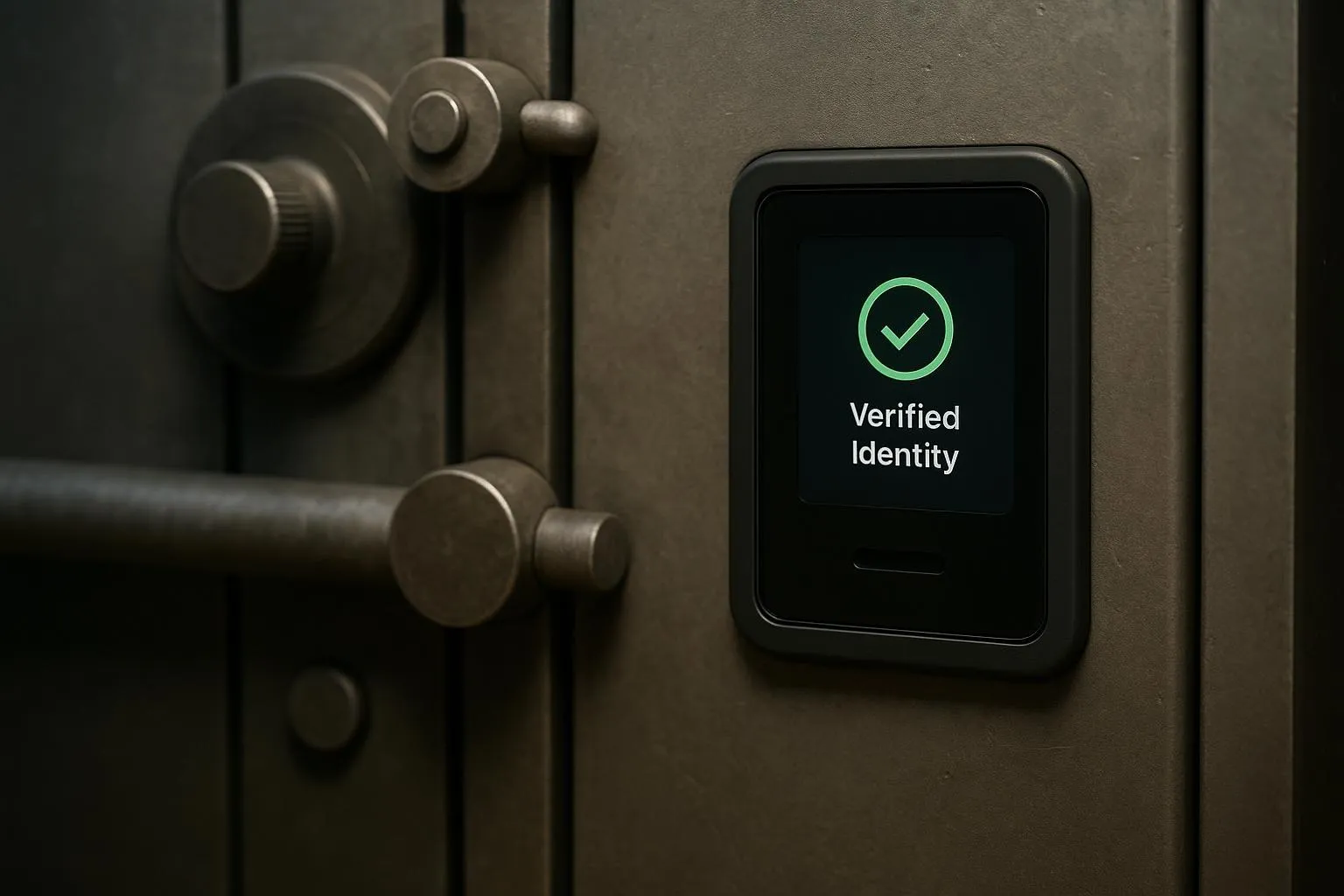
En un coup d’œil
112
modifications intégrées
18
projets de code concernés
Le plus de modifications dans
- jhf-openclaw-env29
- helpifyr-fabric17
- jhf-bobbin12
Cet article est en anglais. Les termes soulignés sont expliqués : survolez-les ou touchez-les.
Picture the operator reapplying a critical stack after a schema evolution-expecting the system to pick up the canonical source, but instead, an outdated or mutated artifact slips through, quietly poisoning the semantic state. For months, even minor drift in source or schema artifacts could go undetected, with subtle breakages surfacing only downstream. Today, that uncertainty ends: the stack’s reapply, source, and schema-init flows now enforce deterministic, fail-closed gates on source-of-truth identity, making every semantic operation auditable and predictable.
01Pourquoi c’est important
Why This Day Mattered
For operators and developers, this means every semantic reapply, recovery, or schema-init is now guaranteed to act on the precise, intended source and schema-no more ghost bugs from stale or mutated artifacts, no more race conditions between worktree states. Platform users gain a new level of confidence that their workloads and migrations reflect exactly what was committed, not whatever happened to be lying around. For downstream integrations and data consumers, this closes the last loophole where silent schema drift or artifact mismatch could propagate into production.
The closed UTC day 2026-07-18 resolved into 112 merged PRs across 18 repos, led by jhf-openclaw-env (29), helpifyr-fabric (17), jhf-bobbin (12).
02Ce qui a changé
What Actually Changed
The semantic stack’s reapply and artifact materialization pipeline now deterministically binds to the canonical source and schema-init generation, verified cross-shell and preserved across compose boundaries. Dirty or mismatched sources trigger immediate fail-closed admission, and every reapply operation is now cross-checked for clean-source identity before materialization proceeds. Artifact bootstrap and identity are preserved through explicit project directories and compose identities, ensuring that any reapply or recovery references only the intended and committed source-of-truth. Recovery of persisted credentials and schema artifacts is now gated on this same canonical reference, closing the loop on drift and mutation.
03Pourquoi c’est plus solide
Why It Holds Better Now
By enforcing cross-shell, deterministic clean-source gates, the stack now guarantees that semantic operations cannot proceed on mutated, outdated, or ambiguous artifacts. This is not just a runtime guardrail: it is a structural contract that makes every artifact, schema-init, and reapply operation auditable and reproducible. The fail-closed path eliminates the class of bugs where drift or local mutation would silently pass through, and explicit identity preservation across compose and materializer boundaries ensures that even complex multi-generation flows remain tied to the intended stack state.
04Pour aller plus loin
Want to Know More?
How could this deterministic source-of-truth enforcement unlock new forms of automated audit, forensic traceability, or self-healing for semantic migrations and stack upgrades?
Termes de cet article
- fail-closed
- Bloquer en cas de doute : sans preuve, l’action n’est pas exécutée.
- source of truth
- La source de référence unique sur laquelle tout le reste s’aligne.
- drift
- Écart silencieux entre l’état visé et l’état réel.
- runtime
- L’environnement dans lequel le système s’exécute réellement.
- PR
- Pull request : une modification de code relue puis intégrée au projet.
- repo
- Dépôt : un projet de code sous gestion de versions.
- operator
- La personne ou l’équipe qui exploite le système.
À quoi cela ressemblerait-il dans votre entreprise ?
Un pilote le montre sur un processus réel.
Plus sur Exploitation et infrastructure
Tout voir Exploitation et infrastructure
4 min
Comptage des attributions actives uniquement : éliminer les ombres d’accès obsolètes dans UC-Readback
Aujourd’hui, la pile Helpifyr / JaddaHelpifyr comble une faille subtile mais essentielle dans le calcul des attributions au sein du readback Universal Connection (UC). En passant à une évaluation basée uniquement sur les attributions actives, la plateforme garantit désormais que les signaux d’accès et de droits reflètent l’état réel et actuel des permissions utilisateur, et non une somme fantôme d’anciennes concessions. Ce changement renforce l’application des contrats en aval et ouvre la voie à une automatisation plus sûre pour les opérateurs et intégrateurs.
Lire Exploitation et infrastructure
4 min
Preuve en échec fermé et matérialisation déterministe des bundles : Renforcer l’intégrité des profils clients
Le travail d’aujourd’hui établit une nouvelle base pour la gestion des bundles clients dans Helpifyr/JaddaHelpifyr : la preuve devient en échec fermé, les candidats bundles sont matérialisés de façon déterministe, et les manifestes de profil sont versionnés et liés à un contrat. Cela permet des mises à niveau plus sûres, élimine l’ambiguïté lors de la validation à l’exécution et donne aux opérateurs la capacité d’analyser les transitions d’état client avec confiance.
Lire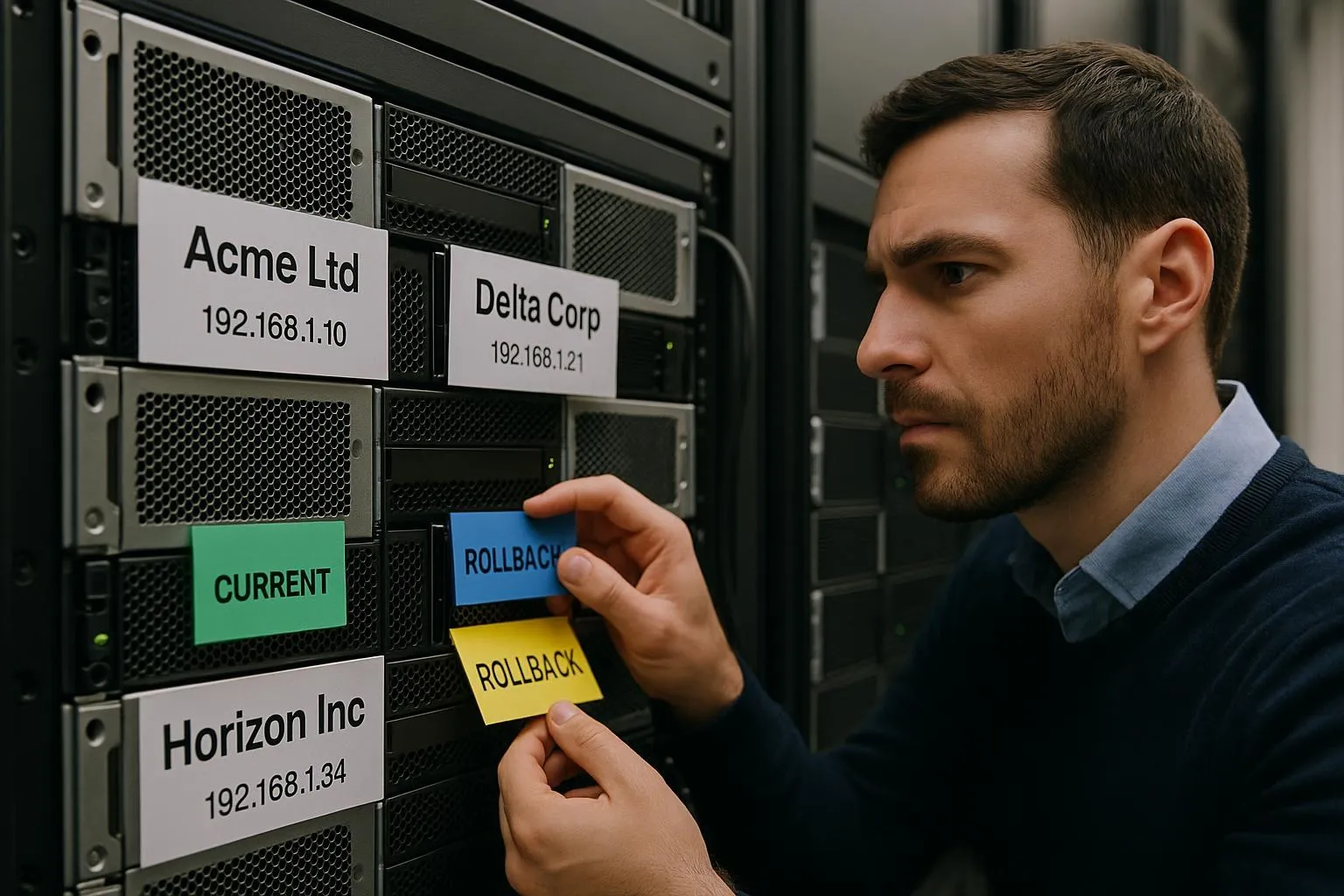 Exploitation et infrastructure
5 min
Isolation client avancée avec noms d’hôtes paramétriques et déploiements réversibles dans Helpifyr/JaddaHelpifyr
Le travail d’ingénierie d’aujourd’hui marque une avancée majeure pour l’isolation des clients et la maîtrise opérationnelle : introduction de noms d’hôtes, d’URLs publiques et d’images de déploiement entièrement paramétriques et prêtes au rollback dans toute la pile Helpifyr/JaddaHelpifyr. Ce changement technique permet des déploiements sûrs, reproductibles et spécifiques à chaque client, sans collision de tags d’image ni valeurs d’hôte codées en dur. Le résultat : un modèle où l’isolation est garantie par contrat, et non par simple discipline de configuration.
Lire