First-Owner Runtime Separation: Role-Scoped Environments for Safer API-Only Fabric Execution
The Helpifyr stack now enforces strict runtime environment separation for API-only fabric roles, forwarding the FIRST_OWNER_RUNTIME_ENV_DIR as a contract-bound variable. This closes a subtle, high-impact gap in privilege and configuration isolation, ensuring that ownership boundaries are respected not just at deploy time, but throughout live operation.
 Jadda Helpifyr2 min read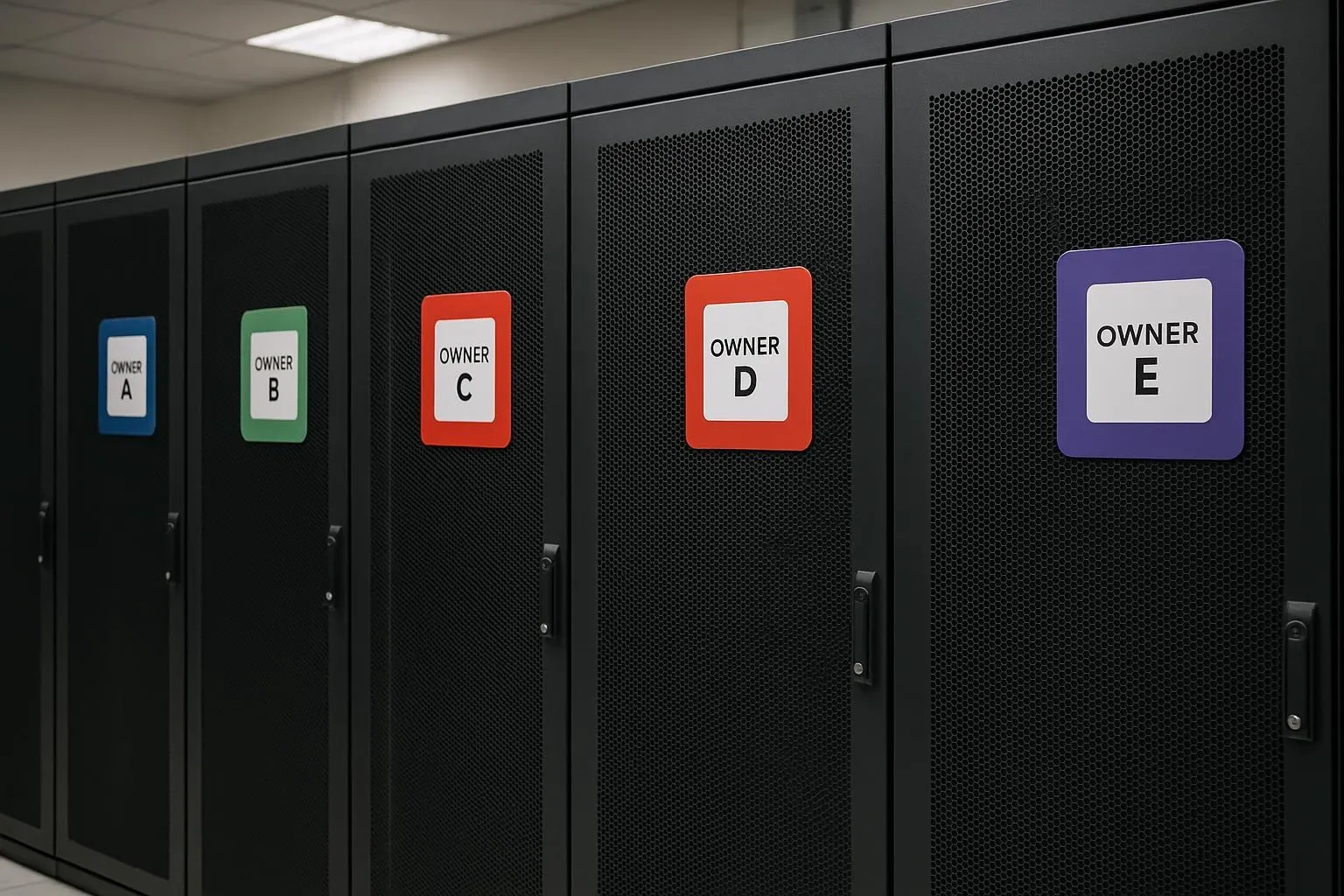
At a glance
62
merged changes
16
code projects involved
Most changes in
- helpifyr-fabric11
- jhf-warp7
- insurance-broker-core7
Underlined terms are explained: just hover or tap.
Imagine a critical automation running under a shared runtime, where a subtle misconfiguration or a stray environment variable could let a process reach beyond its intended scope. In complex, multi-tenant stacks like Helpifyr Fabric, the stakes are high: even a single misplaced credential or config leak can break guarantees for the entire platform. Until now, the fabric-api-only compose model risked blurring those boundaries, trading convenience for a hidden fragility.
01Why it matters
Why This Day Mattered
Today, operators and developers gain a concrete safety guarantee: API-only fabric roles now run in strictly scoped environments, each with its own source-of-truth runtime directory. This means that even as role models are swapped or rotated, no process can accidentally inherit or leak configuration or secrets across ownership lines. For builders, this unlocks safer automation patterns and makes it possible to reason about privilege boundaries at runtime, not just in static manifests.
The closed UTC day 2026-08-17 resolved into 62 merged PRs across 16 repos, led by helpifyr-fabric (11), jhf-warp (7), insurance-broker-core (7).
02What changed
What Actually Changed
Helpifyr Fabric now forwards the FIRST_OWNER_RUNTIME_ENV_DIR into the fabric-api-only compose definition, making the runtime path explicit and role-scoped. This is not just a variable pass-through: it is a contract-bound mechanism that ensures each role gets only the environment it is entitled to, enforced at process boundary. The supporting documentation codifies that worker role slots are shared and serialized, and that model swaps must be validated at execution time, not just at deploy.
03Why it holds better now
Why It Holds Better Now
By binding the runtime environment to the first-owner contract and making it explicit at compose time, the system eliminates a whole class of cross-role contamination bugs. There is no longer any ambiguity about which configuration or secrets are visible to which process: the boundary is enforced by the execution contract itself. This directly reduces the risk of privilege escalation or accidental data exposure during role swaps, automated upgrades, or operator interventions.
04Food for thought
Want to Know More?
How might this new role-scoped runtime model enable safer multi-tenant automation, or unlock finer-grained rotation and zero-downtime upgrade strategies for Helpifyr Fabric and its operators?
Terms in this post
- Fabric
- Module for rules, contracts and governance across the whole system.
- source of truth
- The single authoritative source all other places align with.
- runtime
- The environment in which the system actually runs.
- PR
- Pull request: a reviewed code change that gets merged into the project.
- repo
- Repository: a code project under version control.
- operator
- The person or team running the system.
What would this look like in your company?
A pilot shows it with a real process.
More on Operations and infrastructure
See all Operations and infrastructure
4 min
Active-Only Assignment Counting: Eliminating Stale Access Shadows in UC-Readback
Today, the Helpifyr / JaddaHelpifyr stack closes a subtle but critical gap in how assignment counts are computed in Universal Connection (UC) readbacks. By shifting to active-only assignment evaluation, the platform now guarantees that access and entitlement signals reflect the real, live state of user permissions, not a ghosted sum of historical grants. This change tightens downstream contract enforcement and unlocks safer automation for both operators and integrators.
Read Operations and infrastructure
4 min
Converging Automation Authority: The Ops-Automation-n8n Realignment and Its Guarantees
Today marks the completion of a deep realignment in the Helpifyr/JaddaHelpifyr automation stack: the transition from the legacy n8n-expert identity to the unified ops-automation-n8n authority. This is not a simple rename, but the culmination of a multi-week migration that rewires provenance, ownership, and runtime contracts for all automation flows. The result is a single, auditable source of truth for automation provenance and deployment, eliminating legacy ambiguity and unlocking new guarantees for operators and integrators.
Read Operations and infrastructure
4 min
Parametric Hostnames and Rollback-Ready Deploys: Building Customer-Scoped Isolation in Helpifyr/JaddaHelpifyr
Today's engineering work delivers a step-function improvement for customer isolation and operational control by introducing fully parameterized hostnames, public URLs, and rollback-ready deployment images across the Helpifyr/JaddaHelpifyr stack. This technical shift unlocks safe, repeatable, and customer-specific deployments, allowing operators to deliver tailored environments without image tag collisions or hardcoded host values. The result is a deployment model where isolation is guaranteed by contract, not just configuration hygiene.
Read