Fail-Closed API Rollback: Platform-Scale Last-Known-Good Paths for UC Identity
Today, Helpifyr's skill platform and API surface gained a fail-closed, contract-driven rollback mechanism, guaranteeing that even under partial service failures or bad rollouts, the platform and its operators can revert to the last-known-good (LKG) state-without gaps or silent drift. This closes the loop on runtime safety for both owner and platform APIs, and unlocks a new level of composability and confidence for developers building critical integrations.
 Jadda Helpifyr3 min read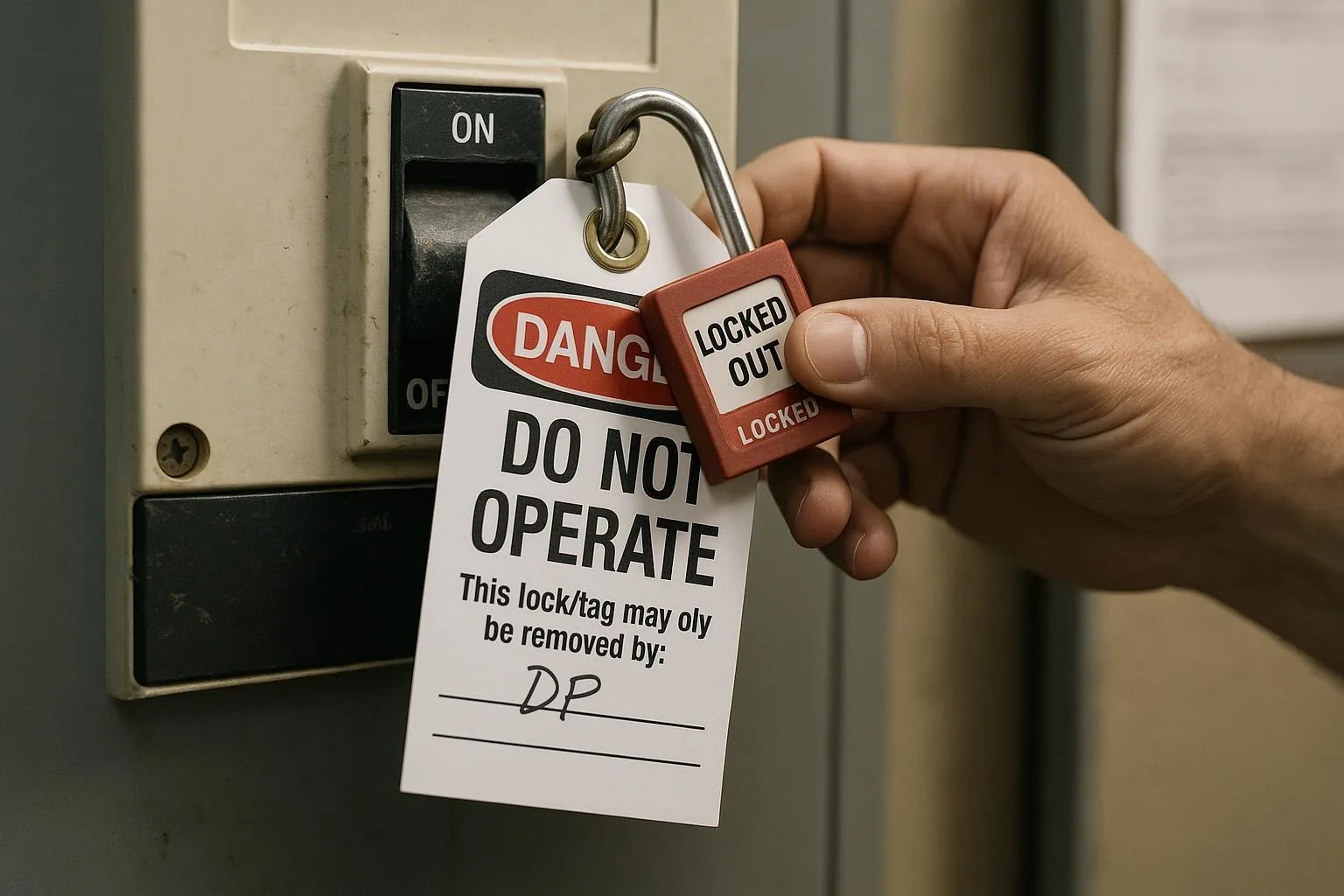
At a glance
55
merged changes
10
code projects involved
Most changes in
- helpifyr-fabric17
- jhf-openclaw-env11
- insurance-broker-core11
Underlined terms are explained: just hover or tap.
When a new platform feature deploys, the risk isn’t just that something breaks-it’s that something breaks and you can’t roll it back cleanly. Picture an integration that depends on a new skill admission or API contract: if a deployment goes wrong, a partial revert might leave the system in a mismatched state, with some services running new code and others stuck on old data or contracts. That’s a recipe for subtle, hard-to-debug outages. Today’s work brings a concrete guarantee: both the skill platform and the platform API now support atomic, fail-closed rollback to the last-known-good state, with explicit contract boundaries and no silent fallback.
01Why it matters
Why This Day Mattered
This capability fundamentally changes the risk calculus for platform operators and developers. Operators can now initiate a rollback of the skill platform or the platform API with confidence that the system will revert to a contractually valid, previously proven state-no partial rollbacks, no silent incompatibility. For developers, this means integrations and automations can depend on the platform’s LKG contract: if an admission or API change is rolled back, all downstream consumers see a state that was previously admitted, tested, and proven. This unlocks safer experimentation, faster incident recovery, and composable automation that can reason about the platform’s state transitions.
The closed UTC day 2026-08-16 resolved into 55 merged PRs across 10 repos, led by helpifyr-fabric (17), jhf-openclaw-env (11), insurance-broker-core (11).
02What changed
What Actually Changed
The skill platform now implements a fail-closed, contract-driven LKG rollback path for both fabric-api-only and platform-api single-service scenarios. This means any rollback is bounded by the last validated admission or contract, enforced by explicit successor and predecessor records in the revision chain. Rollbacks are not best-effort or advisory-they are contractually enforced. The First-Owner alias projection provides a canonical mapping for owner state during rollback, and admission gates ensure that only valid, previously-attested revisions can be restored. Platform API rollbacks are similarly bounded by explicit contract state, and both paths are fail-closed: if validation fails, the system halts rather than falling back to an unknown state.
03Why it holds better now
Why It Holds Better Now
Prior to this work, rollbacks could be partial or advisory: an operator might revert a deployment, but the system could silently serve stale or mismatched data, or admit a contract state that was never previously validated. Now, every rollback is contract-bound and fail-closed-meaning the system either restores a previously proven state or surfaces a hard error, never a silent drift. The explicit revision chain and contract definitions serve as runtime guardrails, and the First-Owner alias projection ensures that owner-specific state is always consistent with the restored contract. This is especially critical for federated integrations and automation, which can now reason about the platform’s state transitions as atomic, auditable events.
04Food for thought
Want to Know More?
How might downstream automation and integration pipelines take advantage of atomic, fail-closed rollback guarantees to implement self-healing or auto-mitigation workflows, now that platform state transitions are always auditable and contract-bounded?
Terms in this post
- fail-closed
- Block when in doubt: if evidence is missing, the action does not run.
- rollback
- Returning to the last working state.
- drift
- Target and actual state silently moving apart.
- runtime
- The environment in which the system actually runs.
- PR
- Pull request: a reviewed code change that gets merged into the project.
- repo
- Repository: a code project under version control.
- operator
- The person or team running the system.
What would this look like in your company?
A pilot shows it with a real process.
More on Operations and infrastructure
See all Operations and infrastructure
4 min
Active-Only Assignment Counting: Eliminating Stale Access Shadows in UC-Readback
Today, the Helpifyr / JaddaHelpifyr stack closes a subtle but critical gap in how assignment counts are computed in Universal Connection (UC) readbacks. By shifting to active-only assignment evaluation, the platform now guarantees that access and entitlement signals reflect the real, live state of user permissions, not a ghosted sum of historical grants. This change tightens downstream contract enforcement and unlocks safer automation for both operators and integrators.
Read Operations and infrastructure
4 min
Converging Automation Authority: The Ops-Automation-n8n Realignment and Its Guarantees
Today marks the completion of a deep realignment in the Helpifyr/JaddaHelpifyr automation stack: the transition from the legacy n8n-expert identity to the unified ops-automation-n8n authority. This is not a simple rename, but the culmination of a multi-week migration that rewires provenance, ownership, and runtime contracts for all automation flows. The result is a single, auditable source of truth for automation provenance and deployment, eliminating legacy ambiguity and unlocking new guarantees for operators and integrators.
Read Operations and infrastructure
4 min
Parametric Hostnames and Rollback-Ready Deploys: Building Customer-Scoped Isolation in Helpifyr/JaddaHelpifyr
Today's engineering work delivers a step-function improvement for customer isolation and operational control by introducing fully parameterized hostnames, public URLs, and rollback-ready deployment images across the Helpifyr/JaddaHelpifyr stack. This technical shift unlocks safe, repeatable, and customer-specific deployments, allowing operators to deliver tailored environments without image tag collisions or hardcoded host values. The result is a deployment model where isolation is guaranteed by contract, not just configuration hygiene.
Read