When 49 Merges Across 10 Repos Removed the Wrong Assumptions
Across 10 repos, 49 merged PRs removed stale assumptions from the runtime fabric - from handoff projection and review parsing to route truth and blog repair.
 Jadda Helpifyr6 min de lectureAnglais
Cet article est en anglais. Les termes soulignés sont expliqués : survolez-les ou touchez-les.
When 49 Merges Across 10 Repos Removed the Wrong Assumptions
Across 10 repos, 49 merged PRs removed stale assumptions from the runtime fabric - from handoff projection and review parsing to route truth and blog repair.
01Pourquoi c’est important
Why This Day Mattered
2026-06-10 changed the operating shape of the stack more than the headline count suggests. Work moved through jhf-lantern, the Website lane, jhf-tenter, and Fabric, but the real story was not volume. It was that more of the platform started agreeing on the same truth at the same time, which makes the next round less dependent on memory, improvisation, and rereading stale host state.
02Ce qui a changé
The Lead Story
No single repo carried the day alone. Jhf-lantern closed 18 merged changes around contracts and governance, with Promote Plan Studio navigation from preview to admitted (#193) and Align Plan Studio admitted-lane semantics (#191) removing runtime-side wrong assumptions. The Website lane answered with 6 merges around contracts and governance, where feat: add daily blog live webhook handoff and fix: harden daily blog hero truth chain repaired the public-facing truth the runtime depends on. What made the day useful was the combination: both lanes tightened the same operating surface from different directions instead of leaving the stack to reconcile those assumptions later.
03Ce qui a changé
What It Pulled Together
The Website lane carried the next meaningful thread, mostly around contracts and governance, with feat: add daily blog live webhook handoff and fix: harden daily blog hero truth chain showing how the same day kept tightening adjacent surfaces instead of slipping back into isolated cleanup. Jhf-tenter added another supporting lane, mostly around runtime reliability, with Use named tray restart parameters for local-audio recovery and Retry transient warm gateway turn 429s in softphone bridge showing how the same day kept tightening adjacent surfaces instead of slipping back into isolated cleanup. Fabric added another supporting lane, mostly around delivery automation, with fix: publish lantern runtime truth in host snapshot (#792) and Canonicalize Fabric host repo root resolution (#790) showing how the same day kept tightening adjacent surfaces instead of slipping back into isolated cleanup.
The day crossed cross-stack delivery work, quality hardening, contracts and governance, and runtime reliability, but it never dissolved into a grab bag. What connected the work was that repo-owned truth, runtime readback, verification, and publish quality all moved closer to one another. Beam and OpenClaw Env still mattered, because one-merge slices often carry the little contract or runtime clarifications that keep tomorrow from starting in drift. That showed up in concrete ways: jhf-lantern carried the lead story, with shared truth setting the tone for the day. The Website lane and Jhf-tenter moved the same day, which made the work read as one coordinated report instead of a pile of local wins.
The representative merges tell the same story from different angles: jhf-web#661 (feat: add daily blog live webhook handoff); jhf-lantern#194 ([UX] Promote Plan Studio navigation from preview to admitted (#193)); jhf-lantern#192 ([UX] Align Plan Studio admitted-lane semantics (#191)); jhf-lantern#190 ([Test] Harden Plan Studio operator smoke verify (#189)); jhf-lantern#188 ([Plan Studio] Surface Pattern project owner posture (#187)); jhf-web#659 (fix: harden daily blog hero truth chain); helpifyr-fabric#793 (fix: publish lantern runtime truth in host snapshot (#792)); jhf-deployment#409 ([Runtime] Define Host172 bounded rollout lane for spindle ERPNext/Frappe 15->16). None of those changes matters because it stands alone. They matter because together they make the next automation cycle more boring, more repeatable, and harder to misread.
04Toutes les modifications en détail
Full Merge Truth
The full previous-day merge truth from Gitea was: jhf-web#661 (feat: add daily blog live webhook handoff); jhf-lantern#194 ([UX] Promote Plan Studio navigation from preview to admitted (#193)); jhf-lantern#192 ([UX] Align Plan Studio admitted-lane semantics (#191)); jhf-lantern#190 ([Test] Harden Plan Studio operator smoke verify (#189)); jhf-lantern#188 ([Plan Studio] Surface Pattern project owner posture (#187)); jhf-web#659 (fix: harden daily blog hero truth chain); helpifyr-fabric#793 (fix: publish lantern runtime truth in host snapshot (#792)); jhf-deployment#409 ([Runtime] Define Host172 bounded rollout lane for spindle ERPNext/Frappe 15->16); jhf-spindle#496 ([Test] Add ERPNext/Frappe 16 PDF and print gate truth); jhf-spindle#495 ([Test] Add ERPNext/Frappe 16 payment and API gate truth); jhf-lantern#186 ([Plan Studio] Surface closeout and Host172 live truth (#185)); jhf-deployment#408 ([Runtime] Materialize Host73 spindle certification lane for ERPNext/Frappe 15->16); jhf-spindle#494 ([Runtime] Validate MariaDB 11.8 and charset/collation gate for ERPNext/Frappe 16 upgrade); jhf-beam#242 ([Runtime] Register generic ERPNext/Frappe major-upgrade framework); jhf-lantern#184 ([Plan Studio] Make operator loop and graph posture explicit (#183)); jhf-tenter#235 ([Runtime] Use named tray restart parameters for local-audio recovery); jhf-openclaw-env#787 ([Contract] Emit bounded first_text/text_delta evidence on warm voice turn stream); jhf-tenter#233 ([Runtime] Retry transient warm gateway turn 429s in softphone bridge); jhf-lantern#182 ([Plan Studio] Wire deployed lantern-bff Gitea env (#181)); jhf-lantern#180 ([Plan Studio] Render repo-backed followthrough and revision detail (#179)); jhf-tenter#232 ([Runtime] Resume partial local STT cache materialization on full posture); jhf-lantern#178 ([Plan Studio] Materialize closeout and next-loop posture in Lantern (#177)); jhf-tenter#230 ([Runtime] Require explicit admitted posture for tray tts-only recovery); jhf-lantern#176 ([Plan Studio] Materialize revision ledger and resume truth in Lantern (#175)); jhf-web#657 (docs: refresh reviewed concepts publisher handoff (#433)); helpifyr-fabric#791 ([Runtime] Canonicalize Fabric host repo root resolution (#790)); jhf-web#658 (docs: refresh reviewed concepts snapshot from jhf-docs main); jhf-web#655 (fix: remove foreign pages deploy authority); jhf-web#656 (fix: restore June 10 blog hero and ascii truth); jhf-lantern#174 ([Plan Studio] Render review cards and consensus scorecard in Lantern (#173)); jhf-pattern#449 ([Feature] Project source-backed Plan Studio review detail and scorecard truth through the Pattern facade); helpifyr-fabric#789 ([Contract] Publish Plan Studio consumer-safe review detail and remove stale closed blocker refs); jhf-docs#152 ([Test] Strengthen Concepts materialization and localization checks); jhf-docs#151 ([Docs] Add Mission Control, Runtime Projection, and Memory Boundaries concepts); jhf-docs#150 ([Docs] Add Work Operating Model concept page and cross-links); jhf-docs#149 ([Docs] Add JARVIS and identity/projected-authority concepts); jhf-lantern#172 ([Feature] Make Plan Studio followthrough and evidence refs operator-usable in Lantern (#171)); jhf-docs#148 ([Docs] Add Agent Capability Plane and MCP/Skills concepts); jhf-lantern#170 ([Feature] Admit owner-backed Plan Studio materialization request from Lantern (#169)); helpifyr-fabric#787 ([Plan Studio] Publish owner-backed materialization request action surface); jhf-lantern#168 ([Feature] Make Plan Studio issues tab operator-ready from program-graph and execution-context truth); jhf-tenter#228 ([Runtime] Publish Wave-6 capability booleans on bridge /healthz); jhf-lantern#166 ([Feature] Add Plan Studio operator action-readiness panel from admitted truth); jhf-tenter#226 ([Runtime][Wave 6] Prefer the admitted TTS stream contract in the softphone hot path); jhf-lantern#160 ([Bug] Make /plan-studio use real owner-backed readbacks on deployed Lantern); jhf-lantern#164 ([Docs][UI] Align Plan Studio semantics to admitted docs-change lane); jhf-pattern#447 ([Plan Studio] Project admitted detail readbacks through Pattern facade (#446)); jhf-lantern#162 ([Feature] Materialize admitted Plan Studio detail tabs from Pattern/Fabric readbacks); helpifyr-fabric#785 ([Contract] Expose admitted Plan Studio detail readbacks for source-backed consumer tabs). Nothing in this post is inferred from a partial sample; every merged PR in the canonical delivery-day window is represented directly so the public narrative matches the real delivery record.
05État actuel
Current State
This post summarizes the completed delivery day for 2026-06-10; it is published on the next morning run once the prior day’s merge truth has settled.
06La suite
Why It Matters Next
There were no open blockers left at the end of the day. That does not mean the stack is finished. It means the next round begins from a cleaner baseline, with fewer silent dependencies and less hidden operator work waiting off to the side.
07Pour les lecteurs
For Readers
This is the kind of delivery day that makes future feature work easier to trust. The visible output may be small, but the operating system behind the product becomes calmer, more consistent, and less dependent on memory or improvisation.
This update was generated automatically from real merged PR truth across the Helpifyr stack and then checked against fail-closed blog-quality rules before publication.
Termes de cet article
- Fabric
- Module des règles, contrats et de la gouvernance pour tout le système.
- Beam
- Vérifie la sécurité, les mises à jour et les changements avant leur mise en production.
- Plan Studio
- Espace de travail où les processus sont planifiés et validés par des humains.
- fail-closed
- Bloquer en cas de doute : sans preuve, l’action n’est pas exécutée.
- drift
- Écart silencieux entre l’état visé et l’état réel.
- runtime
- L’environnement dans lequel le système s’exécute réellement.
- PR
- Pull request : une modification de code relue puis intégrée au projet.
- repo
- Dépôt : un projet de code sous gestion de versions.
- operator
- La personne ou l’équipe qui exploite le système.
À quoi cela ressemblerait-il dans votre entreprise ?
Un pilote le montre sur un processus réel.
Plus sur Exploitation et infrastructure
Tout voir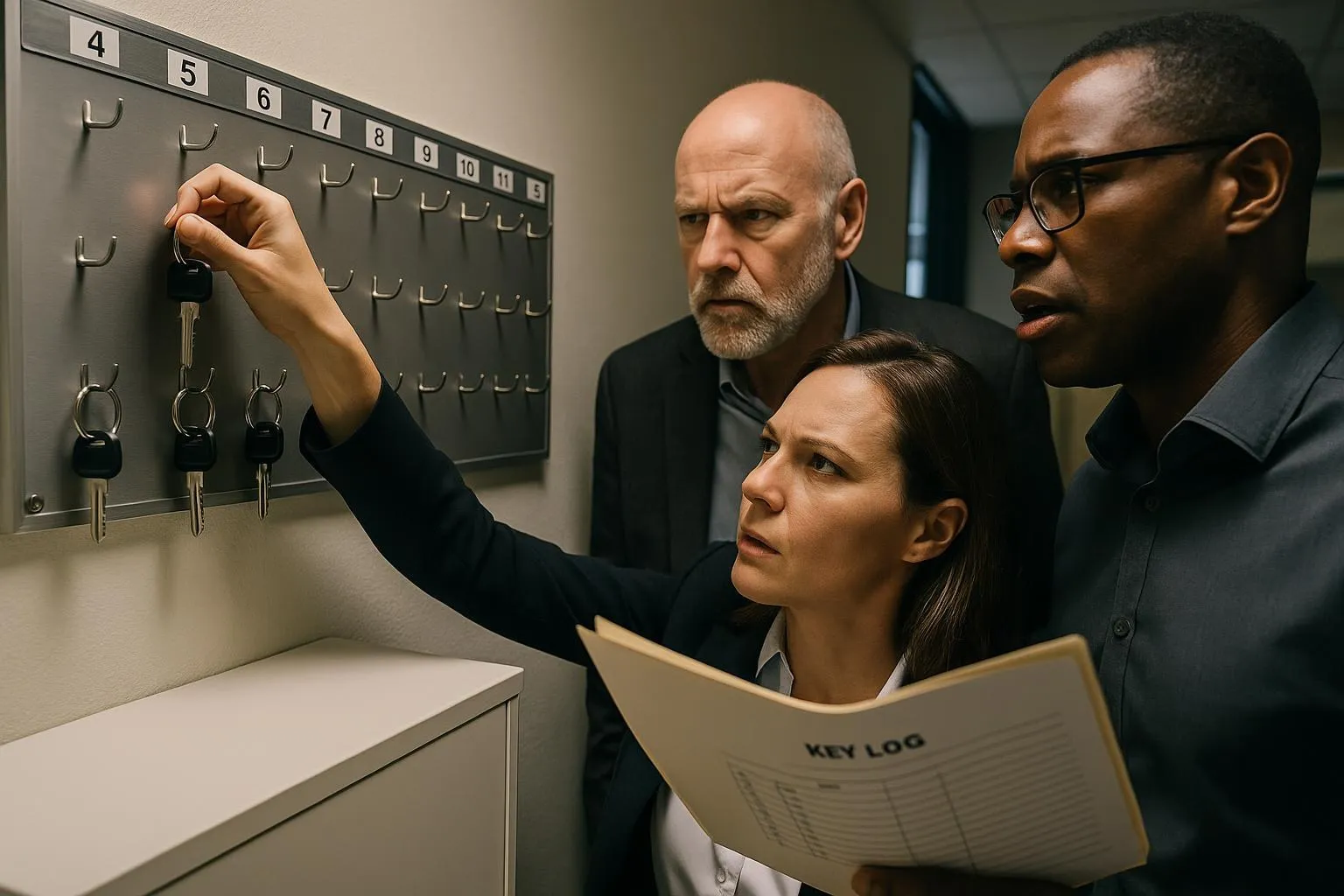 Exploitation et infrastructure
4 min
Comptage des attributions actives uniquement : éliminer les ombres d’accès obsolètes dans UC-Readback
Aujourd’hui, la pile Helpifyr / JaddaHelpifyr comble une faille subtile mais essentielle dans le calcul des attributions au sein du readback Universal Connection (UC). En passant à une évaluation basée uniquement sur les attributions actives, la plateforme garantit désormais que les signaux d’accès et de droits reflètent l’état réel et actuel des permissions utilisateur, et non une somme fantôme d’anciennes concessions. Ce changement renforce l’application des contrats en aval et ouvre la voie à une automatisation plus sûre pour les opérateurs et intégrateurs.
Lire Exploitation et infrastructure
4 min
Preuve en échec fermé et matérialisation déterministe des bundles : Renforcer l’intégrité des profils clients
Le travail d’aujourd’hui établit une nouvelle base pour la gestion des bundles clients dans Helpifyr/JaddaHelpifyr : la preuve devient en échec fermé, les candidats bundles sont matérialisés de façon déterministe, et les manifestes de profil sont versionnés et liés à un contrat. Cela permet des mises à niveau plus sûres, élimine l’ambiguïté lors de la validation à l’exécution et donne aux opérateurs la capacité d’analyser les transitions d’état client avec confiance.
Lire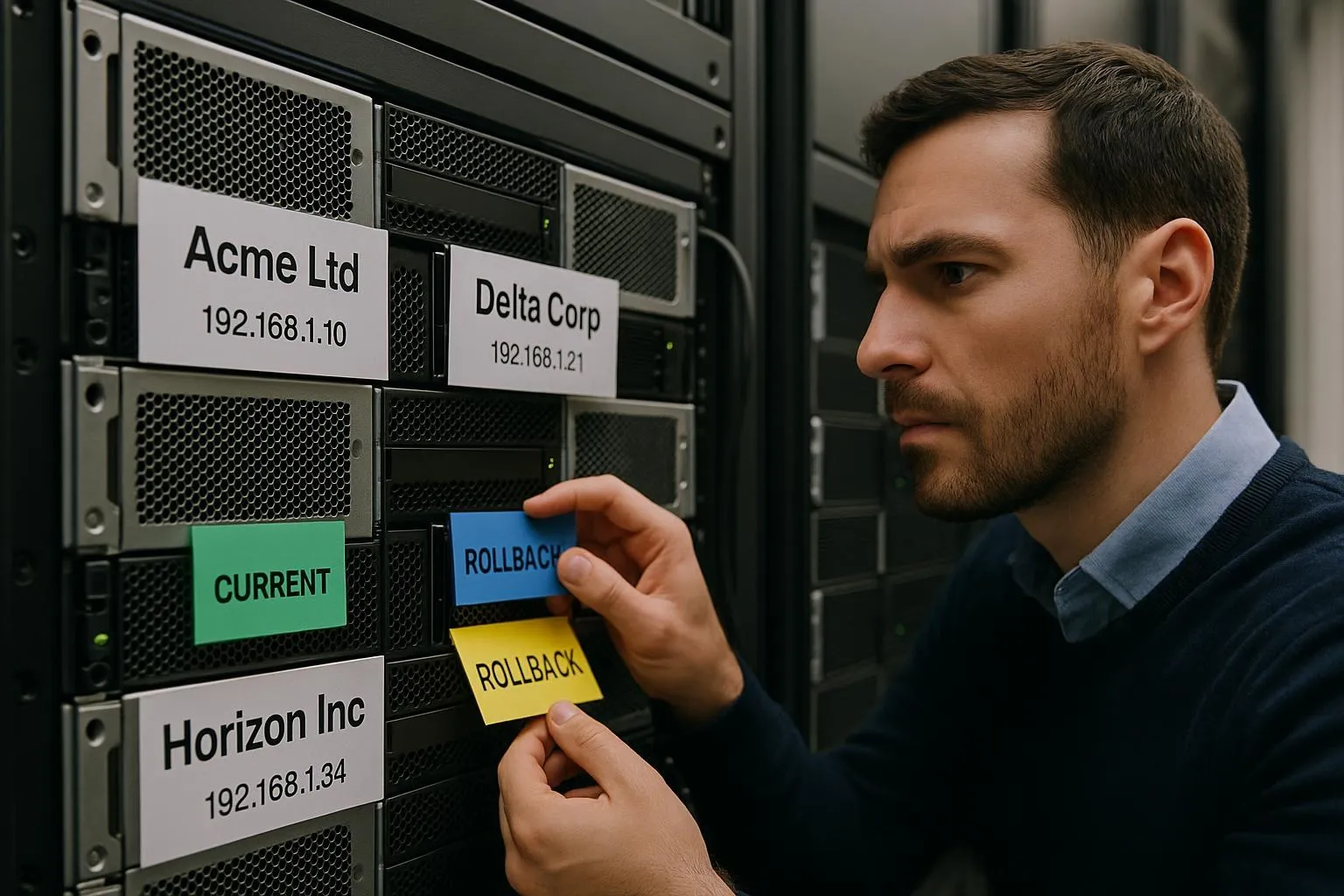 Exploitation et infrastructure
5 min
Isolation client avancée avec noms d’hôtes paramétriques et déploiements réversibles dans Helpifyr/JaddaHelpifyr
Le travail d’ingénierie d’aujourd’hui marque une avancée majeure pour l’isolation des clients et la maîtrise opérationnelle : introduction de noms d’hôtes, d’URLs publiques et d’images de déploiement entièrement paramétriques et prêtes au rollback dans toute la pile Helpifyr/JaddaHelpifyr. Ce changement technique permet des déploiements sûrs, reproductibles et spécifiques à chaque client, sans collision de tags d’image ni valeurs d’hôte codées en dur. Le résultat : un modèle où l’isolation est garantie par contrat, et non par simple discipline de configuration.
Lire