Mandatory Network Oracles: Binding Platform State to Live Network Guarantees
Today, the Helpifyr / JaddaHelpifyr stack closes a foundational gap: network state is no longer a matter of intent or stale configuration, but is now anchored to live, mandatory network oracles. This shift delivers hard, queryable evidence for network conditions that every critical contract can depend on.
 Jadda Helpifyr2 min read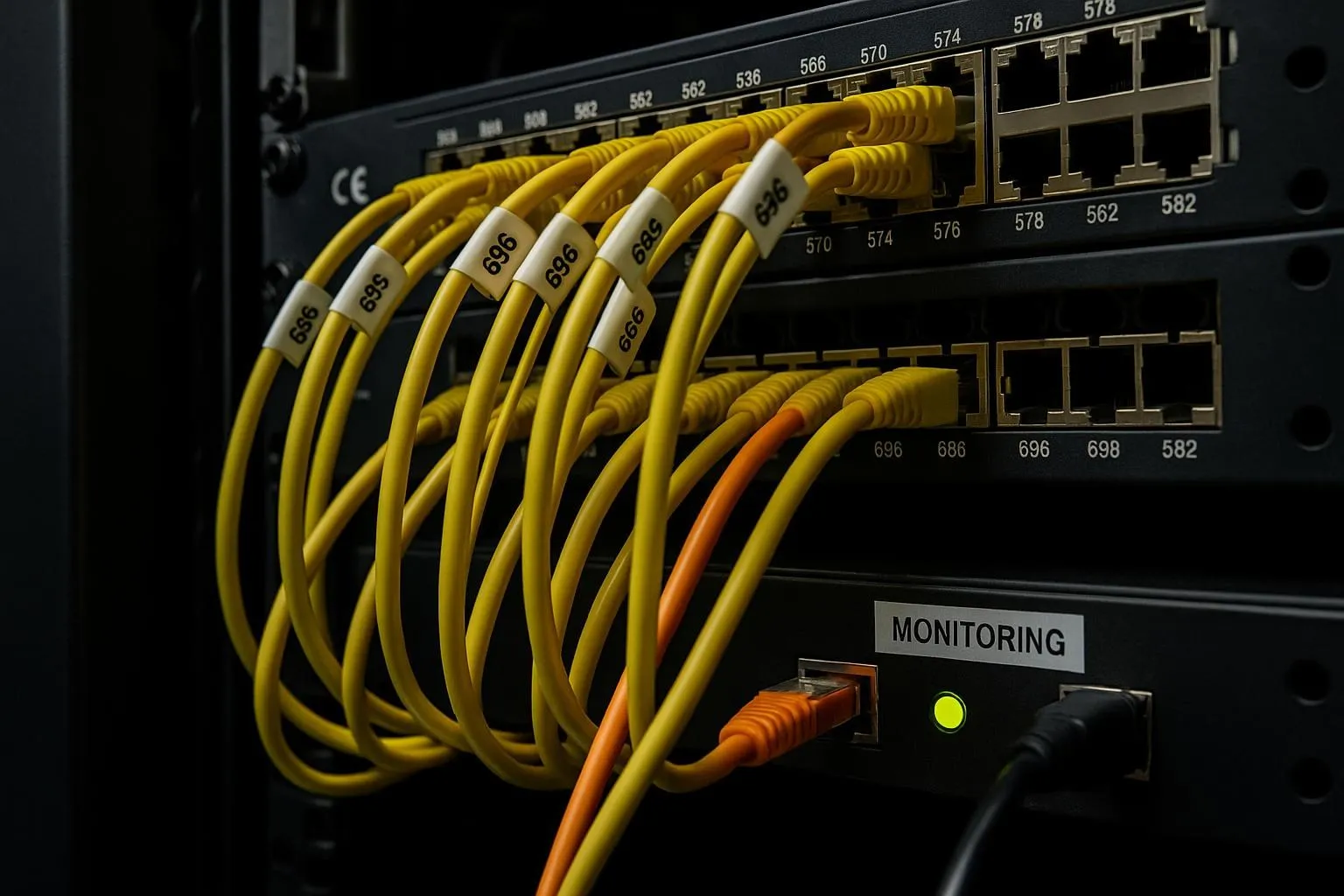
At a glance
57
merged changes
13
code projects involved
Most changes in
- jhf-deployment21
- helpifyr-fabric18
- jhf-bolt4
Underlined terms are explained: just hover or tap.
Imagine debugging a cross-stack deployment where a network assumption fails silently: a port isn’t reachable, a routing rule is missing, or a firewall has drifted. Until now, too many of these failures surfaced only as downstream symptoms-misrouted traffic, timeouts, or inconsistent state. The platform’s network model could assert what should be, but it could not always prove what actually was. Today, that changes: five mandatory network oracles are now live, each producing real-time, contract-grade evidence for the most critical network invariants. This is not just a new data feed; it is a source-of-truth bridge directly into the platform’s operating fabric.
01Why it matters
Why This Day Mattered
Operators and automated workflows now gain a direct, verifiable window into the actual state of the network. No more relying on configuration drift detection or post-facto incident analysis: contracts, deployment gates, and runtime checks can now reference live oracle evidence, making network assumptions provably correct or provably wrong. This closes a major reliability and auditability gap for regulated workloads, continuous delivery, and cross-org integrations.
The closed UTC day 2026-09-03 resolved into 57 merged PRs across 13 repos, led by jhf-deployment (21), helpifyr-fabric (18), jhf-bolt (4).
02What changed
What Actually Changed
The Helpifyr Fabric and Deployment layers now produce and consume five mandatory network oracles, each bound to a distinct network invariant (such as egress path reachability, port binding, and device mount coverage). These oracles are not passive logs-they actively emit evidence that is consumed by deployment gates and contract verifiers. The fabric ensures that any critical state transition (like applying a new network policy or mounting a new device) must reference and validate against the oracle’s live output before proceeding. This is enforced both in the planning and runtime layers, making the network model evidence-driven at every stage.
03Why it holds better now
Why It Holds Better Now
By moving from intent-based assertions to evidence-backed oracles, the platform eliminates entire classes of silent network drift and misconfiguration. Every deployment, policy change, or runtime action is now gated by real, contemporaneous proof from the oracles. This not only blocks unsafe transitions, but also makes every contract and audit trail fully reconstructible from hard evidence. The technical guarantee is simple but powerful: if the oracle doesn’t say it’s true, it isn’t relied on anywhere in the stack.
04Food for thought
Want to Know More?
How will developers extend or specialize these network oracles for organization-specific invariants, and what new classes of self-healing or automated remediation does this unlock for complex, multi-tenant environments?
Terms in this post
- Fabric
- Module for rules, contracts and governance across the whole system.
- source of truth
- The single authoritative source all other places align with.
- drift
- Target and actual state silently moving apart.
- runtime
- The environment in which the system actually runs.
- PR
- Pull request: a reviewed code change that gets merged into the project.
- repo
- Repository: a code project under version control.
- operator
- The person or team running the system.
What would this look like in your company?
A pilot shows it with a real process.
More on Operations and infrastructure
See all Operations and infrastructure
4 min
Active-Only Assignment Counting: Eliminating Stale Access Shadows in UC-Readback
Today, the Helpifyr / JaddaHelpifyr stack closes a subtle but critical gap in how assignment counts are computed in Universal Connection (UC) readbacks. By shifting to active-only assignment evaluation, the platform now guarantees that access and entitlement signals reflect the real, live state of user permissions, not a ghosted sum of historical grants. This change tightens downstream contract enforcement and unlocks safer automation for both operators and integrators.
Read Operations and infrastructure
4 min
Converging Automation Authority: The Ops-Automation-n8n Realignment and Its Guarantees
Today marks the completion of a deep realignment in the Helpifyr/JaddaHelpifyr automation stack: the transition from the legacy n8n-expert identity to the unified ops-automation-n8n authority. This is not a simple rename, but the culmination of a multi-week migration that rewires provenance, ownership, and runtime contracts for all automation flows. The result is a single, auditable source of truth for automation provenance and deployment, eliminating legacy ambiguity and unlocking new guarantees for operators and integrators.
Read Operations and infrastructure
4 min
Parametric Hostnames and Rollback-Ready Deploys: Building Customer-Scoped Isolation in Helpifyr/JaddaHelpifyr
Today's engineering work delivers a step-function improvement for customer isolation and operational control by introducing fully parameterized hostnames, public URLs, and rollback-ready deployment images across the Helpifyr/JaddaHelpifyr stack. This technical shift unlocks safe, repeatable, and customer-specific deployments, allowing operators to deliver tailored environments without image tag collisions or hardcoded host values. The result is a deployment model where isolation is guaranteed by contract, not just configuration hygiene.
Read