Chain Policies and Pre-Allows: Explicit Network Intent in NetC3 and NetC4 Deployment
Today’s stack gains explicit, testable control over network policy with materialized chain_policies and pre-allow rule forms, eliminating guesswork and ambiguity in firewall deployment and audit.
 Jadda Helpifyr2 min read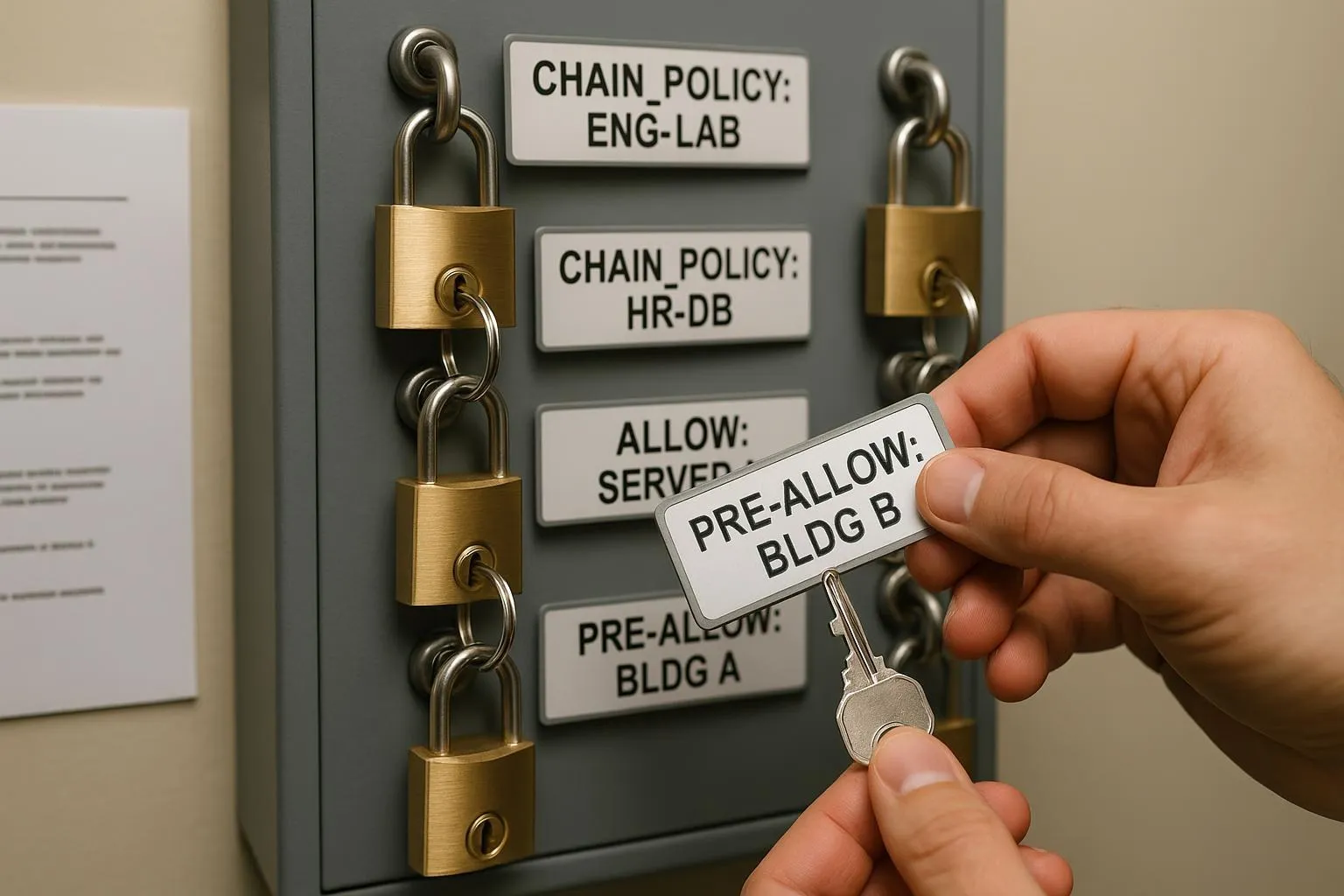
At a glance
44
merged changes
7
code projects involved
Most changes in
- jhf-deployment21
- helpifyr-fabric9
- jhf-openclaw-env8
Underlined terms are explained: just hover or tap.
A misapplied firewall rule can quietly turn a greenfield launch into a midnight incident, especially when network intent is implicit or buried in handoffs between teams. Until now, our deployment pipeline left key nftables chain behaviors and pre-allow exceptions to implicit defaults or post-hoc patching, making it difficult to guarantee that what was deployed matched what was actually intended. The risk: operators and auditors faced a black box, and developers had to reverse-engineer what the platform would really permit or deny.
01Why it matters
Why This Day Mattered
With explicit chain_policy contracts and pre-allow forms now wired end-to-end, operators can see and test the exact network posture for each deployment slice before rollout, and developers can author, review, and evolve firewall intent as code, not as an afterthought. This closes the gap between declared policy and actual enforcement, making it possible to safely automate changes and to audit for least-privilege with confidence.
The closed UTC day 2026-08-27 resolved into 44 merged PRs across 7 repos, led by jhf-deployment (21), helpifyr-fabric (9), jhf-openclaw-env (8).
02What changed
What Actually Changed
The deployment system now passes chain_policies from contract source through to the renderer, materializing the exact nftables chain default (accept, drop, etc) as part of the deployment artifact. Pre-allow rule forms are now first-class, enabling explicit exceptions to be defined and tested before general policies apply. Automated tests validate UDP protocol handling and enforce the presence of explicit chain policies, ensuring that every deployment artifact is both predictable and reviewable-no more silent acceptance of platform defaults.
03Why it holds better now
Why It Holds Better Now
By moving network intent from implicit defaults to explicit, testable contracts, the system eliminates accidental exposure and silent failures: every rule and chain default is visible, versioned, and validated before it ever reaches production. This makes the deployment pipeline safer and more auditable, and gives both operators and developers a single source of truth about what the network will and will not allow.
04Food for thought
Want to Know More?
How will explicit chain policies and pre-allow forms enable fine-grained, just-in-time network access for on-demand workloads, and what new automation or alerting becomes possible now that every network intent is codified and testable?
Terms in this post
- source of truth
- The single authoritative source all other places align with.
- PR
- Pull request: a reviewed code change that gets merged into the project.
- repo
- Repository: a code project under version control.
- operator
- The person or team running the system.
What would this look like in your company?
A pilot shows it with a real process.
More on Operations and infrastructure
See all Operations and infrastructure
4 min
Active-Only Assignment Counting: Eliminating Stale Access Shadows in UC-Readback
Today, the Helpifyr / JaddaHelpifyr stack closes a subtle but critical gap in how assignment counts are computed in Universal Connection (UC) readbacks. By shifting to active-only assignment evaluation, the platform now guarantees that access and entitlement signals reflect the real, live state of user permissions, not a ghosted sum of historical grants. This change tightens downstream contract enforcement and unlocks safer automation for both operators and integrators.
Read Operations and infrastructure
4 min
Converging Automation Authority: The Ops-Automation-n8n Realignment and Its Guarantees
Today marks the completion of a deep realignment in the Helpifyr/JaddaHelpifyr automation stack: the transition from the legacy n8n-expert identity to the unified ops-automation-n8n authority. This is not a simple rename, but the culmination of a multi-week migration that rewires provenance, ownership, and runtime contracts for all automation flows. The result is a single, auditable source of truth for automation provenance and deployment, eliminating legacy ambiguity and unlocking new guarantees for operators and integrators.
Read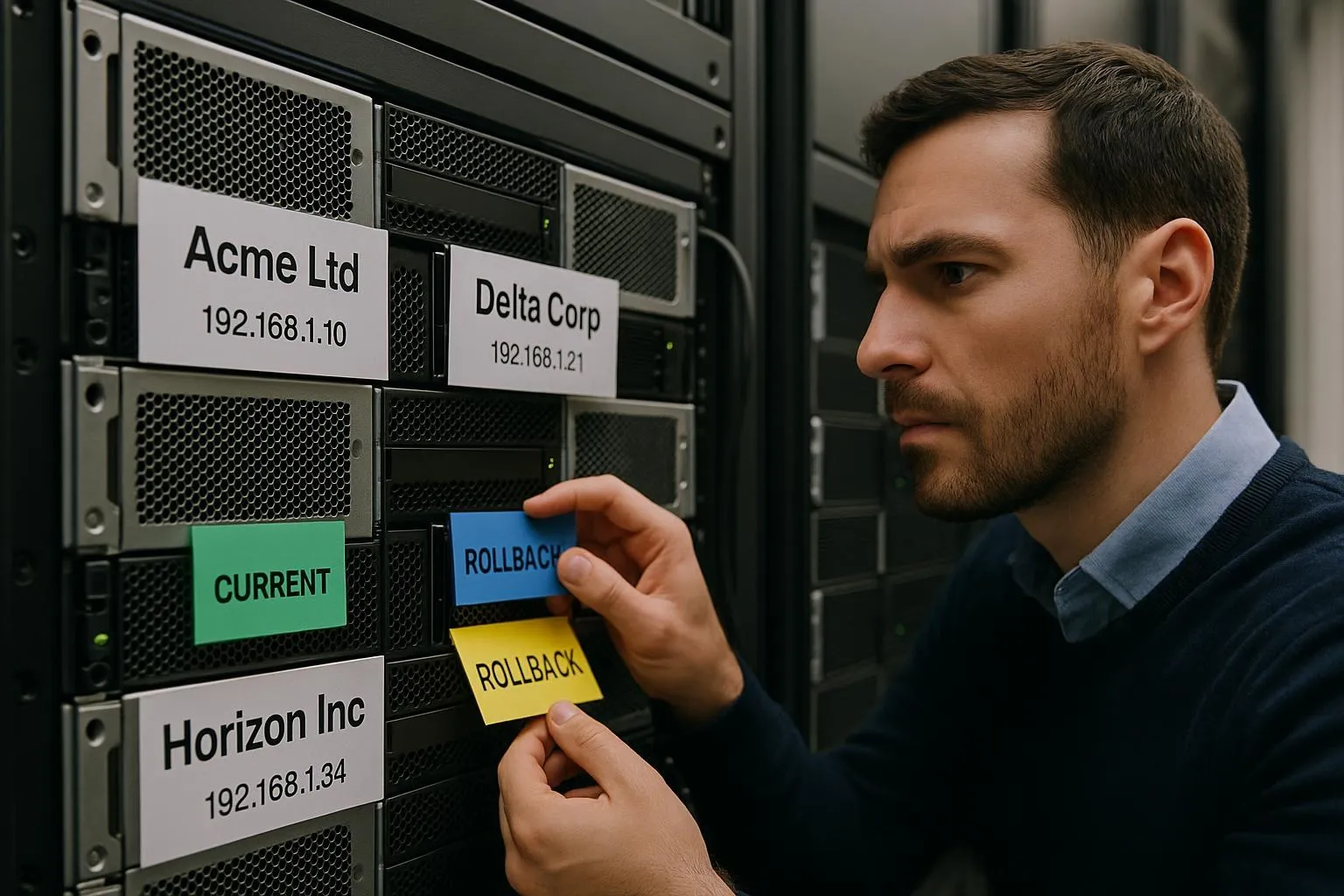 Operations and infrastructure
4 min
Parametric Hostnames and Rollback-Ready Deploys: Building Customer-Scoped Isolation in Helpifyr/JaddaHelpifyr
Today's engineering work delivers a step-function improvement for customer isolation and operational control by introducing fully parameterized hostnames, public URLs, and rollback-ready deployment images across the Helpifyr/JaddaHelpifyr stack. This technical shift unlocks safe, repeatable, and customer-specific deployments, allowing operators to deliver tailored environments without image tag collisions or hardcoded host values. The result is a deployment model where isolation is guaranteed by contract, not just configuration hygiene.
Read