Atomic Migration Rehearsals: Synthetic Datasets and End-to-End Workflows for Insurance Broker Core
Today's work delivers a synthetic demo dataset and atomic migration rehearsal for the insurance-broker-core, enabling safe, repeatable migrations and full-stack workflow validation. This closes a critical gap: operators and developers can now run realistic, end-to-end migrations and operational flows without risking production data or relying on unreliable ad-hoc test coverage.
 Jadda Helpifyr2 min read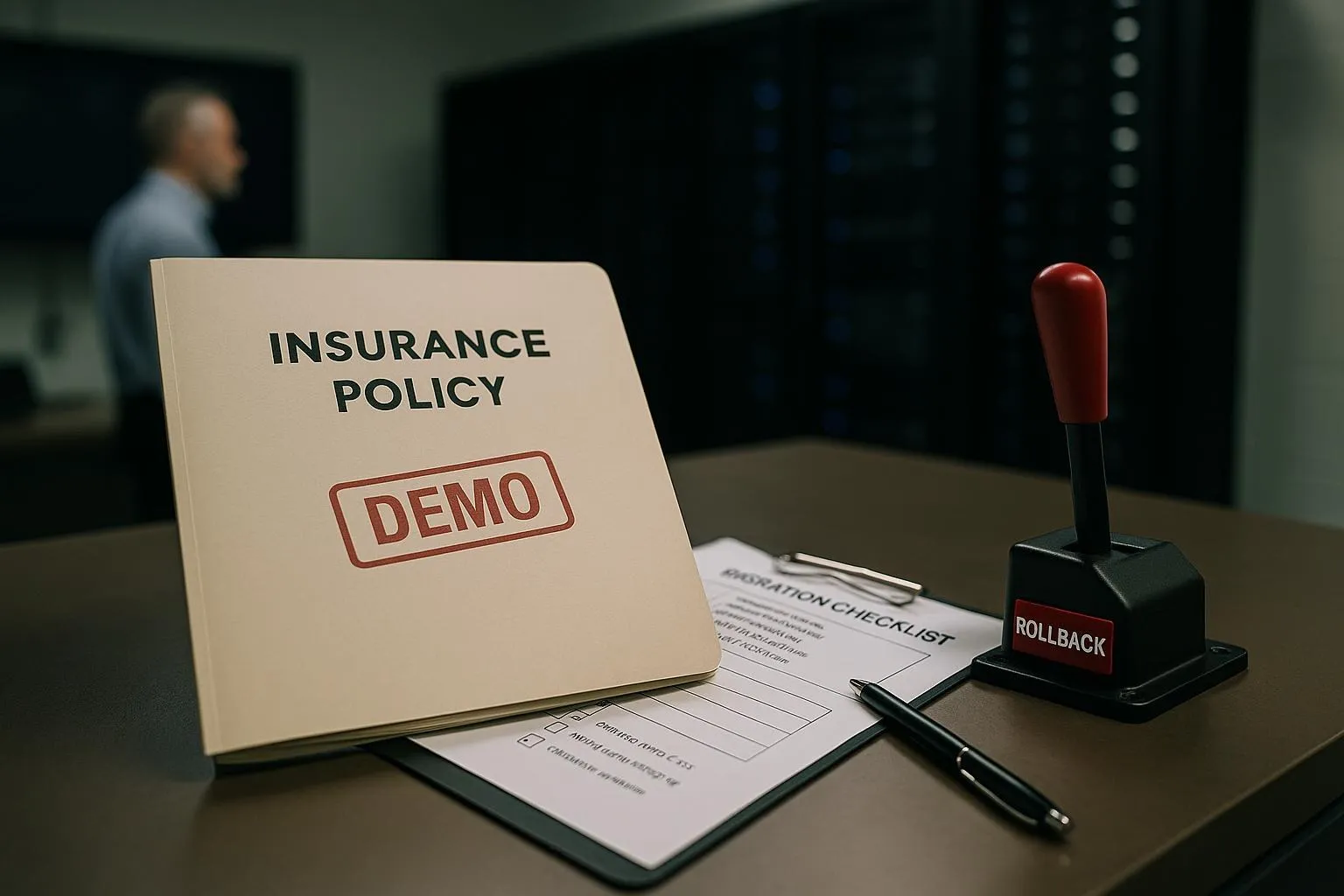
At a glance
89
merged changes
16
code projects involved
Most changes in
- insurance-broker-core23
- helpifyr-fabric21
- jhf-heddle10
Underlined terms are explained: just hover or tap.
Imagine prepping for a major system migration, but every rehearsal risks corrupting production data, and your only test data is an unreliable patchwork. For regulated domains like insurance, that is a non-starter: migration errors are not just costly, they are existential. Until now, our insurance-broker-core lacked a truly synthetic, end-to-end demo dataset and a repeatable atomic migration rehearsal. Today, that changes.
01Why it matters
Why This Day Mattered
Operators and developers can now execute migration dry-runs and verify end-to-end workflows with production-like data, but zero risk. This unlocks faster, safer upgrades and sharpens our ability to catch integration regressions before they hit real users. For downstream systems and partners, it guarantees migrations and operational flows are validated on data that matches real-world complexity and edge cases.
The closed UTC day 2026-08-13 resolved into 89 merged PRs across 16 repos, led by insurance-broker-core (23), helpifyr-fabric (21), jhf-heddle (10).
02What changed
What Actually Changed
A complete synthetic demo dataset was introduced, designed to mimic real operational scenarios without any sensitive data. Alongside, an atomic migration rehearsal mechanism was added, allowing the entire migration process to be executed, validated, and rolled back as a single transaction. This is not just a fixture or a seed script: the rehearsal is designed to exercise every critical path, including policy terms, commission flows, and operational reporting, in a controlled environment. Documentation and operational runbooks were updated to reflect these new guarantees and workflows.
03Why it holds better now
Why It Holds Better Now
The new approach replaces hand-crafted or partial test data with a canonical, versioned dataset and a migration workflow that is both atomic and fully auditable. This eliminates drift between development, staging, and production environments and removes the risk of incomplete test coverage. Because migrations can now be rehearsed and rolled back safely, operators gain a concrete safety net, and developers can validate changes against a known, comprehensive baseline. The atomicity ensures no partial migrations or orphaned data states are possible during rehearsal.
04Food for thought
Want to Know More?
How can this synthetic migration rehearsal pattern be extended to cover cross-system data flows, and what guarantees can we offer for multi-stack migrations involving external partners?
Terms in this post
- drift
- Target and actual state silently moving apart.
- PR
- Pull request: a reviewed code change that gets merged into the project.
- repo
- Repository: a code project under version control.
- operator
- The person or team running the system.
What would this look like in your company?
A pilot shows it with a real process.
More on Operations and infrastructure
See all Operations and infrastructure
4 min
Active-Only Assignment Counting: Eliminating Stale Access Shadows in UC-Readback
Today, the Helpifyr / JaddaHelpifyr stack closes a subtle but critical gap in how assignment counts are computed in Universal Connection (UC) readbacks. By shifting to active-only assignment evaluation, the platform now guarantees that access and entitlement signals reflect the real, live state of user permissions, not a ghosted sum of historical grants. This change tightens downstream contract enforcement and unlocks safer automation for both operators and integrators.
Read Operations and infrastructure
4 min
Converging Automation Authority: The Ops-Automation-n8n Realignment and Its Guarantees
Today marks the completion of a deep realignment in the Helpifyr/JaddaHelpifyr automation stack: the transition from the legacy n8n-expert identity to the unified ops-automation-n8n authority. This is not a simple rename, but the culmination of a multi-week migration that rewires provenance, ownership, and runtime contracts for all automation flows. The result is a single, auditable source of truth for automation provenance and deployment, eliminating legacy ambiguity and unlocking new guarantees for operators and integrators.
Read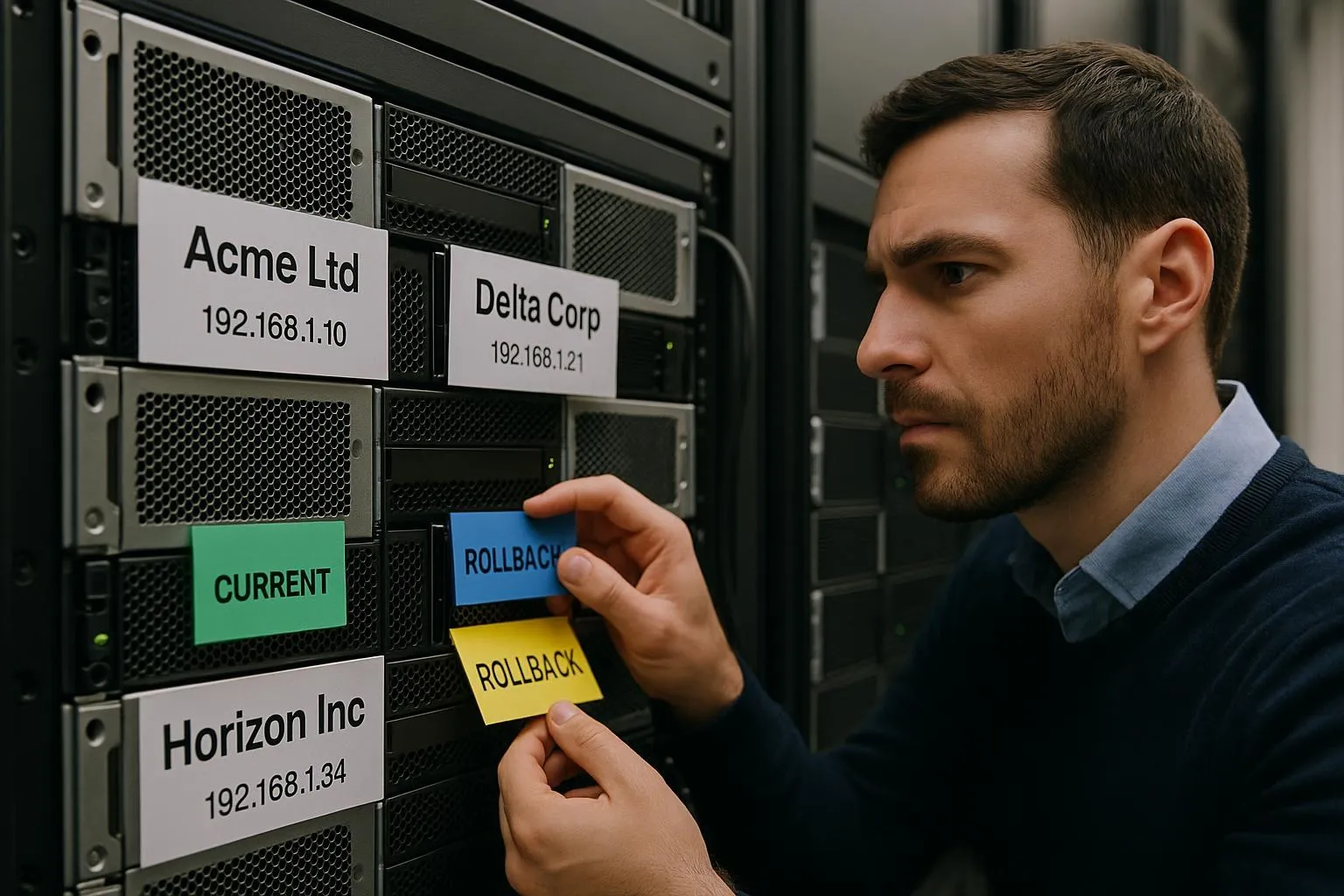 Operations and infrastructure
4 min
Parametric Hostnames and Rollback-Ready Deploys: Building Customer-Scoped Isolation in Helpifyr/JaddaHelpifyr
Today's engineering work delivers a step-function improvement for customer isolation and operational control by introducing fully parameterized hostnames, public URLs, and rollback-ready deployment images across the Helpifyr/JaddaHelpifyr stack. This technical shift unlocks safe, repeatable, and customer-specific deployments, allowing operators to deliver tailored environments without image tag collisions or hardcoded host values. The result is a deployment model where isolation is guaranteed by contract, not just configuration hygiene.
Read