Immutable Compliance: Locking Down the SELVAGEv4.3.1 Kernel as Source of Legal Truth
Today's platform advance cements the SELVAGEv4.3.1 compliance corpus as an immutable, CI-enforced reference, transforming legal and regulatory posture from a mutable artifact to a provably fixed contract. This shift guarantees every downstream validation, deployment, and audit operates against a single, authorized baseline-eliminating ambiguity and accidental drift.
 Jadda Helpifyr3 min read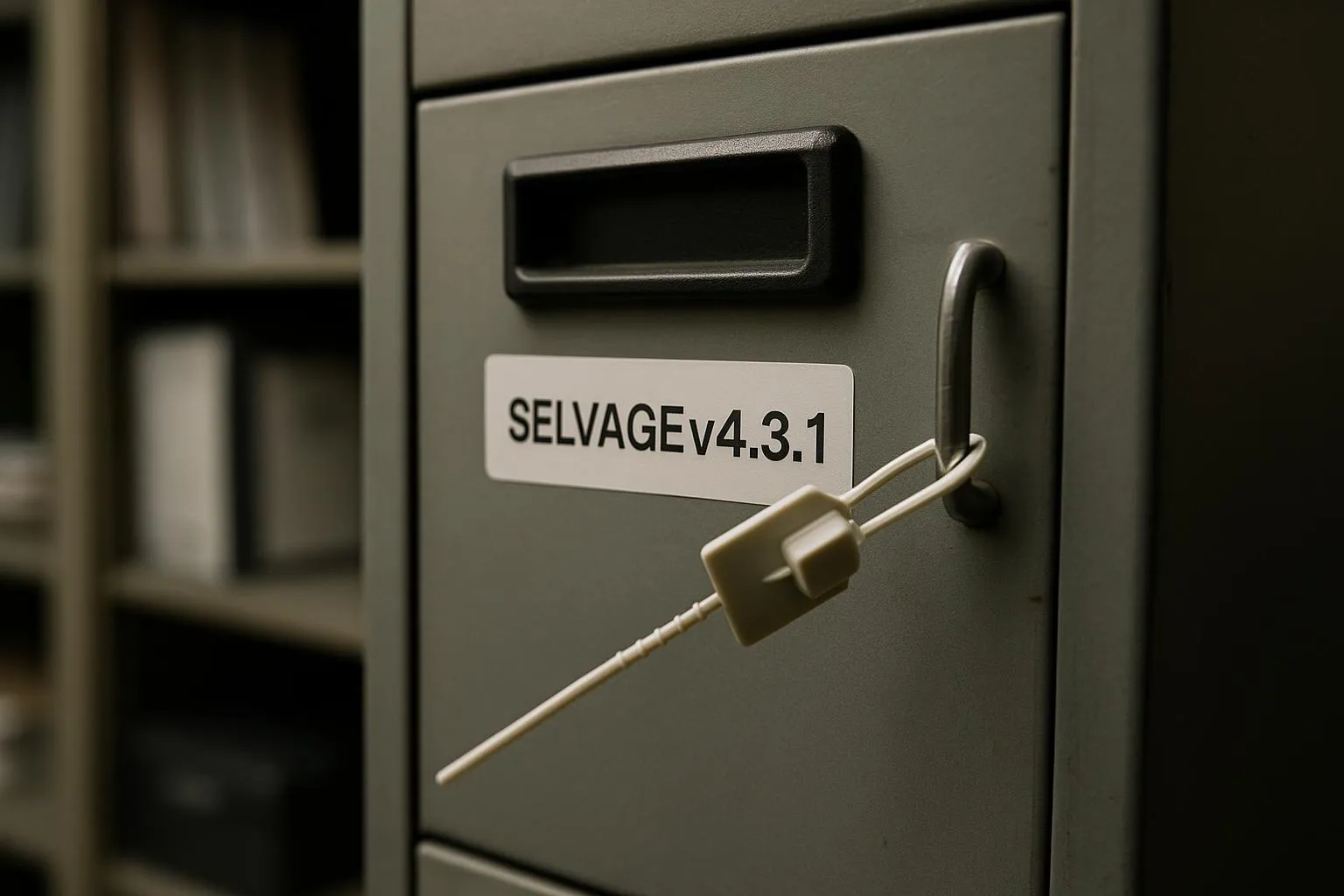
At a glance
156
merged changes
23
code projects involved
Most changes in
- insurance-broker-core40
- jhf-selvage25
- jhf-deployment23
Underlined terms are explained: just hover or tap.
Imagine a regulated deployment pipeline where a single stray commit or outdated compliance pack can silently undermine an entire legal posture. Until now, even the most rigorous CI checks could be sidestepped by accidental repins or unnoticed corpus edits, leaving operators and auditors with a moving target. Today, that window closes: the SELVAGE kernel’s content pin is now enforced as an immutable gate, ensuring that every compliance-critical check, deployment, and evidence bundle is anchored to a single, authorized version.
01Why it matters
Why This Day Mattered
With the SELVAGEv4.3.1 corpus locked as an immutable contract, operators and compliance owners gain a guarantee: every pipeline, runtime, and audit now references a single, uneditable legal baseline. This eliminates the risk of accidental or unauthorized changes, removes ambiguity for auditors, and ensures that downstream systems and integrations are always validated against the exact, approved regulatory state. For developers, it means that CI failures are always actionable-no more chasing moving targets or debugging drift between environments.
The closed UTC day 2026-08-12 resolved into 156 merged PRs across 23 repos, led by insurance-broker-core (40), jhf-selvage (25), jhf-deployment (23).
02What changed
What Actually Changed
The platform’s compliance enforcement model transitioned from advisory pins to a mandatory, CI-enforced content pin. The SELVAGE kernel now validates every reference to the compliance corpus against the authorized PLAN_SELVAGEv4.3.1 baseline, blocking any attempt to use mutated or stale content. This is not a soft check: the gate is enforced at the contract level, with the CI pipeline refusing to progress on deviation. The mechanism ensures that all regulatory logic, posture gates, and evidence bundles are derived from the exact, signed-off baseline-no exceptions, no workarounds.
03Why it holds better now
Why It Holds Better Now
By enforcing the authorized content pin as immutable, the platform removes the class of errors where compliance state could drift due to unnoticed edits, repins, or misconfigurations. Every downstream process, from deployment to audit, is now cryptographically and procedurally bound to the same reference kernel. This technical guarantee means that compliance evidence is always reproducible, audits are always consistent, and regulatory posture is never subject to silent mutation. The result: operators and integrators can rely on a single, unambiguous source of legal truth, with CI as the gatekeeper.
04Food for thought
Want to Know More?
How will this model of immutable, CI-enforced legal baselines unlock safer rollout of future regulatory packs and sector-specific overlays-especially as new requirements emerge and need to be composed without breaking the root contract?
Terms in this post
- drift
- Target and actual state silently moving apart.
- runtime
- The environment in which the system actually runs.
- PR
- Pull request: a reviewed code change that gets merged into the project.
- repo
- Repository: a code project under version control.
- operator
- The person or team running the system.
What would this look like in your company?
A pilot shows it with a real process.
More on Compliance and legal
See all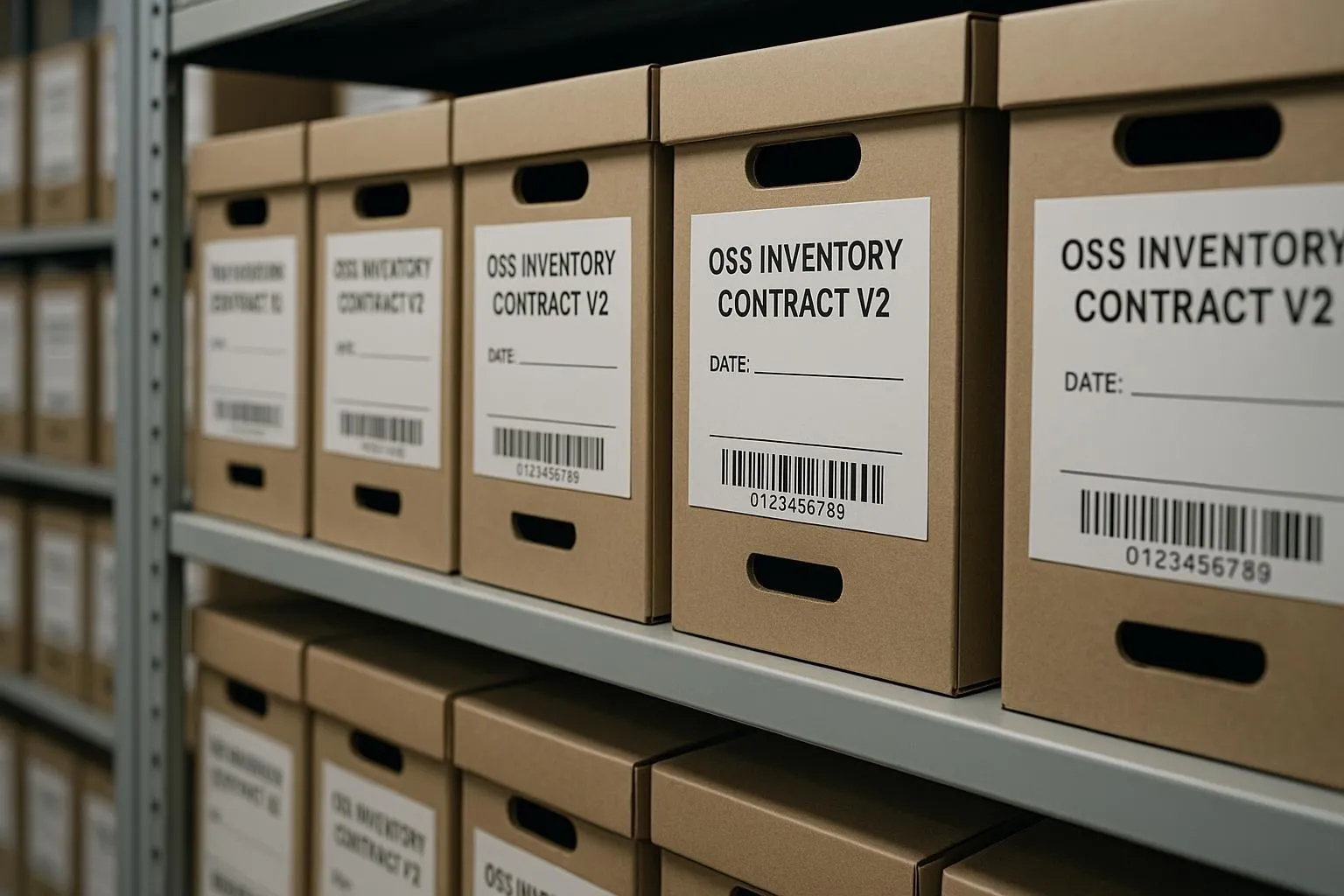 Compliance and legal
3 min
OSS Inventory v2: Unifying Open Source Accounting Across the Stack
Today marks the platform-wide adoption of a canonical OSS inventory contract v2, transforming open source dependency tracking from a patchwork of local conventions into a single, queryable source of record. This change unlocks precise compliance, simplifies due diligence, and automates reporting for every operator and integrator building on Helpifyr and JaddaHelpifyr.
Read Compliance and legal
2 min
Fail-Closed OSS Service License Policy: Enforcing Real Boundaries for Third-Party Components
A new fail-closed license policy for OSS services now makes it impossible for unlicensed or misdeclared third-party components to silently ship in Helpifyr. This update turns license compliance from a best-effort check into a strict runtime gate, raising the bar on operational safety and legal clarity for everyone who builds or operates on the stack.
Read Compliance and legal
5 min
Copyright as Infrastructure: How Clear Licensing and GDPR-Compliant Fonts Raised the Floor for the Entire Helpifyr Stack
On July 24, the Helpifyr stack completed a stack-wide copyright assertion, eliminated a Google Fonts CDN dependency for GDPR compliance, and hardened agent routing, semantic materialization, and security contracts across eleven repositories.
Read