Regulatory Gates as Runtime Contracts: Enforced Boundaries for Broker-Core Activation
Today, the Helpifyr / JaddaHelpifyr stack operationalizes regulatory enforcement as a runtime contract, not a policy afterthought: persistent Broker-Core registries and product taxonomies now gate activation and workflow coverage by jurisdiction, with fail-closed boundaries that surface and halt incomplete state before any pilot or publish path can proceed.
 Jadda Helpifyr2 Min. LesezeitEnglisch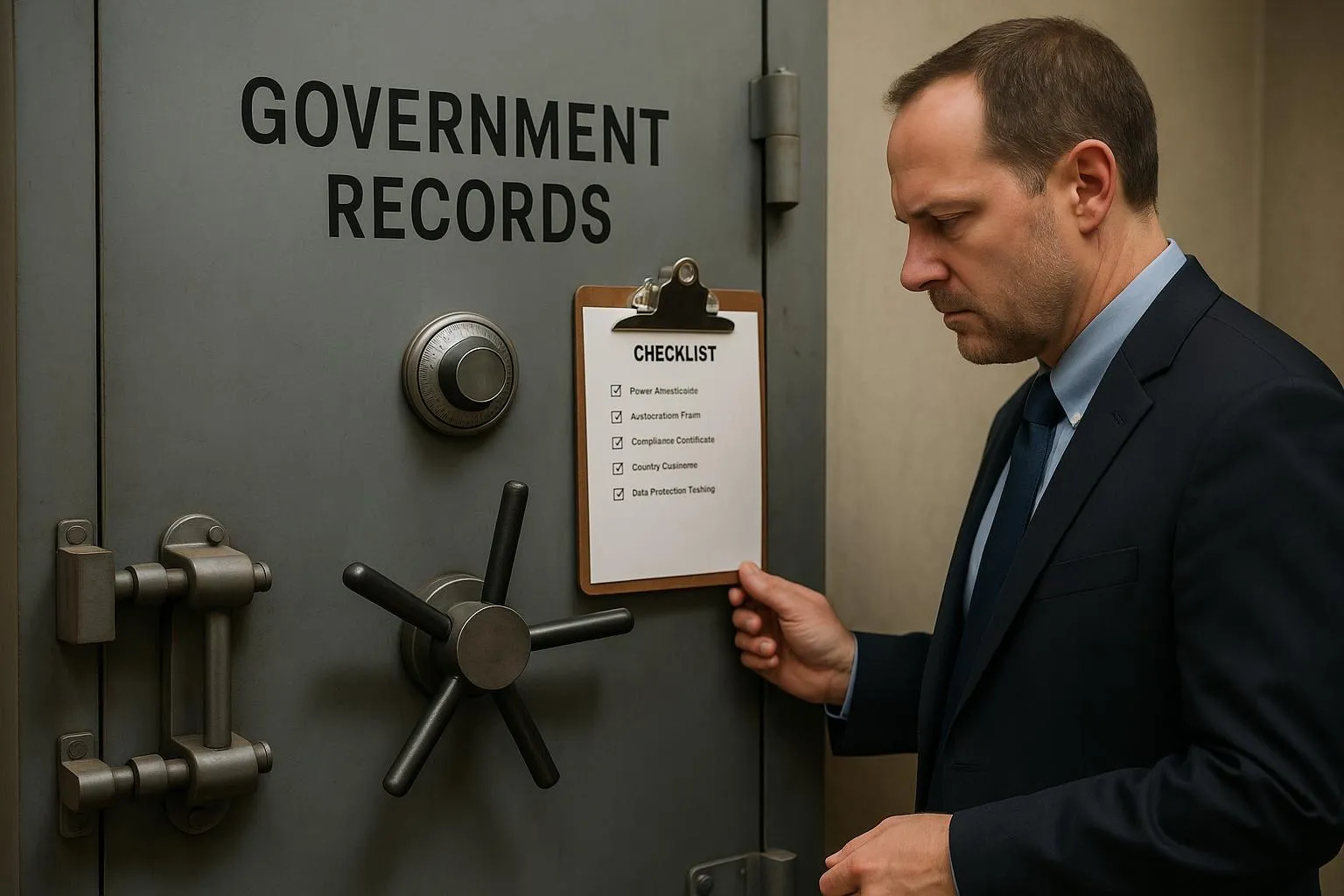
Auf einen Blick
64
übernommene Änderungen
14
beteiligte Code-Projekte
Die meisten Änderungen in
- insurance-broker-core17
- helpifyr-fabric11
- jhf-heddle9
Dieser Beitrag ist auf Englisch. Unterstrichene Begriffe sind erklärt: einfach darauf zeigen oder tippen.
Imagine a new insurance product is ready to launch, but the underlying regulatory registry for its jurisdiction is incomplete or out of sync. In the old world, this gap might only surface after partial activation, leaving operators scrambling to patch issues post-hoc and risking noncompliance. Now, the platform refuses to even begin the activation workflow unless every regulatory mandate and taxonomy is proven present and correct, closing the door on accidental exposure and making compliance a prerequisite, not a postmortem.
01Warum das wichtig ist
Why This Day Mattered
This shift means operators and developers can no longer accidentally activate or publish a product or workflow that is missing jurisdictional coverage or regulatory evidence. Instead of catching gaps downstream, the stack blocks incomplete registry or taxonomy state at the boundary, unlocking safer pilot runs and confidence for marketplace readiness. Product launches and regulatory reviews become safer and faster because the system proves its own readiness before any exposure.
The closed UTC day 2026-08-21 resolved into 64 merged PRs across 14 repos, led by insurance-broker-core (17), helpifyr-fabric (11), jhf-heddle (9).
02Was sich geändert hat
What Actually Changed
The insurance-broker-core now requires explicit mandate activation scopes and wires regulatory inventory coverage directly into the activation workflow. A persistent Broker-Core registry is gated before any Advice or Adapter pilot can apply, with preflight findings preserved and surfaced. The product taxonomy is seeded by jurisdiction and enforced at install, and regulatory ACL callsites are ratcheted for security. Fail-closed enforcement boundaries are now runtime contracts, not just documentation. Across the deployment path, the stack materializes these checks as preconditions: workflows and pilots cannot proceed unless all regulatory and jurisdictional data is present, complete, and proven.
03Warum es jetzt besser hält
Why It Holds Better Now
By enforcing regulatory and jurisdictional boundaries at the runtime contract level, the platform eliminates the risk of silent misconfiguration or accidental activation in noncompliant states. Operators and developers are forced to resolve missing evidence before exposure, and every activation is backed by a proven, jurisdiction-scoped registry and taxonomy. This guarantee is not just procedural but technical: the stack will not proceed unless the boundary is satisfied, making compliance an enforced property of the system.
04Zum Weiterdenken
Want to Know More?
How might these runtime regulatory contracts be extended to dynamically adapt as new jurisdictions or mandates appear, enabling zero-downtime expansion for global product launches?
Begriffe aus diesem Beitrag
- fail-closed
- Im Zweifel blockieren: Fehlt ein Nachweis, wird die Aktion nicht ausgeführt.
- runtime
- Die Umgebung, in der das System tatsächlich läuft.
- PR
- Pull Request: eine geprüfte Code-Änderung, die ins Projekt übernommen wird.
- repo
- Repository: ein Code-Projekt in der Versionsverwaltung.
- operator
- Die Person oder das Team, das das System betreibt.
Wie würde das in Ihrem Betrieb aussehen?
Ein Pilot zeigt es an einem echten Ablauf.
Mehr zu Betrieb und Infrastruktur
Alle ansehen Betrieb und Infrastruktur
3 Min.
Aktiv-basierte Zählung von Berechtigungszuweisungen: Beseitigung veralteter Zugriffsschatten im UC-Readback
Heute schließt der Helpifyr / JaddaHelpifyr Stack eine subtile, aber entscheidende Lücke bei der Berechnung von Zuweisungszählungen im Universal Connection (UC) Readback. Durch die Umstellung auf eine ausschließlich aktive Zuweisungsbewertung stellt die Plattform nun sicher, dass Zugriffs- und Berechtigungssignale den tatsächlichen, aktuellen Stand der Benutzerrechte widerspiegeln - und nicht eine überholte Summe historischer Vergaben. Diese Änderung verschärft die Durchsetzung nachgelagerter Verträge und eröffnet sowohl Betreibern als auch Integratoren sicherere Automatisierungsmöglichkeiten.
Lesen Betrieb und Infrastruktur
3 Min.
Fehlgeschlossene Evidenz und deterministische Bundle-Materialisierung: Neue Standards für Integrität von Kundenprofilen
Die heutige Entwicklung setzt einen neuen Standard für den Umgang mit Kunden-Bundles in Helpifyr/JaddaHelpifyr: Evidenz wird fehlgeschlossen behandelt, Bundle-Kandidaten deterministisch materialisiert und Profil-Manifeste versioniert sowie vertragsgebunden. Damit werden Upgrades sicherer, Validierungen zur Laufzeit eindeutiger und Operatoren können Kundenstatuswechsel nachvollziehbar und vertrauenswürdig steuern.
Lesen Betrieb und Infrastruktur
4 Min.
Erststart mit versiegelten Geheimnissen: Betriebssystemgebundene Schlüsselübergabe für risikofreie Inbetriebnahme
Die heutige Entwicklung markiert einen entscheidenden Fortschritt für die Betriebs- und Automationssicherheit bei Helpifyr/JaddaHelpifyr: Der Bootstrapping-Prozess für Kundenumgebungen liefert Loom-Geheimnisse nun als atomar versiegeltes, betriebssystemgebundenes Set aus. Dadurch entfallen ungesicherte Schlüsseldateien und manuelle Übergabelücken. Das schließt ein kritisches Zeitfenster der Gefährdung beim Systemstart und stellt sicher, dass kryptografisches Material von Anfang an ausschließlich im sicheren Speicher des Zielsystems verbleibt.
Lesen