Canonical CRM Projections: Binding Bobbin, Fabric, and Control-DB Into a Single Source of Truth
Today, the Helpifyr stack crossed a threshold: CRM organization state, previously fragmented across Bobbin, Fabric, and their projection transports, now flows as a single canonical envelope. The entire pipeline-artifact, operator credential, and runtime admission-materializes deterministically, making every CRM link observable, auditable, and reliably projected.
 Jadda Helpifyr3 min de lectureAnglais
En un coup d’œil
104
modifications intégrées
14
projets de code concernés
Le plus de modifications dans
- jhf-openclaw-env32
- helpifyr-fabric15
- jhf-reed12
Cet article est en anglais. Les termes soulignés sont expliqués : survolez-les ou touchez-les.
Imagine debugging a CRM sync issue late at night: the organization link event fired, but where is it now? Was it projected to Bobbin, did the Control-DB see it, or did the artifact stage fail on Host172? Historically, each segment of this journey had its own contract, envelope, and potential for drift. Operators faced a maze of partial state and ambiguous failure modes. Today, that ambiguity ends. The Bobbin projection transport, Fabric CRM envelope, and Control-DB route are now locked together-every CRM organization link and its identity are carried, staged, and materialized as a single, canonical flow.
01Pourquoi c’est important
Why This Day Mattered
For operators, CRM organization state can now be traced through every stage, with root-cause visibility and no more silent envelope mismatches. Developers building integrations or automations have a stable, contract-bound structure for CRM events, not a moving target. For users, this means CRM-driven features (like organization onboarding or entitlement) reflect live, end-to-end state without lag or ghost records. The platform can now guarantee that what is declared in Fabric is what is projected in Bobbin and consumed in Control-DB, with no silent splits.
The closed UTC day 2026-07-26 resolved into 104 merged PRs across 14 repos, led by jhf-openclaw-env (32), helpifyr-fabric (15), jhf-reed (12).
02Ce qui a changé
What Actually Changed
The pipeline for CRM organization projection was unified: Fabric now emits a canonical crm.organization.linked envelope, preserving immutable CCL identity and segment_id. The Bobbin projection transport consumes this envelope directly, and the entire artifact staging and materialization process on Host172 is now deterministic, contract-bound, and observable. The Control-DB network route is attached with the same canonical reference, and artifacts are staged, rotated, and read back via a single, root-canonical path. Operator credentials, artifact roots, and runtime admission are all projected and referenced through explicit, contract-driven mechanisms, eliminating the prior drift between declared and materialized state.
03Pourquoi c’est plus solide
Why It Holds Better Now
This unification removes the risk of envelope divergence: every stage-declaration, projection, artifact staging, and network routing-now references the same canonical CRM envelope and immutable identity. By making the Bobbin worker artifact root and operator credential explicit, the system can rotate, read back, and audit state transitions deterministically. Stale or mismatched artifacts are rotated out, and the runtime only admits state that matches the declared contract. This means the CRM organization state is not only observable, but also fully auditable and recoverable, closing the loop for both reliability and compliance.
04Pour aller plus loin
Want to Know More?
How can downstream automations or analytics now leverage the canonical CRM envelope for richer, cross-system workflows-what new joins or traceability become possible when every CRM event is contract-bound and observable end-to-end?
Termes de cet article
- Fabric
- Module des règles, contrats et de la gouvernance pour tout le système.
- Bobbin
- La mémoire du système ; conserve le contexte avec sa provenance.
- drift
- Écart silencieux entre l’état visé et l’état réel.
- runtime
- L’environnement dans lequel le système s’exécute réellement.
- PR
- Pull request : une modification de code relue puis intégrée au projet.
- repo
- Dépôt : un projet de code sous gestion de versions.
- CRM
- Gestion de la relation client : contacts, demandes et opportunités.
- operator
- La personne ou l’équipe qui exploite le système.
À quoi cela ressemblerait-il dans votre entreprise ?
Un pilote le montre sur un processus réel.
Plus sur Données et logique métier
Tout voir Données et logique métier
2 min
Cascade Extraction: Deterministic Invoice Intake from First Scan to Field Guarantee
Today, Helpifyr's document pipeline crossed a threshold: supplier invoices can now be ingested, parsed, and enriched with deterministic, provenance-tracked field extraction-across diverse layouts and tax regimes. This is not just a smarter OCR, but a system-wide architectural shift that guarantees every extracted value is explainable, reproducible, and anchored to its source.
Lire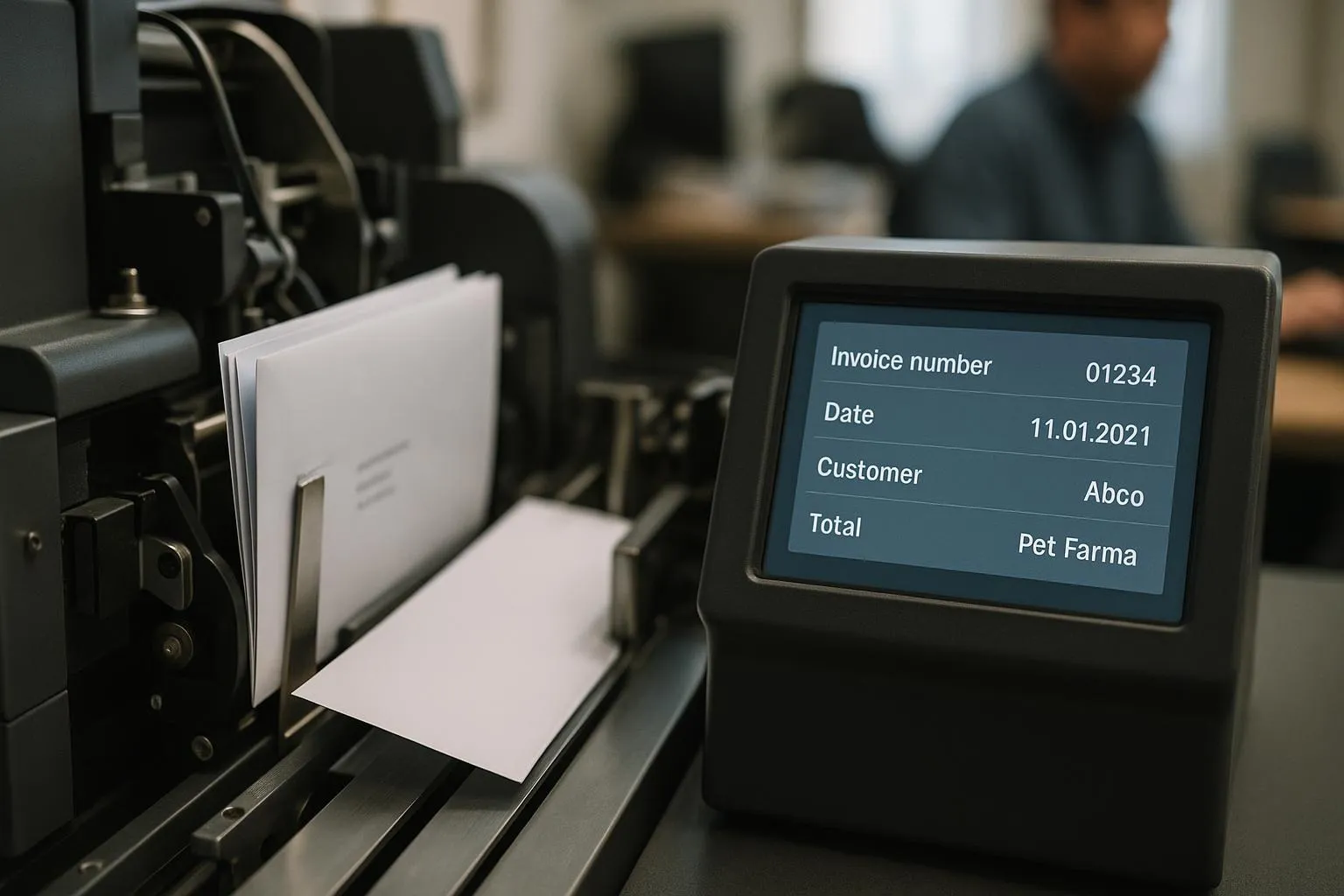 Données et logique métier
2 min
Automatic Invoice Field Extraction: Supplier Intake Meets Real-Time Enrichment
Today, invoice intake on the Helpifyr / JaddaHelpifyr stack gained a new edge: invoices entering via supplier intake are now automatically enriched with structured data through live field extraction, closing the loop between document arrival and actionable, queryable records.
Lire Données et logique métier
2 min
Settling for Certainty: Reference Pinning Ends Phantom State in Decision Flows
A new reference pinning mechanism now guarantees that settlement decisions in flight cannot be lost or misapplied, eliminating phantom or orphaned states and making every decision traceable and replay-safe, even across restarts.
Lire