Offline Import and Local Materialization: Evidence Chains Without Cloud Dependency
Today marks a shift in how Helpifyr/JaddaHelpifyr operators and integrators can guarantee evidence continuity and provenance, even when online access to canonical sources is disrupted. By enabling secure offline import and bounded local materialization of verified Pirn bundles, the stack now supports airgapped and forward-migrated environments with the same evidence guarantees as live cloud-connected operation.
 Jadda Helpifyr4 min read
At a glance
115
merged changes
15
code projects involved
Underlined terms are explained: just hover or tap.
Imagine a critical regulatory audit or migration event in a jurisdiction where network access is tightly controlled, or cloud endpoints are temporarily unreachable. Previously, Helpifyr/JaddaHelpifyr’s evidence and deployment flows were tightly coupled to live cloud verification-meaning operators, auditors, or integrators could be blocked by network partitions or cloud-side disruptions. The tension was clear: the stack’s model for evidence continuity and deployment provenance depended on real-time cloud round-trips, locking out airgapped, sensitive, or disaster-recovery environments from the same guarantees. Today, that contract changes: the platform admits a full offline import and local materialization path, closing the evidence gap for operators working under strict isolation or in-flight migration scenarios.
01Why it matters
Why This Day Mattered
This capability unlocks a new class of operational scenarios for both users and platform operators. Critical environments-whether regulated, airgapped for security, or in the midst of an infrastructure migration-can now maintain provable evidence chains and deployment provenance without live cloud access. This directly benefits auditors, compliance officers, and operators who need to demonstrate continuity of evidence or complete deployments in environments where cloud dependencies are either forbidden or temporarily unavailable. For developers building on the stack, it means their integrations and workflows can now be designed to tolerate or even prefer offline-first flows, reducing the risk of downtime or blocked evidence chains due to network or cloud outages. In short, today’s work means that evidence continuity is no longer a privilege of always-online operation, but a guarantee regardless of network context.
The closed UTC day 2026-09-21 resolved into 115 merged PRs across 15 repos.
02What changed
What Actually Changed
The core shift is the introduction and binding of a secure offline import orchestration and bounded local materialization mechanism for Pirn bundles. The stack now exposes a CLI-driven flow for importing verified local bundles, with explicit schema-bound receipts to guarantee the provenance and integrity of the imported artifacts. This is not a simple file copy: the import process verifies bundle signatures using synthetic TUF (The Update Framework) consumers and ensures that only artifacts with valid, bounded approval requests can be materialized. The status of each offline materialization is now readable and verifiable, and failed evidence exports are explicitly denied to prevent incomplete or unverified chains from entering the record. The admission profile for nightly stack runs has been updated to allow filtered-publication bundles, ensuring that only compliant and fully-audited artifacts are included. This all composes to a new contract: operators can project, fetch, and materialize deployment decisions and evidence chains entirely offline, with the same schema and cryptographic guarantees as the online path.
03Why it holds better now
Why It Holds Better Now
Technically, the new state is more capable because it decouples evidence and deployment provenance from live cloud dependency without weakening the verification contract. By requiring bounded approval requests, schema-bound receipts, and offline verification of bundle signatures (via TUF), the stack ensures that only valid and auditable artifacts are admitted-even in isolation. The explicit denial of failed exports and the ability to read back the status of each materialization prevent silent corruption or evidence gaps. Developers and operators gain a deterministic, testable path for local evidence projection, making it possible to validate workflows and compliance chains in CI, staging, or disaster-recovery scenarios where cloud access is restricted or intentionally absent. The explicit contract for filtered-publication profiles and the isolation of development runners mean that only artifacts meeting strict provenance and audit requirements can enter the record, closing the loop for airgapped and migration-driven environments.
04Food for thought
Want to Know More?
How will this offline import and local materialization path change the way you approach compliance, migration, or disaster recovery in environments with strict network controls? For developers: what new workflows or test scenarios become possible now that full evidence and deployment provenance can be projected and validated entirely offline? And for operators: what guarantees or controls would you want to see next to further strengthen the airgap and migration story-such as automated reconciliation or forward-proofing of evidence chains?
Terms in this post
- provenance
- Proof of origin: where a piece of information or an artefact comes from.
- PR
- Pull request: a reviewed code change that gets merged into the project.
- repo
- Repository: a code project under version control.
- operator
- The person or team running the system.
What would this look like in your company?
A pilot shows it with a real process.
More on Evidence and verification
See all Evidence and verification
5 min
Fail-Closed Capture Boundaries: Immutable Evidence for Customer Profile Integrity
Today, the Helpifyr / JaddaHelpifyr stack crossed a threshold in customer profile integrity by enforcing fail-closed, repo-bound evidence capture at every critical boundary. This shift locks in both the inputs and the causal chain for customer state transitions, making drift, ambiguous custody, and silent misattribution impossible. Operators, developers, and downstream adapters now have a single, immutable source of truth: every profile event is now cryptographically attested, causally traceable, and verifiable against the exact source tree and admission gate that authorized it.
Read Evidence and verification
3 min
Fail-Closed Evidence and Deterministic Bundle Materialization: Raising the Floor for Customer Profile Integrity
Today’s work delivers a new baseline for customer bundle handling in Helpifyr/JaddaHelpifyr: evidence is now fail-closed, bundle candidates are deterministically materialized, and profile manifests are versioned and contract-bound. This unlocks safer upgrades, cuts ambiguity in runtime validation, and empowers operators to reason about customer state transitions with confidence.
Read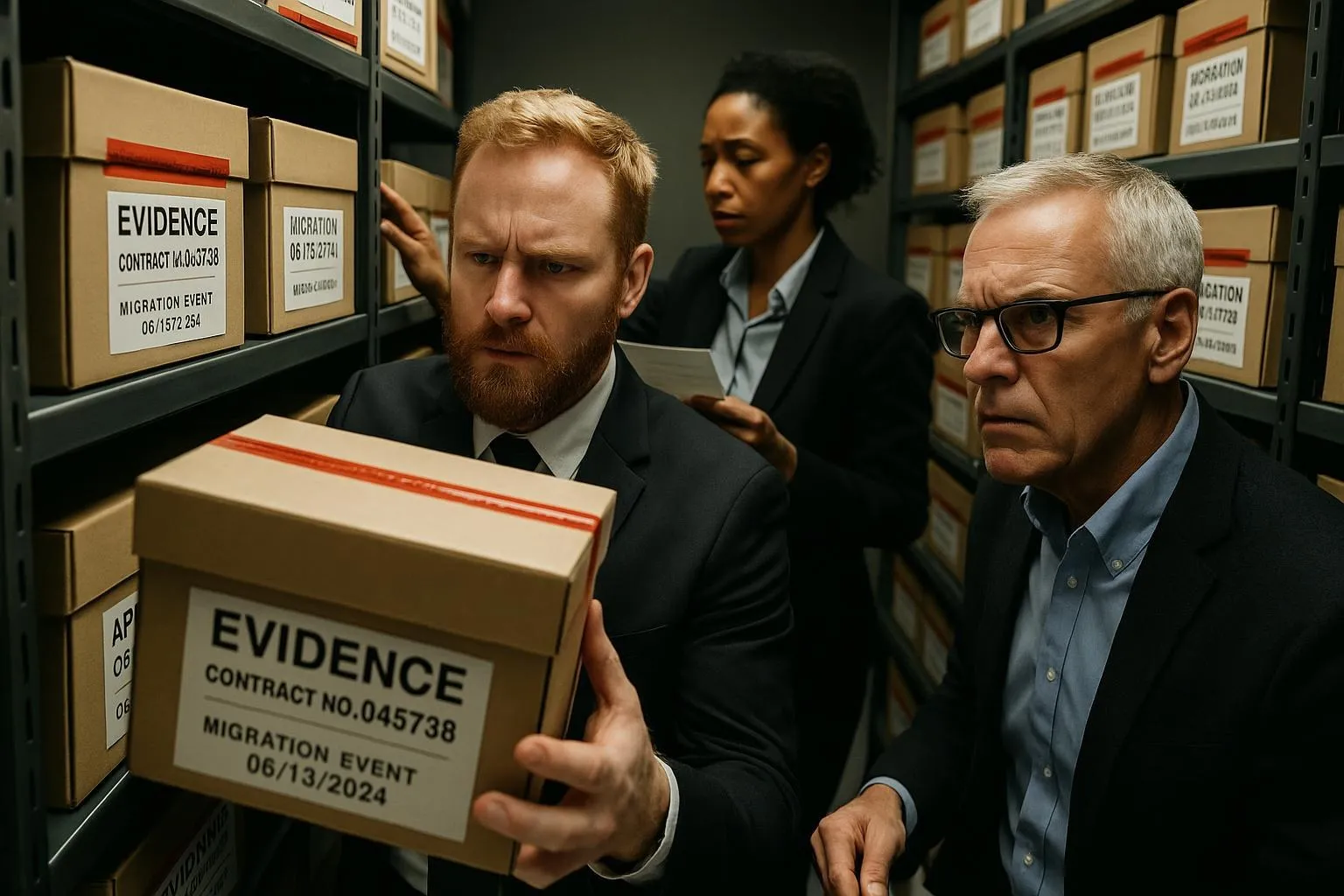 Evidence and verification
3 min
Sealing the Evidence: Immutable Readbacks and Controlled Boundaries for Plan 28.2 and Beyond
Today's engineering work delivers a tangible advance in the reliability and auditability of authority evidence for critical insurance plan operations. By introducing sealed inventory readbacks, explicit migration cutover evidence, and hardened schemas for external approval, the Helpifyr/JaddaHelpifyr stack now guarantees that what operators and auditors see is not just the current state, but a cryptographically and contractually bound snapshot of how it got there.
Read