Semantic Activation Gates: Programmatic Control Over Stack Readiness, Not Just Runtime Flags
Today, we moved beyond generic admission toggles, introducing explicit semantic activation gates (S0-S3) that encode the true operational state of services and programmatic contract layers. This shift replaces implicit readiness with a contract-driven, evidence-backed posture, giving operators and integrators a reliable, introspectable source of truth for stack component activation.
 Jadda Helpifyr3 Min. LesezeitEnglisch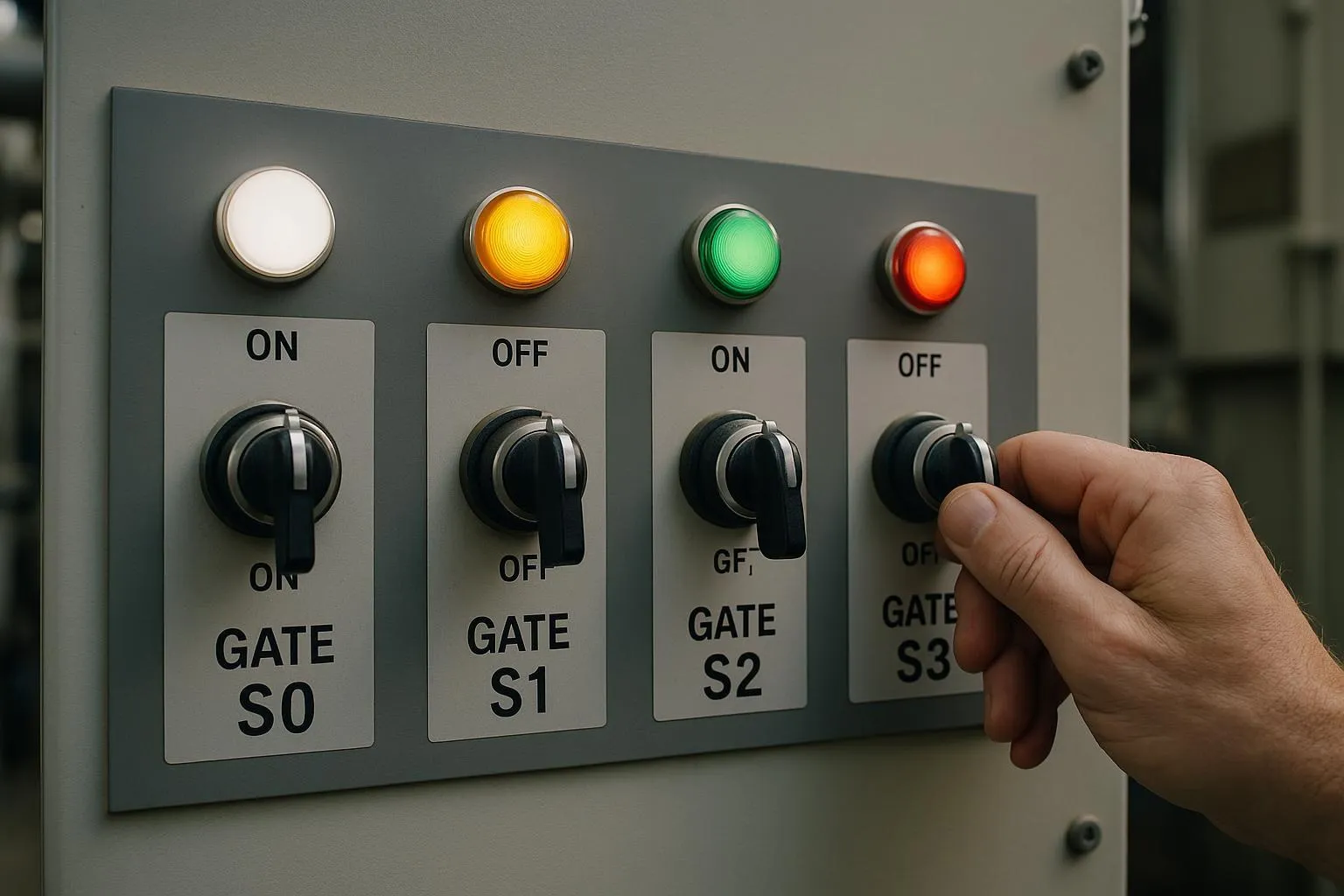
Auf einen Blick
236
übernommene Änderungen
21
beteiligte Code-Projekte
Die meisten Änderungen in
- jhf-openclaw-env68
- jhf-lantern53
- helpifyr-fabric22
Dieser Beitrag ist auf Englisch. Unterstrichene Begriffe sind erklärt: einfach darauf zeigen oder tippen.
A recurring pain for operators and integrators has been the ambiguity around when a service is truly ‘ready’-not just running, but contractually and contextually able to accept real work. Historically, readiness checks have been blunt: a port is open, a flag is set, maybe a health endpoint returns 200. But these signals rarely capture the nuanced, staged activation that complex systems require. The stakes: integrations fail at runtime, work queues stall, and automation chains break, all due to a lack of semantic clarity about what ‘ready’ actually means in context.
01Warum das wichtig ist
Why This Day Mattered
By defining and enforcing S0-S3 semantic activation gates across the Helpifyr/JaddaHelpifyr stack, we unlocked precise, programmable control over component readiness. This enables operators to automate handoffs and orchestrations with confidence, knowing that downstream services only admit work when their contractually declared posture is met. For developers, this means fewer race conditions and less guesswork when integrating new capabilities. For users, workflows become more predictable, with fewer silent stalls or cryptic failures.
The closed UTC day 2026-07-16 resolved into 236 merged PRs across 21 repos, led by jhf-openclaw-env (68), jhf-lantern (53), helpifyr-fabric (22).
02Was sich geändert hat
What Actually Changed
The stack now materializes explicit activation gates (S0-S3) in helpifyr-fabric, each representing a defined semantic milestone (such as ‘foundation contracts loaded’, ‘identity posture attested’, or ‘handoff receivers materialized’). These gates are programmatically surfaced in the Fabric API and Compose layers, and are consumed by downstream runtime orchestrators and admission controllers. Instead of relying on implicit readiness or scattered config flags, activation is now evidence-backed and introspectable, with contract-bound state transitions and event publication across the stack.
03Warum es jetzt besser hält
Why It Holds Better Now
The semantic activation model replaces guesswork and implicit coordination with contractually guaranteed, observable state transitions. Because each gate is tied to concrete evidence-such as loaded contracts, attested identities, or published mapping events-operators and automation can reason about stack readiness with precision. This eliminates timing races and the risk of admitting work to a component that is technically up but not semantically ready. The approach also supports future extension: new activation gates can be defined as the contract surface expands, without breaking existing orchestration.
04Zum Weiterdenken
Want to Know More?
How could these semantic activation gates be leveraged to drive zero-downtime deploys or automated rollback, using evidence-backed state transitions instead of brittle health checks?
Begriffe aus diesem Beitrag
- Fabric
- Baustein für Regeln, Verträge und Governance im ganzen System.
- rollback
- Zurücksetzen auf den letzten funktionierenden Stand.
- runtime
- Die Umgebung, in der das System tatsächlich läuft.
- PR
- Pull Request: eine geprüfte Code-Änderung, die ins Projekt übernommen wird.
- repo
- Repository: ein Code-Projekt in der Versionsverwaltung.
- operator
- Die Person oder das Team, das das System betreibt.
Wie würde das in Ihrem Betrieb aussehen?
Ein Pilot zeigt es an einem echten Ablauf.
Mehr zu Betrieb und Infrastruktur
Alle ansehen Betrieb und Infrastruktur
3 Min.
Aktiv-basierte Zählung von Berechtigungszuweisungen: Beseitigung veralteter Zugriffsschatten im UC-Readback
Heute schließt der Helpifyr / JaddaHelpifyr Stack eine subtile, aber entscheidende Lücke bei der Berechnung von Zuweisungszählungen im Universal Connection (UC) Readback. Durch die Umstellung auf eine ausschließlich aktive Zuweisungsbewertung stellt die Plattform nun sicher, dass Zugriffs- und Berechtigungssignale den tatsächlichen, aktuellen Stand der Benutzerrechte widerspiegeln - und nicht eine überholte Summe historischer Vergaben. Diese Änderung verschärft die Durchsetzung nachgelagerter Verträge und eröffnet sowohl Betreibern als auch Integratoren sicherere Automatisierungsmöglichkeiten.
Lesen Betrieb und Infrastruktur
3 Min.
Fehlgeschlossene Evidenz und deterministische Bundle-Materialisierung: Neue Standards für Integrität von Kundenprofilen
Die heutige Entwicklung setzt einen neuen Standard für den Umgang mit Kunden-Bundles in Helpifyr/JaddaHelpifyr: Evidenz wird fehlgeschlossen behandelt, Bundle-Kandidaten deterministisch materialisiert und Profil-Manifeste versioniert sowie vertragsgebunden. Damit werden Upgrades sicherer, Validierungen zur Laufzeit eindeutiger und Operatoren können Kundenstatuswechsel nachvollziehbar und vertrauenswürdig steuern.
Lesen Betrieb und Infrastruktur
4 Min.
Erststart mit versiegelten Geheimnissen: Betriebssystemgebundene Schlüsselübergabe für risikofreie Inbetriebnahme
Die heutige Entwicklung markiert einen entscheidenden Fortschritt für die Betriebs- und Automationssicherheit bei Helpifyr/JaddaHelpifyr: Der Bootstrapping-Prozess für Kundenumgebungen liefert Loom-Geheimnisse nun als atomar versiegeltes, betriebssystemgebundenes Set aus. Dadurch entfallen ungesicherte Schlüsseldateien und manuelle Übergabelücken. Das schließt ein kritisches Zeitfenster der Gefährdung beim Systemstart und stellt sicher, dass kryptografisches Material von Anfang an ausschließlich im sicheren Speicher des Zielsystems verbleibt.
Lesen