Semantic Activation Gates: Programmatic Control Over Stack Readiness, Not Just Runtime Flags
Today, we moved beyond generic admission toggles, introducing explicit semantic activation gates (S0-S3) that encode the true operational state of services and programmatic contract layers. This shift replaces implicit readiness with a contract-driven, evidence-backed posture, giving operators and integrators a reliable, introspectable source of truth for stack component activation.
 Jadda Helpifyr3 min read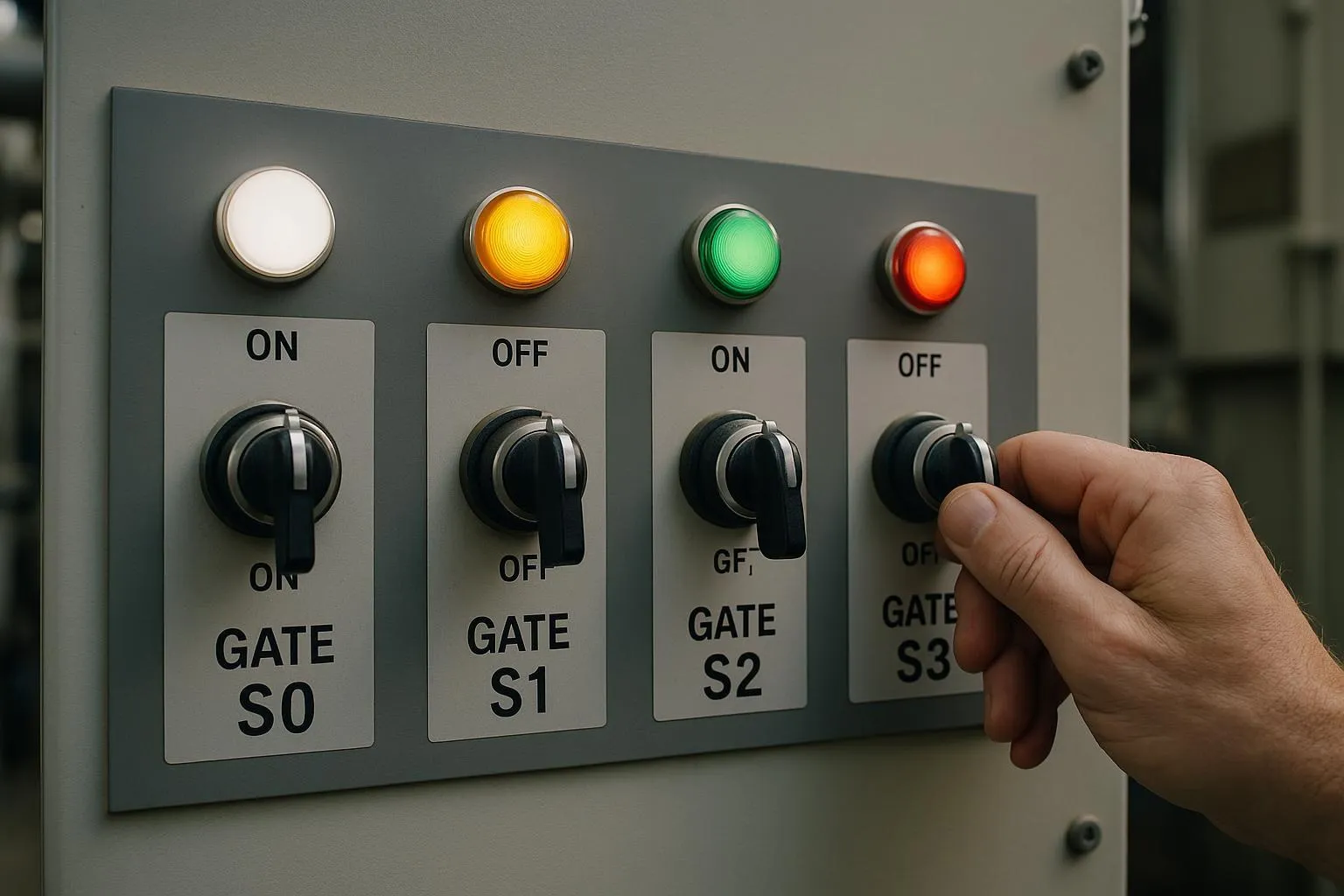
At a glance
236
merged changes
21
code projects involved
Most changes in
- jhf-openclaw-env68
- jhf-lantern53
- helpifyr-fabric22
Underlined terms are explained: just hover or tap.
A recurring pain for operators and integrators has been the ambiguity around when a service is truly ‘ready’-not just running, but contractually and contextually able to accept real work. Historically, readiness checks have been blunt: a port is open, a flag is set, maybe a health endpoint returns 200. But these signals rarely capture the nuanced, staged activation that complex systems require. The stakes: integrations fail at runtime, work queues stall, and automation chains break, all due to a lack of semantic clarity about what ‘ready’ actually means in context.
01Why it matters
Why This Day Mattered
By defining and enforcing S0-S3 semantic activation gates across the Helpifyr/JaddaHelpifyr stack, we unlocked precise, programmable control over component readiness. This enables operators to automate handoffs and orchestrations with confidence, knowing that downstream services only admit work when their contractually declared posture is met. For developers, this means fewer race conditions and less guesswork when integrating new capabilities. For users, workflows become more predictable, with fewer silent stalls or cryptic failures.
The closed UTC day 2026-07-16 resolved into 236 merged PRs across 21 repos, led by jhf-openclaw-env (68), jhf-lantern (53), helpifyr-fabric (22).
02What changed
What Actually Changed
The stack now materializes explicit activation gates (S0-S3) in helpifyr-fabric, each representing a defined semantic milestone (such as ‘foundation contracts loaded’, ‘identity posture attested’, or ‘handoff receivers materialized’). These gates are programmatically surfaced in the Fabric API and Compose layers, and are consumed by downstream runtime orchestrators and admission controllers. Instead of relying on implicit readiness or scattered config flags, activation is now evidence-backed and introspectable, with contract-bound state transitions and event publication across the stack.
03Why it holds better now
Why It Holds Better Now
The semantic activation model replaces guesswork and implicit coordination with contractually guaranteed, observable state transitions. Because each gate is tied to concrete evidence-such as loaded contracts, attested identities, or published mapping events-operators and automation can reason about stack readiness with precision. This eliminates timing races and the risk of admitting work to a component that is technically up but not semantically ready. The approach also supports future extension: new activation gates can be defined as the contract surface expands, without breaking existing orchestration.
04Food for thought
Want to Know More?
How could these semantic activation gates be leveraged to drive zero-downtime deploys or automated rollback, using evidence-backed state transitions instead of brittle health checks?
Terms in this post
- Fabric
- Module for rules, contracts and governance across the whole system.
- rollback
- Returning to the last working state.
- runtime
- The environment in which the system actually runs.
- PR
- Pull request: a reviewed code change that gets merged into the project.
- repo
- Repository: a code project under version control.
- operator
- The person or team running the system.
What would this look like in your company?
A pilot shows it with a real process.
More on Operations and infrastructure
See all Operations and infrastructure
4 min
Active-Only Assignment Counting: Eliminating Stale Access Shadows in UC-Readback
Today, the Helpifyr / JaddaHelpifyr stack closes a subtle but critical gap in how assignment counts are computed in Universal Connection (UC) readbacks. By shifting to active-only assignment evaluation, the platform now guarantees that access and entitlement signals reflect the real, live state of user permissions, not a ghosted sum of historical grants. This change tightens downstream contract enforcement and unlocks safer automation for both operators and integrators.
Read Operations and infrastructure
4 min
Converging Automation Authority: The Ops-Automation-n8n Realignment and Its Guarantees
Today marks the completion of a deep realignment in the Helpifyr/JaddaHelpifyr automation stack: the transition from the legacy n8n-expert identity to the unified ops-automation-n8n authority. This is not a simple rename, but the culmination of a multi-week migration that rewires provenance, ownership, and runtime contracts for all automation flows. The result is a single, auditable source of truth for automation provenance and deployment, eliminating legacy ambiguity and unlocking new guarantees for operators and integrators.
Read Operations and infrastructure
4 min
Parametric Hostnames and Rollback-Ready Deploys: Building Customer-Scoped Isolation in Helpifyr/JaddaHelpifyr
Today's engineering work delivers a step-function improvement for customer isolation and operational control by introducing fully parameterized hostnames, public URLs, and rollback-ready deployment images across the Helpifyr/JaddaHelpifyr stack. This technical shift unlocks safe, repeatable, and customer-specific deployments, allowing operators to deliver tailored environments without image tag collisions or hardcoded host values. The result is a deployment model where isolation is guaranteed by contract, not just configuration hygiene.
Read