Workflow Concurrency Guards: CI Safety Nets for Parallel World
Today, the Helpifyr and JaddaHelpifyr stack gained a system-wide guarantee against conflicting CI runs. By enforcing canonical concurrency guards across our critical workflows, we have eliminated a subtle but costly class of race conditions, making every merge and deploy more predictable for developers and operators alike.
 Jadda Helpifyr2 min read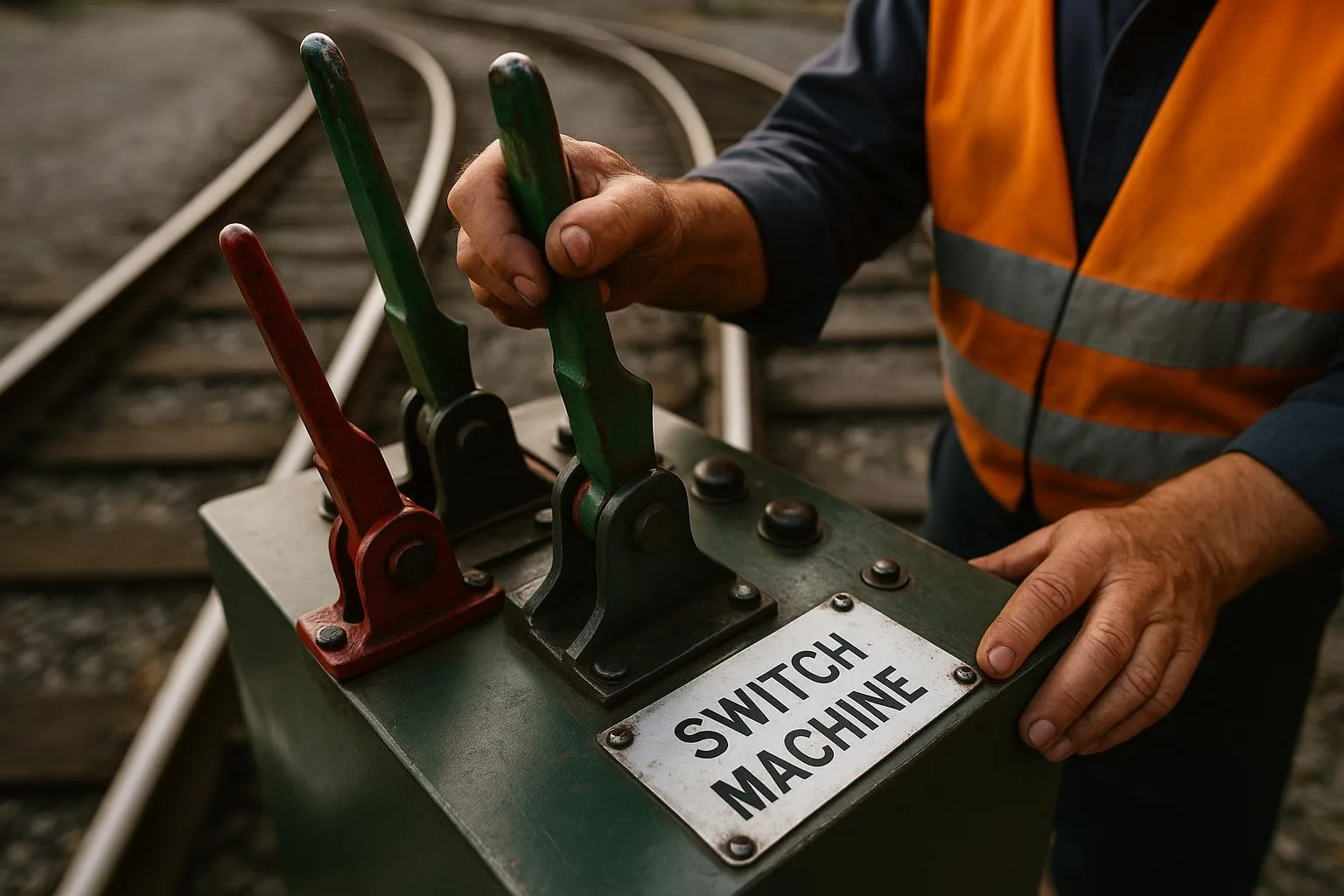
At a glance
57
merged changes
13
code projects involved
Most changes in
- jhf-deployment26
- helpifyr-fabric16
- jhf-weft4
Underlined terms are explained: just hover or tap.
Imagine a developer racing to fix a production bug, only to have their workflow collide with another teammate’s CI run, leaving both builds in an indeterminate state. Or a critical deploy blocked by a stale, overlapping job that never should have run in parallel. In a world where velocity is prized, such concurrency hazards are not just annoyances-they’re sources of real risk, wasted time, and hard-to-debug failures. This day, we drew a clear line: CI workflows across the stack now respect a single source of truth for concurrency, ensuring that the system never executes conflicting operations at once.
01Why it matters
Why This Day Mattered
For developers, this means no more inexplicable build failures or mysterious state drifts caused by overlapping jobs. Operators gain confidence that deploys, migrations, and heavy jobs won’t step on each other’s toes. Users benefit from a platform that can ship fixes and features without the hidden instability of CI-induced race conditions. The value is in time not lost to re-running jobs, in state never corrupted by parallel mutation, and in the guarantee that automation can be trusted to sequence actions safely-even as the stack and its teams scale.
The closed UTC day 2026-08-30 resolved into 57 merged PRs across 13 repos, led by jhf-deployment (26), helpifyr-fabric (16), jhf-weft (4).
02What changed
What Actually Changed
We established canonical concurrency guards in CI for every major Boost and JaddaHelpifyr component, from insurance advice to lead generation to core deployment and web. Each workflow now declares explicit concurrency keys, isolating critical lanes-such as migrations, heavy smoke tests, and deployment verifications-so that only one can run for a given scope at a time. This coordination is enforced at the workflow engine level, not by fragile ad-hoc scripts or manual discipline. For jobs that must run serially, like host-capacity allocation or DCO signoff, the guardrails are now automatic and unambiguous.
03Why it holds better now
Why It Holds Better Now
The new model is technically superior because it eliminates the entire class of bugs where two workflows mutate shared resources or environments simultaneously. By pushing concurrency control into the CI system itself, we avoid the pitfalls of lock files, polling, or human sequencing. The mechanism is both precise and composable: it works across forks, branches, and repos, and can be audited or tuned centrally. This lets us parallelize where safe and serialize where necessary, without guesswork.
04Food for thought
Want to Know More?
How might this foundational guarantee let us unlock even more aggressive automation-such as self-healing deploys, auto-rollback, or multi-region cutovers-knowing that concurrency hazards are now systematically excluded?
Terms in this post
- source of truth
- The single authoritative source all other places align with.
- rollback
- Returning to the last working state.
- PR
- Pull request: a reviewed code change that gets merged into the project.
- repo
- Repository: a code project under version control.
- operator
- The person or team running the system.
What would this look like in your company?
A pilot shows it with a real process.
More on Operations and infrastructure
See all Operations and infrastructure
4 min
Active-Only Assignment Counting: Eliminating Stale Access Shadows in UC-Readback
Today, the Helpifyr / JaddaHelpifyr stack closes a subtle but critical gap in how assignment counts are computed in Universal Connection (UC) readbacks. By shifting to active-only assignment evaluation, the platform now guarantees that access and entitlement signals reflect the real, live state of user permissions, not a ghosted sum of historical grants. This change tightens downstream contract enforcement and unlocks safer automation for both operators and integrators.
Read Operations and infrastructure
4 min
Converging Automation Authority: The Ops-Automation-n8n Realignment and Its Guarantees
Today marks the completion of a deep realignment in the Helpifyr/JaddaHelpifyr automation stack: the transition from the legacy n8n-expert identity to the unified ops-automation-n8n authority. This is not a simple rename, but the culmination of a multi-week migration that rewires provenance, ownership, and runtime contracts for all automation flows. The result is a single, auditable source of truth for automation provenance and deployment, eliminating legacy ambiguity and unlocking new guarantees for operators and integrators.
Read Operations and infrastructure
4 min
Parametric Hostnames and Rollback-Ready Deploys: Building Customer-Scoped Isolation in Helpifyr/JaddaHelpifyr
Today's engineering work delivers a step-function improvement for customer isolation and operational control by introducing fully parameterized hostnames, public URLs, and rollback-ready deployment images across the Helpifyr/JaddaHelpifyr stack. This technical shift unlocks safe, repeatable, and customer-specific deployments, allowing operators to deliver tailored environments without image tag collisions or hardcoded host values. The result is a deployment model where isolation is guaranteed by contract, not just configuration hygiene.
Read